
23164 Landrum Village Dr., Montgomery, TX 77316
To contact a resident: (936) 597-7377
For more information about senior living options: (866) 208-4318
Silver Hills Costs & Pricing
Silver Hills offers competitive pricing for its living accommodations when compared to both Montgomery County and the broader Texas market. For a semi-private room, residents at Silver Hills pay $2,800 per month, significantly lower than the county average of $3,664 and the state average of $3,680. Similarly, the studio option at Silver Hills is priced at $3,300, which not only undercuts Montgomery County's average of $3,939 but also stands favorably against Texas's average of $3,758. These cost structures highlight Silver Hills as an attractive option for those seeking quality living arrangements without the higher price tag typically associated with the region.
| Floor plans | Silver Hills | Montgomery County | Texas |
|---|---|---|---|
| Semi-Private | $2,800 | $3,664 | $3,680 |
| Studio | $3,300 | $3,939 | $3,758 |
Assisted Living communities with a similar price nearby
-
from +$500 / mo
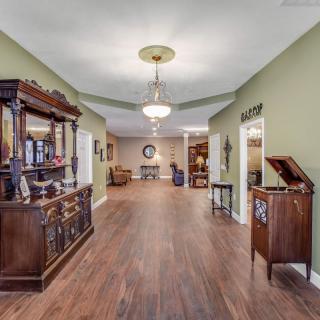
Countryside Manor Assisted Living
$3,300 to $4,300 / month23.5 miles away -
from +$185 / mo

Reunion Court Of The Woodlands
$2,985 to $7,000 / month20.2 miles away -
About the same
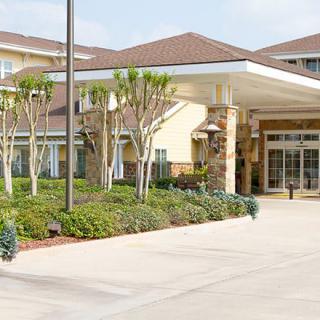
The Village at Gleannloch Farms, a CCRC
$2,770 to $6,226 / month22.4 miles away -
from +$500 / mo

Royal Palms Senior Living
$3,300 to $3,600 / month16.8 miles away -
from -$435 / mo

The Landing at Augusta Woods IL , AL and MC
$2,365 to $4,465 / month17.8 miles away
Overall Review of Silver Hills
Pros
 Village Home is described as a great place with caring people.
- The kitchen crew is amazing.
- The staff are dedicated and compassionate, treating residents like family.
- The facilities are exceptional, with spacious and well-maintained rooms.
- Village Home offers a serene countryside setting with tranquility and easy access to urban amenities.
- It provides a great environment with friendly staff.
Cons
 The place is one of the worst places to put loved ones.
- The staff turnover occurs every other month.
- The food is not nourishing and tastes terrible.
- The staff aren’t there for the residents/patients.
- They’re understaffed and when a patient presses the help button, staff tell the patient they’ll be back and do not return for two hours.
- The residents are neglected.
- The owners closed it or sold it, prioritizing money over residents and not deserving of a star.
- They sold A Village Home to make money, showing disregard for residents who have been there for over 20 years.
- It is sickening that the workers who have served for decades are not cared for.
- Karma will come around.
Review
Silver Hills in Montgomery, TX is best suited for families that prize a quiet, rural setting and a home-like atmosphere where staff feel like part of daily life and relatives are welcome to be involved in care planning. The property sits in a serene countryside, yet remains within easy reach of Conroe, Montgomery, and The Woodlands, offering a balance of peace and practical access to urban amenities. This blend appeals to residents who value personal connections, familiar routines, and a sense of belonging. However, the community’s overall appeal hinges on staffing stability and dependable, timely care, a combination that is not consistently demonstrated across the reviews.
From several accounts, the strongest redeeming feature is the warmth of the staff and the environment that supports social connection. Reviewers describe caring, friendly personnel and a kitchen team that earns praise, paired with engaging activities and well-maintained living spaces. The sense of being treated like family emerges as a significant positive, particularly for families seeking a non-clinical, approachable feel. The setting’s tranquility also supports daily life, reducing stress and facilitating interaction among residents. When these elements align, Silver Hills presents a compelling, homey option in the area.
Yet the negative voices cannot be ignored. Two reviews paint a stark counterpoint, accusing the operation of chronic understaffing, slow response to call bells, and neglect of residents. One account details repeated delays in assistance, forcing residents to cope for hours when help is requested. A separate report claims ownership upheaval and disinvestment, describing a scenario where residents lose continuity as changes in ownership disrupt operations. Taken together, these concerns center on safety, dignity, and reliability, suggesting that some days the experience may deteriorate into frustration and anxiety for both residents and families.
The pros, careful, personable staff, a warm community, and engaging routines, do offer meaningful value, but they do not fully offset the core risks described in the complaints. Reliability of help when needed is non-negotiable in assisted living, and delayed responses undermine safety and independence. When meals and nutrition come with inconsistent quality, daily well-being suffers further. For families who can verify ongoing staffing commitments, transparent governance, and solid contingency plans for transitions, these strengths can justify selecting Silver Hills. For others, the gaps are too significant to overlook.
Prospective residents should approach a visit with targeted questions and a critical eye. Inquire about staffing levels per shift and recent turnover, the process for addressing call-bell requests, and typical response times for urgent needs. Request a recent menu sample and a tour of dining service operations to assess nourishment and variety. Ask how the community handles ownership changes and what protections exist to maintain continuity of care during transitions. Observe whether staff know residents by name and reflect genuine relationships during tours. If red flags appear or if responses are evasive, alternatives deserve serious consideration.
Bottom line: Silver Hills can be a strong fit for families seeking a serene, homelike atmosphere with approachable staff and engaging routines, provided that governance and staffing are solid and dependable. For families where quick, consistent assistance is essential, or where nutritional quality is a critical non-negotiable, exploring other Montgomery-area options is prudent. The region offers competing communities with longer track records of stability and more predictable care, making it sensible to compare options side-by-side. The final decision should hinge on verified staffing reliability, transparent operations, and a lived experience that aligns with the resident’s care priorities.
 Studio apartments
 Assisted Living
 Activities on-site
 Devotional services off-site
 Indoor common areas
 Ambulatory care
 Diabetic care
 Incontinence care
 Meals provided





 Senior Transition Services: Understanding Their Role, Cost, and Importance
 Exploring the Path to Senior Living: A Comprehensive Look at Independent Living and Assisted Living
 Is Assisted Living Deductible on Your Taxes? Understanding the Complexities of Assisted Living Expenses and Deductions