




115 Lone Star Bend, Montgomery, TX 77356
For more information about senior living options: (866) 208-4318
Live Oak Assisted Living Costs & Pricing
Live Oak Assisted Living offers competitive pricing for its residents, particularly when compared to the averages in Montgomery County and throughout Texas. A studio at Live Oak is priced at $3,400 per month, significantly lower than the county's average of $3,939 and just slightly below the state average of $3,758. For a one-bedroom unit, Live Oak charges $3,500, again undercutting Montgomery County's average of $4,089 while remaining close to the Texas average of $3,761. The two-bedroom option is available at $4,550 per month; although this is slightly above the county's rate of $4,014 and below the state average of $4,215. Overall, Live Oak Assisted Living provides a more economical choice for various living arrangements without compromising on quality or care.
| Floor plans | Live Oak Assisted Living | Montgomery County | Texas |
|---|---|---|---|
| Studio | $3,400 | $3,939 | $3,758 |
| 1 Bedroom | $3,500 | $4,089 | $3,761 |
| 2 Bedrooms | $4,550 | $4,014 | $4,215 |
Memory care communities with a similar price nearby
-
About the same
Countryside Manor Assisted Living
$3,300 to $4,300 / month20.5 miles away -
from +$400 / mo

Memory Lane Assisted Living
$3,800 to $4,000 / month17.6 miles away -
from -$415 / mo

Reunion Court Of The Woodlands
$2,985 to $7,000 / month20.8 miles away -
from -$500 / mo

Faithful Senior Care, LLC
$2,900 to $3,900 / month14.7 miles away -
from -$630 / mo

The Village at Gleannloch Farms, a CCRC
$2,770 to $6,226 / month24.7 miles away
Overall Review of Live Oak Assisted Living
Pros
 Live Oak Senior Care is described as the best, with friendly staff and good food.
- The facility is clean, spacious, and welcoming.
- Residents have many friends their own age and enjoy their independence.
- The staff are compassionate and provide excellent care.
- The rooms are comfortable, offering private one-bedroom apartments.
- The community is beautifully located with large apartments and friendly staff.
- Activities are engaging, including game rooms and singing.
- The facility is noted for strong COVID prevention and high-quality care.
- The owner and management are highly regarded for their professionalism.
Cons
 The owner does not understand how to run the facility and has hired a very rude employee who treats the seniors like they’re nothing.
- A resident’s son plans to install a camera in the room due to concerns about the caregiver.
- The owner seems blind to the facts and drives her employees away, with multiple staff quitting in the past few days because of how the facility is run.
- Because the facility is brand new, it has very few residents, which may not be conducive for a resident who needs a lot of activities and attention.
- Friendliness varies depending on which staff member is assisting, indicating inconsistency in care.
Review
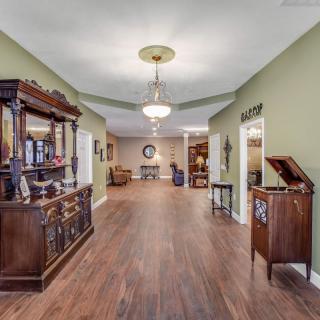
Live Oak Assisted Living in Montgomery, TX is best suited for seniors who want a clean, comfortable, intimate setting where independence is supported and daily life revolves around reliable meals, social connection, and caring attention. The community operates as a small-scale option with around 41 beds, offering spacious one-bedroom apartments that residents can personalize with familiar items. Its Lake Conroe-adjacent location and bright, open common areas create a non-institutional feel that appeals to families seeking warmth alongside practical care. For seniors who value a strong sense of community, easy access to daily activities, and a facility that feels more like a welcoming home than a hospital, Live Oak delivers. Memory care is available, which helps anchor transitions when needs evolve.
However, families should explicitly consider alternatives if operational stability and consistently high staffing are top priorities. Some reviewers raise concerns about how the facility is run, pointing to management style and staff dynamics. The most vocal cautions center on leadership issues and turnover, suggesting that daily experience can vary by shift or caregiver. Those needing aggressive medical oversight, highly specialized care, or the lowest possible price may prefer larger communities with proven corporate structures or different pricing models. For seniors whose care needs are intensive, or for families wanting a seamless, uniformly positive experience across all teams, other options may be better fits.
On the plus side, residents consistently praise the physical environment and daily living quality. Apartments are described as clean, spacious, and well-appointed, with enough room for personal belongings. The staff is repeatedly characterized as friendly and approachable, and meals receive frequent compliments for quality and variety, important for dietary considerations and overall satisfaction. The small size of the community can foster real familiarity, enabling staff to know residents well and respond quickly to preferences and routines. Memory care is part of the offering, which helps stabilize transitions for loved ones who eventually need more support. The location near neighborhood amenities and the overall warmth of the setting reinforce a sense of belonging and safety.
Yet the caution signs must be weighed. Several reviewers allege that a lack of consistent leadership at the top translates into uneven experiences on the floor, with reports of rude behavior from a caregiver and multiple staff departures in short order. While daily care may still be solid, turnover can disrupt routines and scuttle continuity of care plans. Price is another consideration; some families find it higher than comparable options, which can affect affordability for seniors on fixed incomes. Finally, while activities exist and are engaging, the calendar can feel less robust than in larger communities, simply due to the smaller resident pool and the evolving program in a new facility.
Taken together, the community’s strengths often offset the drawbacks when a careful fit is in play. The intimate, homelike environment tends to yield strong, personal attention from staff, which matters most to residents with memory challenges or medications management needs already improving with consistent routines. The quality of food, cleanliness, and welcoming atmosphere create a reliable baseline of satisfaction that persists even when staff turnover is mentioned. The memory-care option reduces the risk of abrupt transitions, offering continuity for families planning longer-term care. In practice, most families discover that when medications and daily routines are well managed, the positive elements, friendliness, accessible activities, and a safe, bright space, outweigh the potential downsides, particularly if price is within reach or if space to negotiate a better package is available.
For families evaluating Live Oak, the clear takeaway is practicality: this is a strong choice for seniors who prize a warm, manageable community with high-quality living spaces, good food, and meaningful social life, especially when memory care is anticipated. It is less ideal for those requiring rock-solid, uniform leadership across every shift or for those with tight budgets that demand the lowest possible rate. Prospective residents should tour with a focus on caregiver interactions, ask direct questions about leadership stability, review the care-planning process, and measure how well the calendar aligns with desired activities. If the fit checks these boxes, Live Oak becomes a compelling balance of comfort, community, and capable care.
 64 resident community capacity
 1-bedroom apartments
 Assisted Living
 Memory Care
 Respite Care
 Cats allowed
 Dogs allowed
 Activities on-site
 Air-conditioning
 Beautician on-site
 Cable or satellite TV
 Computer center
 Devotional services off-site
 Dining room
 Financial aid
 Fitness room
 Full kitchen
 Fully furnished
 Gaming room
 Garden
 Housekeeping services
 Indoor common areas
 Laundry
 Move-in coordination
 Outdoor space
 Private bathrooms
 Restaurant-style dining
 Small library
 Swimming pool
 Telephone
 Wellness center
 Wi-Fi/high-speed internet available
 Community operated transportation
 12-16 hour nursing
 24-hour call system
 Ambulatory care
 Assistance with bathing
 Assistance with dressing
 Assistance with transfers
 Diabetes diet
 Diabetic care
 Medication management
 Mental wellness program
 Special dietary restrictions
 Concierge services
 Live musical performances
 Planned day trips
 English




 Illuminating Insights About Alzheimer's Disease: Ten Crucial Realities
 A Thorough Discussion of Medications Potentially Linked to Dementia Risk
 Why Do Dementia Patients Sleep So Much? Understanding Oversleeping, Stages, and Care Approaches