
401 HELEN GREATHOUSE CIRCLE, Midland, TX 79707
To contact a resident: (432) 694-1691
For more information about senior living options: (866) 208-4318
Overall Review of Helen Greathouse Assisted Living at Manor Park
Pros
 The Village at Manor Park offers single rooms, cited as the number-one factor in choosing it.
- It is conveniently located near the family.
- A doctor visits Alzheimer’s patients at the facility, providing accessible care.
- The community is described as very clean.
- The staff are highly satisfactory to the family.
- The room is beautiful, with a foyer and a bathroom, and it holds a lot of furniture.
Cons
 The reviewer is not pleased with one staff member.
- The reviewer had trouble with this staff member and with no one else.
- The reviewer notes this staff member keeps pushing for sitters for the mother, while other nurses say sitters are not needed and she just needs to get adjusted.
Review
Helen Greathouse Assisted Living at Manor Park is best suited for families seeking a private, single-occupancy option in Midland that keeps memory-care needs manageable through regular on-site medical oversight and a consistently clean, orderly environment. The single-room advantage stands out as the primary driver for selecting this community, paired with the convenience of being near family and able to monitor care closely. The arrangement appeals to caregivers who want personalized space for a loved one, minimal roommate disruption, and direct access to healthcare professionals who understand dementia-related needs. In short, it serves decisively those who prize privacy, proximity, and straightforward medical oversight in daily living.
Yet, a clear alternative path exists for families facing different care realities. If a resident requires higher-intensity, 24/7 supervision, or if the care philosophy needs to be uniformly reinforced across all shifts, other options may be worth exploring. The report of friction with one staff member, who advocates sitters while others say sitters aren’t routinely needed, signals potential inconsistency in care messaging. For families seeking robust dementia programming, predictable staff routines, or a more integrated approach to daily care coordination, communities with dedicated memory-care wings or more formal sitter-management policies may deliver greater peace of mind. Location, privacy, and access to a doctor come at a trade-off if broader social programming is a priority.
The strongest pros here, cleanliness, proximity to relatives, and reliable access to a physician who visits Alzheimer’s patients, meaningfully offset several limitations. A spotless environment reduces health risks and supports familiar routines, while the in-house medical presence provides reassurance that cognitive-care needs won’t drift into distant, episodic visits. The general staff warmth and competence reported by the family add a layer of trust, helping to smooth transitions and daily interactions for a resident who relies on steady routines. The private room’s ease of personalization also matters: residents can settle into a familiar setup without sharing space that could complicate sleep or comfort. Taken together, these positives form a practical foundation for ongoing, low-disruption living.
Still, meaningful caveats demand a practical response. The potential inconsistency in staff messaging around sitters underscores the importance of proactive care management. Families should insist on a clear, written policy regarding when sitters are recommended, how decisions are made, and who approves any changes in care plans. Arranging a care conference early on, requesting a printed daily routine, and asking for direct lines of communication with the primary nurse or care coordinator can transform a stated strength into an experience that consistently aligns with expectations. The opportunity to address this head-on before move-in is essential to prevent small clashes from becoming persistent frustrations.
For decisions centered on memory-care readiness versus a broader social-activity focus, the community presents a compelling case if the priority is a private space with regular medical touchpoints. The presence of a doctor visiting Alzheimer’s patients adds tangible value, and the practical benefits of a private room, ease of customization and reduced roommate risk, are hard to overlook. However, if the resident thrives on robust social programming, structured dementia-specific activities, or a fortress of consistency across all caregivers, those needs may be better met elsewhere. Visits and conversations with management can illuminate how well this community can scale its routines to match evolving care requirements.
Implementation comes down to concrete checks before formalizing a move. Tour the facility with a clear eye toward room options (confirm availability of true single-occupancy spaces), verify the doctor’s schedule and the scope of medical oversight, and request sample care plans that reflect Alzheimer’s care in daily routines. Talk through the sitter policy and ask for recent examples of how staff resolved care plan disagreements. Gauge the responsiveness of the team during the tour and in follow-up communications. If the overall impression remains positive and the care philosophy aligns with family expectations, Helen Greathouse at Manor Park offers a practical, well-kept, near-home option that delivers on essential privacy, medical oversight, and cleanliness.
 Assisted Living
 Memory Care
 Activities on-site
 Devotional services off-site
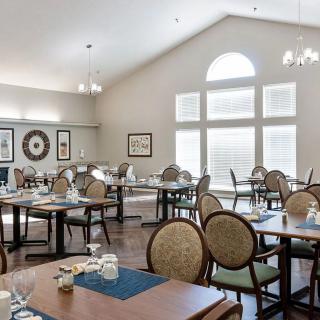
 Indoor common areas
 Midland International (5 miles away)
 Ambulatory care
 Diabetic care
 Meals provided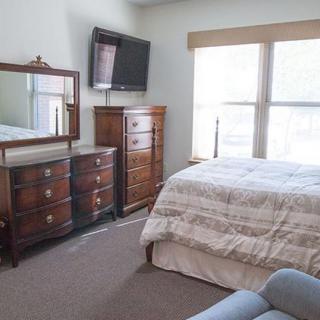




 A Detailed Exploration of Assisted Living Medicaid Waivers Across the United States
 Exploring the Contrasts Between Assisted Living and Skilled Nursing
 Vibrant Senior Living: A Comprehensive Guide for Active Older Adults