
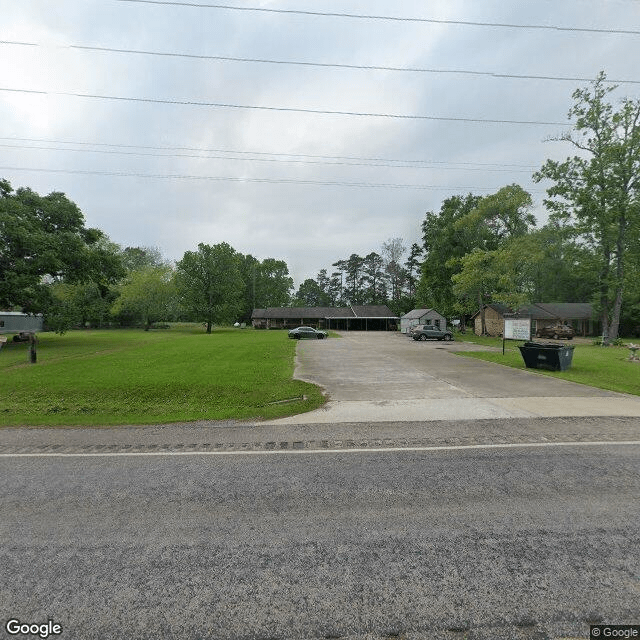
4837 Fm 770 N, Hull, TX 77564
For more information about senior living options: (866) 208-4318
Overall Review of Fairys Landing Residential Personal Care Center
Pros
 The care he received was outstanding.
- The staff went above and beyond for him.
- He was never alone.
- They engaged him with activities.
- The facility is highly recommended for excellent care.
- Fairy’s Landing was a godsend when they needed it most.
- They went over and above all of his needs.
- They treated him with dignity and attended to his every need as friends.
- They prayed over him and made him very comfortable in his last days.
- The family gained peace of mind knowing he was well cared for.
Cons
 They like to do medical procedures without getting consent.
- They say it's their choice what they tell their patients or not.
Review
Fairy’s Landing Residential Personal Care Center in Hull, TX is best suited for families facing late-stage dementia or terminal illness where the priority is around-the-clock, compassionate care delivered by a small, intimately involved team. The community shows itself strongest for those who need rapid placement and immediate, hands-on support so a loved one can remain in a home-like setting rather than a large institution. It is less suitable for families who demand rigorous, formal medical oversight and strict, transparent consent processes as a matter of policy; in those cases, alternative providers with more defined governance and documentation practices are worth evaluating first.
Two of the strongest threads in the feedback are the staff’s dedication and their ability to create a supportive, human-centered environment. Families recount staff who “went above and beyond,” kept residents engaged with activities, and treated the person with dignity and respect. The sentiment of being “never alone” shines through in end-of-life moments, with caregivers who stay by the bedside, coordinate visits, and communicate in a way that reassures families even as they face loss. In particular, the care surrounding a loved one’s final days, feeding, bathing, medication administration, and emotional presence, paints a picture of a facility that prioritizes personhood and companionship as much as clinical routines.
Equally notable is the quick, responsive intake process and the sense that the facility can mobilize supports rapidly when a crisis arises. One family described the owner/operator as the hinge that opened doors fast, moving a loved one in within days when the need was most acute. That responsiveness, paired with a consistent staff approach that prioritizes meaningful interactions, helps families regain a measure of control during an otherwise chaotic time. The ability to visit at any time, with the same routines and tone maintained, also contributes to a stable, predictable atmosphere for residents and families alike.
However, a significant caveat shadows these strengths: concerns about consent and transparency around medical procedures. One reviewer explicitly alleges that procedures were performed without proper consent and that information-sharing practices were opaque, framed as a matter of “our choice what we tell our patients.” This is not a nuance but a potential ethical and legal risk that can unsettle families who expect clear, proactive consent processes and full disclosure. For families balancing quality-of-care with governance, this gap weakens the otherwise compelling case and understandably makes caution the default lens through which the facility should be evaluated.
The pros, deep, compassionate care, family-aligned visitation, and a responsive admission process, offset the cons only to a point, depending on what matters most to the decision-makers. For families prioritizing emotional warmth, continuity of care, and the comfort of a home-like setting during fragile health trajectories, Fairy’s Landing delivers outcomes that feel personal and trustworthy. Yet for those whose comfort hinges on strict adherence to consent norms, documented procedures, and transparent medical decision-making, the risk of covert or inadequately explained interventions is a decisive counterweight that cannot be ignored.
Ultimately, this community belongs to a narrow but important niche: families who want a small, engaged caregiving team that treats residents with dignity, quickly accommodates urgent moves, and allows open, flexible visiting while navigating late-stage illness and end-of-life care. Prospective residents should engage in candid conversations about consent policies, seek concrete examples of how decisions are documented and communicated, and request direct access to leadership to review those practices. If those assurances cannot be documented to the family’s satisfaction, alternatives with stronger governance and clearer consent frameworks should be considered. For others, the combination of heartfelt care and practical availability makes Fairy’s Landing a compelling option worth pursuing with due diligence.
 10 resident community capacity
 Assisted Living
 Board and Care Home
 Cable or satellite TV
 Dining room
 Fully furnished
 Garden
 Housekeeping services
 Move-in coordination
 Outdoor space
 Telephone
 Wi-Fi/high-speed internet available
 24-hour supervision
 Activities of daily living assistance
 Assistance with bathing
 Assistance with dressing
 Assistance with transfers
 Diabetes diet
 Meal preparation and service
 Medication management
 Special dietary restrictions
 Transportation arrangement (medical)
 Transportation to doctors appointments






 Assisted Living Support for Veterans: A Complete and Detailed Overview
 Exploring the Contrasts Between Assisted Living and Skilled Nursing
 8 Key Indicators That Suggest It May Be Time to Transition from Assisted Living to Skilled Nursing Care