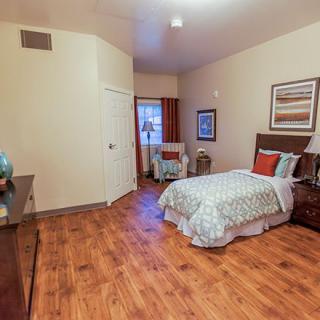
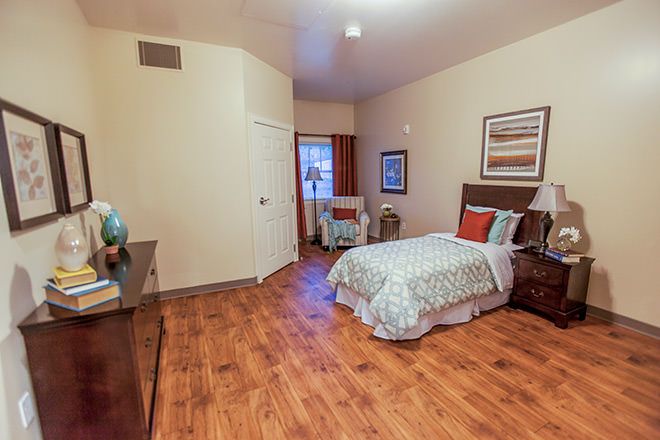
7450 Willowchase Boulevard, Houston, TX 77070
For more information about senior living options: (866) 208-4318
The Hampton at Willowbrook Costs & Pricing
At The Hampton at Willowbrook, the monthly cost for a studio room is $3,645, which positions it favorably within the broader context of Harris County and Texas. In comparison, the average cost in Harris County stands at $4,021, while the state average is slightly higher at $3,758. This makes The Hampton an attractive option for those seeking quality senior living accommodations that offer both value and comfort. With its competitive pricing, residents can enjoy a warm community atmosphere without straining their budgets.
| Floor plans | The Hampton at Willowbrook | Harris County | Texas |
|---|---|---|---|
| Studio | $3,645 | $4,021 | $3,758 |
Memory care communities with a similar price nearby
-
from +$355 / mo
Total Loving Care Inc 2
$4,000 to $5,250 / month23.1 miles away -
from -$195 / mo

Cypress Assisted Living- Drake Prairie Lane
$3,450 / month4.9 miles away -
from -$145 / mo

Houston - Arad Senior Care 1
$3,500 / month17.1 miles away -
from -$250 / mo

Atria Westchase
$3,395 to $6,995 / month16.8 miles away -
from -$145 / mo

Houston - Arad Senior Care 2
$3,500 / month17.3 miles away
Overall Review of The Hampton at Willowbrook
Pros
 The renovated Ambience is making the facility feel real nice, and the staff are compassionate, attentive, and treat residents like family.
- The memory care program is exceptional, offering personalized activities and a calm, structured environment that helps residents feel safe and engaged.
- On-site therapy services have been a huge benefit, helping residents stay active and get the care they need without leaving the community.
- The facility is clean, welcoming, and feels like home.
- This is the perfect choice for families looking for a place where their loved one will be well cared for and genuinely valued.
- The staff are very professional and the facility looks beautiful.
- The newly renovated facility is clean and staffed with fantastic teams.
- Residents compliment the staff for being friendly and attentive, and they love the home-cooked meals.
Cons
 The memory care experience for his father has been very poor, especially at night.
- Some residents are left unattended while one aide helps others with showers.
- The medication distribution is handled by a tech responsible for several buildings, making memory care last.
- As of 8:45 pm, his father was still waiting for his medication to help him sleep.
- The family does not recommend the facility and plans to move their father out ASAP.
Review
The Hampton at Willowbrook in Houston is best suited for families that prioritize a memory-care–focused environment with a warm, home-like feel, and a clear emphasis on structured daily routines. The recent renovation contributes to a calm, contemporary atmosphere, and on-site therapy services expand care options without requiring off-site trips. Families that value compassionate, professional staff who are described as genuinely attentive and devoted to residents’ well-being will find a solid fit here. For those who want a setting where memory care is deeply personalized and where residents are treated as valued individuals, this community presents a compelling combination of ambience, accessibility, and targeted cognitive-care programming.
Those weighing alternatives should note a critical caveat: nighttime oversight and timely medication administration. While many experiences are laudatory, one review frames memory care at night as problematic, with residents left unattended as staff juggle multiple buildings and med passes, resulting in medication delays. For families whose loved one requires consistent 24/7 monitoring, prompt night-time medications, or a dependable nighttime routine, this may not be the best match. Ongoing management changes mentioned by some reviewers can also signal potential variability in staffing stability and day-to-day consistency, warranting careful comparison with other options that prove night-shift reliability and steady leadership.
On the plus side, the enhanced ambience post-renovation has tangible benefits. A clean, inviting environment supports dignity and ease of navigation for memory-impaired residents. The staff consistently earns praise for compassion and attentiveness, contributing to a sense that residents are genuinely cared for and valued. The memory care program itself is highlighted as exceptional, with personalized activities and a calm, structured environment that helps residents feel safe and engaged. The integration of on-site therapy services further strengthens daily care by keeping residents active and supported without the need for frequent off-site trips.
The main drawbacks revolve around the night shift realities. The strongest negative account centers on poor nighttime memory-care experiences and medication delays, underscoring a real risk that cannot be dismissed. While the facility is undergoing leadership changes and a major renovation of the memory-care area, which signals commitment to improvement, the reported gap at night points to a concrete shortcoming in operations that affect safety and comfort after sunset. Prospective families should treat this as a non-negotiable risk factor to verify before committing, rather than a universal outcome.
When the positives are fully leveraged, the pros offer meaningful counterbalance to the cons. A well-structured memory-care program, supported by personalized activities and a calm environment, provides a strong daily rhythm that can protect cognitive well-being and reduce agitation. The on-site therapy and the redesigned, home-like setting contribute to a higher quality of daily life and fewer disruptions from hospital-style transfers. Yet the night-time vulnerabilities cannot be fully offset by daytime strengths; successful decision-making rests on validating that nighttime staffing and medication processes have improved and are reliably safe. That combination, strong day care with verifiable night coverage, positions this community as a solid choice for the right family.
Bottom line: The Hampton at Willowbrook stands out for families seeking a memory-care–oriented residence with a refreshed, welcoming atmosphere, dedicated staff, and on-site therapy that supports ongoing activity and well-being. It is a credible option for those who can confirm robust night staffing and dependable medication management, and who value a resident-centered, home-like setting where care feels personal and attentive. For families where night-time monitoring and timely med passes are non-negotiable, it is essential to seek out a definitive plan and, if possible, observe a night shift in action. With due diligence and direct confirmation of nighttime operations, this community can be a prudent, well-suited choice for memory-care needs.
 104 resident community capacity
 Assisted Living
 Memory Care
 Activities off-site
 Air-conditioning
 Beautician on-site
 Cable or satellite TV
 Computer center
 Devotional services off-site
 Dining room
 Fitness room
 Fully furnished
 Gaming room
 Garden
 Ground floor units
 Handicap accessible
 Housekeeping services
 Indoor common areas
 Kitchenette
 Move-in coordination
 Outdoor common areas
 Private bathrooms
 Respite or short term stays offered
 Restaurant-style dining
 Small library
 Telephone
 Wellness center
 Wi-Fi/high-speed internet available
 George Bush Intercontinental (12 miles away)
 Community operated transportation
 12-16 hour nursing
 24-hour call system
 Assistance with bathing
 Assistance with dressing
 Assistance with transfers
 Diabetes diet
 Diabetic care
 High acuity care
 Incontinence care
 Medication management
 Mental wellness program
 Special dietary restrictions
 Art classes
 Catholic services
 Concierge services
 Cooking classes
 Day trips and outings
 Educational speakers / life long learning
 Karaoke
 Wine tasting







 When to Transition from Assisted Living to Memory Care: Key Indicators, Steps, and Finding the Right Community
 Understanding the Distinctions: Assisted Living and Memory Care Explained
 How to Communicate with a Loved One Living with Dementia: 10 Supportive Strategies