

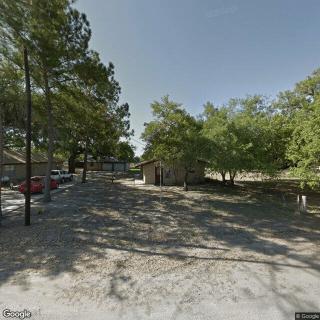
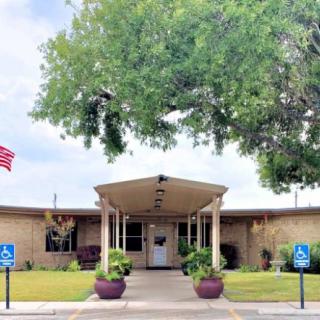
1024 CR 664, Devine, TX 78016
To contact a resident: (830) 665-5829
For more information about senior living options: (866) 208-4318
Overall Review of Ramirez Personal Care Home II
Pros
 Patients can leave the hospital with basic needs provided.
- Health insurance covers the room, making it affordable.
- Patients receive three meals a day plus snacks.
Review
Ramirez Personal Care Home II in Devine, TX is best suited for seniors or recovering patients who need a modest level of supervision and basic daily support, and for families seeking an affordable post-acute option where health insurance can cover the room and meals. It plays the practical role of a transition space after hospital discharge, prioritizing the essentials over specialized programming or advanced medical oversight. The community’s positioning is clear: if the primary need is reliable basic care in a structured, low-friction setting, this facility answers that immediate demand without demanding a steep financial commitment.
From the available feedback, the standout reality is that essential needs are met in a straightforward, no-frills manner. The emphasis is on “basic needs provided,” with a room funded by health insurance and three meals a day plus snacks. In other words, the operation appears to deliver predictable, budget-conscious care rather than a boutique or highly personalized care environment. For families seeking a safe, predictable place to bridge from hospital to home, that predictability has real value, especially when the focus is on continuing routine meals, a secure room, and a basic cadence of daily living.
Yet there is a clear counterweight to that practicality. The single, modest review leaves a conspicuous absence of depth on staffing, clinical oversight, and activity or rehabilitative offerings. The lack of detailed information about nurse availability, medication management, or the availability of rehabilitative services suggests potential gaps for residents needing ongoing medical coordination or more intensive support with daily activities. In short, the strength of a basic care package rises against a potential weakness in individualized attention and robust programming. For families evaluating longer-term independence or more complex health needs, these gaps become decisive.
That tension, basic reliability versus limited scope, drives the main decision pivot. The pros offset the cons for residents who view post-acute care as a transitional step: a dependable bed, routine meals, and a calm environment that reduces hospital-related stress while insurance coverage helps manage cost. The cons, however, are not trivial. If the resident requires frequent clinical monitoring, aggressive medication management, or meaningful social and cognitive stimulation, the data is inconclusive at best. The pricing practicality is appealing, but it comes with a price in terms of flexibility, responsiveness, and the potential need to pivot again to a higher level of care later.
For families navigating this choice, concrete questions matter a lot: what is the exact staff-to-resident ratio on day and night shifts? How quickly can a resident access a nurse or administrator if a medical issue arises? What are the available rehabilitative services, physical therapy, occupational therapy, or speech therapy, and who coordinates them? How are medications managed, and what safeguards exist to prevent errors? What does meal quality and dietary flexibility look like, and can the setting accommodate specialized diets or preferences? How engaged are residents in daily activities, and what opportunities exist for social interaction to prevent isolation? A candid sit-down with administration focused on these points will reveal whether the current practical appeal aligns with the resident’s evolving needs.
Overall, Ramirez Personal Care Home II offers a practical, budget-conscious option for post-hospital residents who want a basic safety net, predictable meals, and insurance-covered lodging. It is not positioned as a high-acuity medical facility or a richly resourced community with extensive programming. Families should approach with clear expectations: this is a place to stabilize and recover enough to resume independent living elsewhere or to maintain comfort with minimal supervision. If the priority is comprehensive medical oversight, aggressive therapy, or an active, engaging daily life, alternatives should be pursued with deliberate comparison. For the right person, someone who values straightforward, affordable post-acute care in a small-town setting, Ramirez Personal Care Home II can be a sensible, even prudent, bridge option.



 In-Home Care Costs in 2025: A Detailed State-by-State Exploration
 Understanding Home Health Care: A Comprehensive Guide
 Home Health Care Demystified: A Comprehensive Guide for Families and Caregivers