
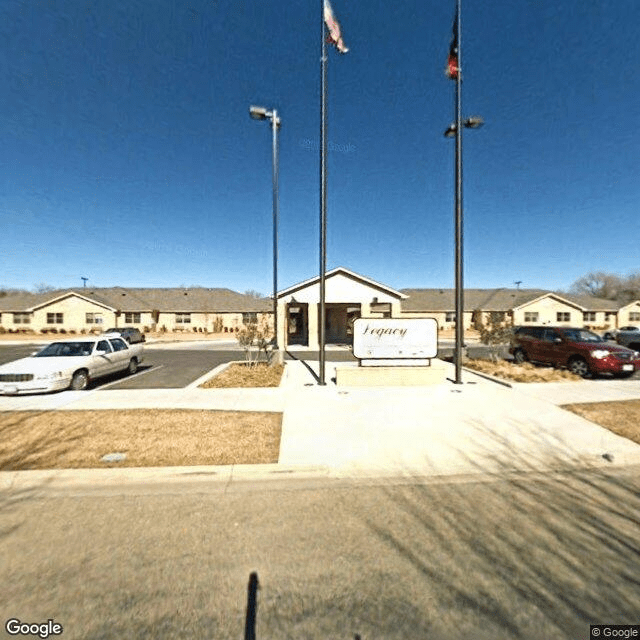
301 Texas Boulevard, Dalhart, TX 79022
For more information about senior living options: (866) 208-4318
Legacy Assisted Living Community Costs & Pricing
Legacy Assisted Living Community offers competitive pricing for its residents, with studio apartments priced at $3,210 per month, which aligns perfectly with the average rate in Hartley County. Similarly, their one-bedroom units are also available at an appealing $3,600 per month, maintaining the same cost as in the county. When compared to broader state averages, however, it's evident that living at Legacy is a more economical choice; both room types significantly undercut the typical expenses found throughout Texas - $3,758 for studios and $3,761 for one-bedroom apartments. This makes Legacy not only a desirable option for quality assisted living but also a financially sensible one for those seeking a welcoming community without compromising on care or comfort.
| Floor plans | Legacy Assisted Living Community | Hartley County | Texas |
|---|---|---|---|
| Studio | $3,210 | $3,210 | $3,758 |
| 1 Bedroom | $3,600 | $3,600 | $3,761 |
Overall Review of Legacy Assisted Living Community
Pros
 None identified in the provided reviews.
Cons
 The place is described as having more screws loose than Home Depot.
- The director is described as low-budget and in need of improvement.
- There’s a warning that the staff may not know HIPAA.
- Friends of residents report that they have heard nothing but negative comments.
- Residents are treated very poorly.
- The staff are described as rude and very disrespectful.
- The reviewers would never want anyone they care about to stay there.
Review
Legacy Assisted Living Community in Dalhart, TX is best suited for budget-conscious seniors who need a basic level of daily support and for families prepared to maintain active oversight. The setting likely serves residents with relatively low care needs who prioritize affordability and local convenience over premium amenities or highly responsive staffing. In practical terms, this community can function as a practical option when price is the overwhelming constraint and other, more robust facilities are out of reach.
Those who should consider alternatives are seniors demanding consistently respectful staff, reliable leadership, and strong privacy protections. A resident with higher medical or cognitive needs, or one who requires frequent medical monitoring and prompt response, would likely be better served elsewhere. Families unwilling to supervise care on a regular basis or to advocate actively for rights and privacy should look for a community with stronger governance and clearer accountability.
The potential upside centers on affordability and a local, easy-to-access option that may meet basic daily living needs without a premium price tag. Yet the detectable downsides overshadow these advantages. Core strengths, whatever they may be, do not adequately compensate for frank concerns about staff behavior, leadership quality, and privacy handling. The most credible voices describe rude, disrespectful interactions and a leadership posture that feels underfunded or inattentive. When evaluating value, the sting of these interpersonal and governance gaps substantially undercuts any monetary savings.
From the standpoint of safety and dignity, the most troubling signals are clear. Multiple accounts describe staff as uncaring or disrespectful toward residents, which directly erodes trust and daily well-being. Leadership comes across as under-resourced or disengaged, with descriptors such as “low budget” applied to administrative oversight. A separate, pointed concern about privacy handling, suggesting lapses in HIPAA-style safeguards, amplifies fears about how medical and personal information is managed. Taken together, these factors create a pattern that many families will find unacceptable for long-term residency.
Practical evaluation steps emerge for families weighing Legacy against stronger options. Begin with a no-nonsense tour focusing on demeanor and responsiveness during routine tasks, then request a direct meeting with the administrator to discuss staff training, resident rights, and incident reporting. Ask for written policies on privacy, medication administration, and how complaints are tracked and resolved. Review recent state licensing records and inspection reports for any citations related to staffing, safety, or resident rights. If possible, speak confidentially with current residents or family members about their day-to-day experience and any changes in care quality over time.
Bottom line: Legacy Assisted Living Community should not be the automatic default for families prioritizing consistent, respectful care and rigorous privacy protections. The reported combination of rude treatment, leadership concerns, and potential privacy lapses places a heavy burden on families to oversee daily operations personally. Alternatives in Dalhart or nearby areas, especially those with clearer governance, stronger staff training, and demonstrable commitment to resident dignity, are worth pursuing. If a choice is made to proceed with Legacy, a deliberate plan for oversight, ongoing evaluation, and formal escalation must be in place, with upfront expectations set regarding staffing stability, care standards, and privacy safeguards.
 40 resident community capacity
 Assisted Living
 Cats allowed
 Dogs allowed
 Activities off-site
 Air-conditioning
 Beautician on-site
 Cable or satellite TV
 Devotional services off-site
 Dining room
 Fully furnished
 Garden
 Ground floor units
 Handicap accessible
 Housekeeping services
 Indoor common areas
 Kitchenette
 Move-in coordination
 Outdoor common areas
 Respite or short term stays offered
 Restaurant-style dining
 Small library
 Telephone
 Wheelchair accessible showers
 Wi-Fi/high-speed internet available
 24-hour call system
 Ambulatory care
 Assistance with bathing
 Assistance with dressing
 Assistance with transfers
 Diabetes diet
 Diabetic care
 Incontinence care
 Medication management
 Mental wellness program
 Special dietary restrictions
 Art classes
 Cooking classes
 Day trips and outings
 Educational speakers / life long learning
 Forever fit
 Live dance or theater performances
 Live musical performances
 Live well programs



 Comprehensive Insights into Activities of Daily Living (ADLs) and Their Assessment
 Medicare Coverage for Assisted Living: An In-Depth Exploration
 Choosing the Right Senior Care: A Detailed Exploration of Assisted Living and Nursing Homes