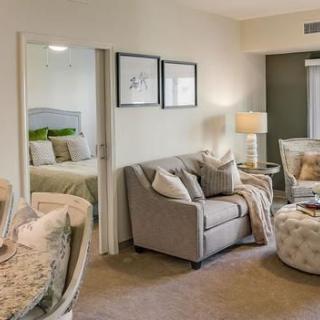
Mary, Queen of Angels offers a range of accommodation options that reflect the premium services and amenities available at this facility. The monthly costs for residents are notably higher when compared to the averages in Davidson County and throughout Tennessee. For instance, a semi-private room at Mary, Queen of Angels is priced at $3,780, significantly above the local average of $2,765 and the state average of $3,162. Similarly, studio apartments cost $4,390 compared to $3,340 in Davidson County and $3,485 statewide. The disparity continues with one-bedroom units at $5,675 versus local and state averages of $2,694 and $3,592, respectively. Lastly, the pricing for two-bedroom accommodations stands at $6,570 while Davidson County averages are at $3,353 and Tennessee's average is $3,962. These figures indicate that Mary, Queen of Angels positions itself as a more upscale option within the region's care facilities.
Floor plans
Mary, Queen of Angels
Davidson County
Tennessee
Semi-Private
$3,780
$2,765
$3,162
Studio
$4,390
$3,340
$3,485
1 Bedroom
$5,675
$2,694
$3,592
2 Bedrooms
$6,570
$3,353
$3,962
Memory care communities with a similar price nearby
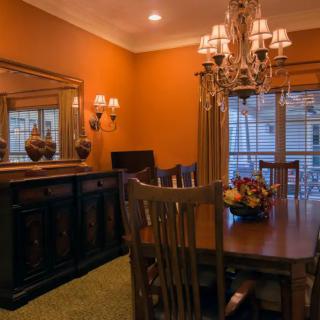
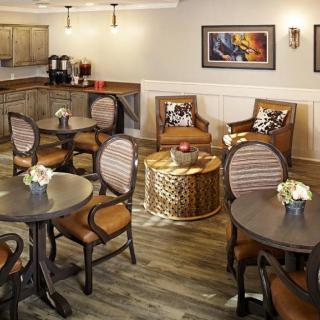
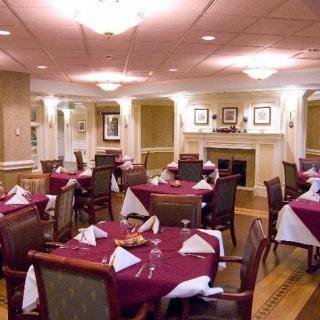
Dining is described as restaurant-style, not cafeteria-like.
Several reviewers specifically describe the dining experience as restaurant-style, including a dining facility that feels like a restaurant and meals served in a restaurant setting. Residents and visitors also point to the overall quality of the dining experience when describing their visits and stays.
common3 reviews mention this
Easy check-in uses facial recognition
Check-in and entry are streamlined with facial recognition.
Multiple reviewers mention a self check-in or automated entry process that uses facial recognition. They describe it as efficient and user-friendly, and one reviewer also notes the front-desk welcome after signing in.
common3 reviews mention this
Activities keep residents engaged
Activities and entertainment are a regular part of life.
Reviewers mention community events and entertainment that involve both residents and outside performers, including a dance/entertainment troupe performance. Others also highlight the range of activities they saw during visits, including themed participation like sports wear day, and they describe the activity program as a standout.
caveat3 reviews mention this
Medication handling is a serious concern
Some residents experienced medication problems and gaps in communication.
A few reviewers raise concerns about medication management, including reported medication mistakes and pharmacy-related errors that were not communicated to families. One reviewer also says information shared before choosing the facility was incorrect and incomplete, and another describes the broader communication breakdown with management when incidents were reported.
How we summarize
Counts show how many written reviews mention each theme; a review can touch several themes, and only frequently mentioned themes are displayed.
Features
Types of Care
Assisted Living
Memory Care
Amenities
Activities off-site
Activities on-site
Air-conditioning
Beautician on-site
Cable or satellite TV
Devotional services off-site
Devotional services on-site
Indoor common areas
Kitchenette
Outdoor common areas
Wheelchair accessible showers
Wi-Fi/high-speed internet available
Transportation
Nashville International (10 miles away)
Care Services
Ambulatory care
Diabetic care
Medication management
Dining
Anytime dining
Guest meals
Meals provided
Restaurant style dining
Room service
Vegetarian
Activities
Art classes
Catholic services
Cooking classes
Day trips and outings
Devotional activities offsite
Devotional activities on-site
Happy hour
Jewish services
Karaoke
Live dance or theater performances
Live musical performances
Protestant services
Wine tasting
Nearby Places of Interest
This area of Nashville, Tennessee, is a diverse and bustling neighborhood with a variety of amenities and services nearby. There are multiple healthcare options including physicians, hospitals, pharmacies, and specialists such as dermatologists and audiologists. Residents can enjoy a range of dining options from fast food to casual dining at restaurants like Hattie B's Hot Chicken. For leisure activities, there are several parks within a short distance for outdoor enjoyment. Additionally, there are cafes for socializing and theaters for entertainment. Places of worship such as Calvary United Methodist Church offer spiritual support while transportation is convenient with John C Tune Airport nearby. Overall, this neighborhood provides a well-rounded community for senior living with access to essential services and recreational opportunities.
Physicians
Jerry Jay Smith, MD (0.1 miles)
Pinnacle Dermatology- Nashville (0.1 miles)
Vision 1st (0.1 miles)
Audiology Associates and Hearing Aids Today (0.3 miles)
Mary, Queen of Angels offers a range of accommodation options that reflect the premium services and amenities available at this facility. The monthly costs for residents are notably higher when compared to the averages in Davidson County and throughout Tennessee. For instance, a semi-private room at Mary, Queen of Angels is priced at $3,780, significantly above the local average of $2,765 and the state average of $3,162. Similarly, studio apartments cost $4,390 compared to $3,340 in Davidson County and $3,485 statewide. The disparity continues with one-bedroom units at $5,675 versus local and state averages of $2,694 and $3,592, respectively. Lastly, the pricing for two-bedroom accommodations stands at $6,570 while Davidson County averages are at $3,353 and Tennessee's average is $3,962. These figures indicate that Mary, Queen of Angels positions itself as a more upscale option within the region's care facilities.
Medication management is a crucial feature in memory care services, as it ensures that residents receive the correct medications at the appropriate times to manage their cognitive symptoms effectively. This structured approach helps reduce confusion and anxiety often associated with incorrect dosages or missed medications. Trained staff oversee the entire process, from tracking prescriptions to administering medications and monitoring side effects, enabling a personalized care plan that addresses each resident's unique needs. By alleviating the burden of medication adherence, this support fosters a sense of security and stability, allowing residents to focus on engaging in meaningful activities that promote cognitive function and overall well-being.
Beautiful, clean community with friendly staff, restaurant-style dining, and ample amenities.
Warm Hearts at Home
Nashville, TN
Excellent access to healthcare and local amenities nearby.
Abe's Garden/Park Manor Apartments
Nashville, TN
4.6 from 36 reviews
Full continuum of care (assisted, independent, memory care) with 24-hour supervision and extensive amenities (dining, wellness, transportation, beauty salon, activities).
Park Manor
Nashville, TN
4.6 from 14 reviews
$2,381 to $3,950 / month
Friendly, well-trained staff with engaging memory-care activities and good dining.
Caregivers by WholeCare LLC
Nashville, TN
4.5 from 11 reviews
Personalized care with easy access to many nearby amenities and medical services.
Belmont Village Senior Living Green Hills
Nashville, TN
4.5 from 106 reviews
$3,435 to $7,370 / month
Friendly, attentive staff with clean facilities and engaging activities.
Blakeford at Green Hills, a CCRC
Nashville, TN
4.1 from 57 reviews
$2,720 to $4,950 / month
Beautiful campus with friendly staff and engaging activities.
Morningside of Belmont
Nashville, TN
4.3 from 159 reviews
$2,800 to $4,500 / month
Safe, caring staff with a warm, engaging community and convenient location.
The article emphasizes the significance of establishing a power of attorney for elderly parents to enable an agent to make decisions on their behalf regarding health and finances, especially during cognitive or physical decline. It outlines various types of power of attorney, the importance of consulting legal professionals, and the responsibilities and challenges faced by agents, while also discussing alternatives and common misconceptions.
Caregiver support groups are crucial for providing emotional and practical assistance to those caring for loved ones, offering resources, coping strategies, and a sense of community through various organizations and platforms. These groups help alleviate isolation and burnout while addressing the unique challenges faced by caregivers of individuals with specific conditions.
The guide outlines the complexities of Medicaid coverage for assisted living, highlighting significant state-to-state variations, limited coverage often restricted to personal care services, and the existence of specialized waivers for certain needs like memory care. It advises families to consult local Medicaid offices for options while emphasizing the importance of understanding state-specific regulations and facility policies.
Get PricingAsk A QuestionSchedule A TourContact Senior Advisor
By clicking submit, you agree to our Partner's Terms of Use. You
also consent to receive calls and texts, which may be autodialed, from our Partner. Your consent is not a condition to
using our Partner's service. Please visit our Partner's Privacy Policy for information about their privacy practices.


 Assisted Living
 Memory Care
 Activities off-site
 Air-conditioning
 Beautician on-site
 Cable or satellite TV
 Devotional services off-site
 Indoor common areas
 Kitchenette
 Outdoor common areas
 Wheelchair accessible showers
 Wi-Fi/high-speed internet available
 Nashville International (10 miles away)
 Ambulatory care
 Diabetic care
 Medication management
 Anytime dining
 Art classes
 Catholic services
 Cooking classes
 Day trips and outings
 Happy hour
 Jewish services
 Karaoke
 Live dance or theater performances
 Live musical performances
 Wine tasting
 Strong nearby amenities and services (cafes, parks, dining, healthcare, theaters, transit).



 Guiding Your Journey: Understanding Power of Attorney for Elderly Parents
 22 Remarkable Caregiver Support Groups Available Online and In-Person
 Understanding Medicaid Coverage for Assisted Living: A Comprehensive Guide