For more information about senior living options: (866) 208-4318
3.9 from 127 reviews
5 stars
70
4 stars
19
3 stars
13
2 stars
7
1 stars
18
Magnolias of Myrtle Beach Costs & Pricing
Magnolias of Myrtle Beach offers competitive pricing for its accommodations compared to Horry County and the broader South Carolina market. For instance, residents can enjoy a studio apartment at $2,500, which is significantly lower than the county average of $3,503 and the state average of $3,649. Similarly, a one-bedroom unit is available at $2,800, while Horry County's rate stands at $3,964 and South Carolina's at $3,806. The trend continues with the two-bedroom option priced at $3,100 compared to county and state averages of $4,421 and $4,337 respectively. These rates highlight Magnolias of Myrtle Beach as an attractive option for those seeking quality living spaces without the premium costs often associated with the region.
Floor plans
Magnolias of Myrtle Beach
Horry County
South Carolina
Studio
$2,500
$3,503
$3,649
1 Bedroom
$2,800
$3,964
$3,806
2 Bedrooms
$3,100
$4,421
$4,337
Memory care communities with a similar price nearby
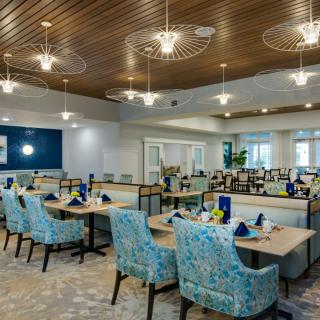
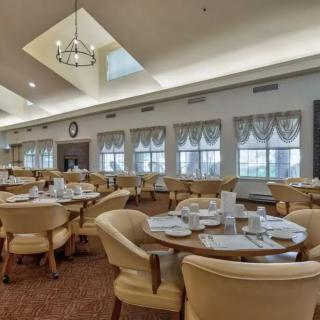
Dining quality and the way meals are served stand out in many resident reports.
Many reviewers describe home-style, comfort-food meals with favorites like fried chicken, mac and cheese, and desserts, and they repeatedly mention that the service staff bring the food rather than residents serving themselves. Several also bring up the buffet-style setup and the atmosphere as part of the dining experience, including whether the food stays hot and fresh. The community also offers restaurant-style dining and meals designed around special dietary restrictions, including diabetes-related diets.
common22 reviews mention this
Friendly, attentive service shows up
Residents frequently describe staff as friendly and responsive during meals and daily interactions.
A large share of reviews mention staff being kind, friendly, and attentive—especially around refilling drinks, clearing plates, and taking care of needs quickly. Some reviewers contrast this with a few negative experiences involving rudeness or service that did not meet expectations. Overall, the staffing impression in reviews aligns with the community’s emphasis on daily support and meal preparation and service.
caveat6 reviews mention this
Cost can feel uneven
Pricing reviews range from good value to complaints about being overpriced.
Some reviewers call the food and overall experience a reasonable price, while others say they paid too much for what they received. That split mirrors how residents may evaluate value depending on expectations for portion size, variety, and overall meal quality. Pricing also comes in well below county and state benchmarks across the listed unit types, which helps explain why some readers see it as affordable even when others do not.
caveat2 reviews mention this
Mixed experiences with care follow-through
A small number of reviews raise concerns about care follow-through and medication support.
While most reviews focus on dining and day-to-day friendliness, a couple of reviews mention serious operational concerns, including medication being missed and difficulty with basic patient needs. Those concerns stand out against the community’s documented focus on medication management and support with activities of daily living, including assistance with bathing, dressing, and transfers. If care consistency is a top priority, it’s worth asking how medication needs are monitored and documented in practice.
differentiator2 reviews mention this
VA support is specifically mentioned
Residents and families mention help related to VA benefits during the move-in process.
One reviewer specifically describes the community helping a parent obtain VA benefits and accepting him at a reduced monthly rate, and another review notes support that included guidance before a decision. This matches the community’s stated VA benefits consultation offering, which suggests families may be able to get help navigating that paperwork. Reviews that mention these conversations treat them as part of the move-in experience rather than day-to-day care.
common
Nearby errands and medical care
The area around the community includes nearby pharmacies, restaurants, and a medical center.
Several nearby conveniences are within about a mile, including pharmacies and local dining options. There are also medical facilities nearby, including a physician office and a hospital within roughly 1 to 2 miles. This can make it easier to handle everyday needs and appointments when planning a routine outside the community.
How we summarize
We summarize when many written reviews mention each theme; a review can touch several themes, and only frequently mentioned themes are displayed.
Features
Housing
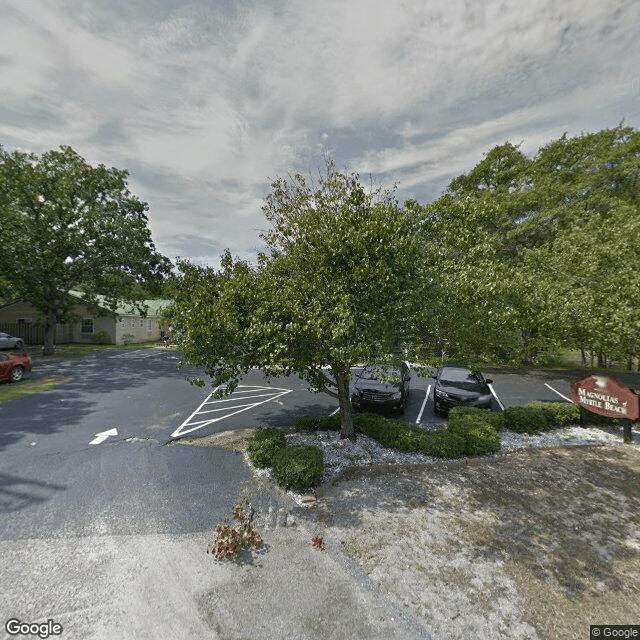
48 resident community capacity
1-bedroom apartments
Studio apartments
Types of Care
Assisted Living
Memory Care
Pets
Cats allowed
Dogs allowed
Amenities
Activities on-site
Beauty salon
Cable or satellite TV
Devotional services off-site
Dining room
Fully furnished
Garden
Housekeeping services
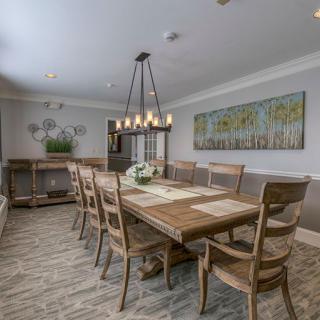
Indoor common areas
Kitchenette
Laundry
Move-in coordination
Outdoor space
Restaurant-style dining
Small library
TV room
Telephone
VA Benefits Consultation
Wi-Fi/high-speed internet available
Transportation
Myrtle Beach International (7 miles away)
Transportation & parking
Care Services
24-hour call system
24-hour supervision
Activities of daily living assistance
Ambulatory care
Assistance with bathing
Assistance with dressing
Assistance with transfers
Diabetes diet
Diabetic care
Meal preparation and service
Medication management
Mental wellness program
Special dietary restrictions
Walking wheelchair assistance
Dining
Diabetes diet
Meals provided
Special dietary restrictions
Activities
Activities on-site
Community-sponsored activities
Devotional activities offsite
Fitness programs
Resident-run activities
Scheduled daily activities
Languages Spoken
English
Nearby Places of Interest
This part of Myrtle Beach, South Carolina, offers convenient access to essential amenities for senior living. There are multiple pharmacies nearby including CVS and Walgreens, ensuring easy access to medications and healthcare supplies. A variety of restaurants catering to different tastes are also within close proximity, offering dining options for every occasion. Additionally, there are cafes like Starbucks for a quick coffee break or socializing with friends. For medical needs, there are several physicians' offices and hospitals in the area providing a range of specialized care services. Overall, this neighborhood provides a well-rounded community with resources that would support a comfortable and convenient lifestyle for seniors.
Magnolias of Myrtle Beach offers competitive pricing for its accommodations compared to Horry County and the broader South Carolina market. For instance, residents can enjoy a studio apartment at $2,500, which is significantly lower than the county average of $3,503 and the state average of $3,649. Similarly, a one-bedroom unit is available at $2,800, while Horry County's rate stands at $3,964 and South Carolina's at $3,806. The trend continues with the two-bedroom option priced at $3,100 compared to county and state averages of $4,421 and $4,337 respectively. These rates highlight Magnolias of Myrtle Beach as an attractive option for those seeking quality living spaces without the premium costs often associated with the region.
Magnolias of Myrtle Beach offers a range of features designed to support residents with dementia or Alzheimer's disease, enhancing their quality of life and overall wellbeing. Assistance with dressing ensures that residents can maintain their dignity and comfort, while medication management helps to prevent confusion and promotes adherence to prescribed regimens. Meal preparation and service address nutritional needs, accommodating individual dietary preferences and restrictions, which is crucial for health maintenance. Support with activities of daily living, including bathing and transfers, fosters independence within a safe environment, thereby reducing the risk of accidents. The availability of 24-hour supervision provides peace of mind for both residents and families, ensuring immediate assistance when necessary. Additionally, a mental wellness program engages residents cognitively and emotionally, helping to stimulate memory recall and promote social interaction, which are vital for emotional stability in individuals facing cognitive decline.
Delirium is a rapidly onset, reversible cognitive disturbance often caused by acute medical issues, while dementia is a gradual and irreversible decline due to chronic neurodegenerative diseases. Accurate differentiation between the two is essential for appropriate treatment and management in older adults.
Dementia, including Alzheimer’s disease, is often mischaracterized in terms of lethality as it leads to complications that can be fatal rather than being a direct cause of death; it causes a progressive decline in cognitive and physical health, making patients vulnerable to infections and other health crises. Effective management of nutrition, hydration, and communication is crucial in patient care, with palliative care becoming vital in advanced stages to enhance comfort and quality of life while caregivers play a key role amidst the challenges posed by the disease.
Reminiscence therapy helps individuals with dementia recall past memories through structured discussions and meaningful objects, enhancing mood, relationships, and sense of identity while celebrating their lives. It can be practiced in formal settings or at home, requiring sensitivity to personal histories and cultural backgrounds.
Get PricingAsk A QuestionSchedule A TourContact Senior Advisor
By clicking submit, you agree to our Partner's Terms of Use. You
also consent to receive calls and texts, which may be autodialed, from our Partner. Your consent is not a condition to
using our Partner's service. Please visit our Partner's Privacy Policy for information about their privacy practices.

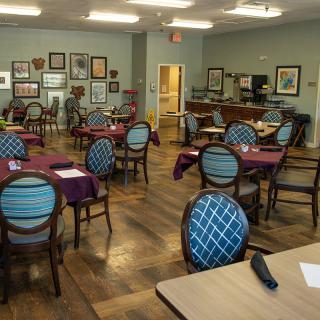
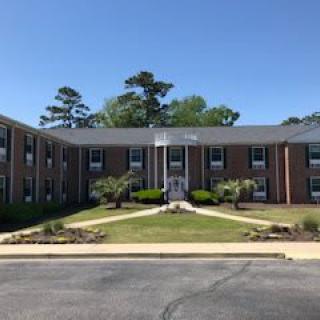
 48 resident community capacity
 1-bedroom apartments
 Assisted Living
 Memory Care
 Cats allowed
 Dogs allowed
 Activities on-site
 Beauty salon
 Cable or satellite TV
 Devotional services off-site
 Dining room
 Fully furnished
 Garden
 Housekeeping services
 Indoor common areas
 Kitchenette
 Laundry
 Move-in coordination
 Outdoor space
 Restaurant-style dining
 Small library
 Telephone
 VA Benefits Consultation
 Wi-Fi/high-speed internet available
 Myrtle Beach International (7 miles away)
 Transportation & parking
 24-hour call system
 Ambulatory care
 Assistance with bathing
 Assistance with dressing
 Assistance with transfers
 Diabetes diet
 Diabetic care
 Medication management
 Mental wellness program
 Special dietary restrictions
 Walking wheelchair assistance
 Fitness programs
 English
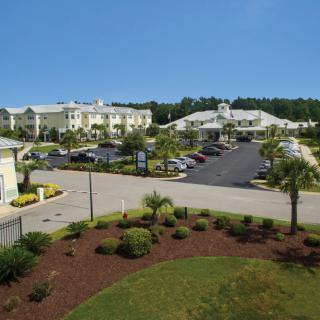
 Intimate 6-resident community with personalized care and nearby amenities.
 Delirium and Dementia: Unraveling the Key Differences
 Are Dementia and Alzheimer's Disease Lethal? A Comprehensive Exploration
 Exploring the Power of Reminiscence Therapy for Individuals With Dementia