

146 Route 119, Home, PA 15747
To contact a resident: (724) 463-0320
For more information about senior living options: (866) 208-4318
Wofford's Shady Grove Manor Costs & Pricing
Wofford's Shady Grove Manor offers a private room at a competitive rate of $4,652 per month, aligning perfectly with the pricing for Indiana County. This consistency reflects the facility's commitment to providing value within the local market. When compared to the broader Pennsylvania state average, which stands at $4,890 for similar accommodations, Wofford's rates are notably more attractive. This strategic pricing not only enhances affordability for residents but also underscores Wofford's dedication to delivering quality care while remaining sensitive to financial considerations in a healthcare environment that can often be expensive.
| Floor plans | Wofford's Shady Grove Manor | Indiana County | Pennsylvania |
|---|---|---|---|
| Private | $4,652 | $4,652 | $4,890 |
Assisted Living communities with a similar price nearby
-
from -$352 / mo
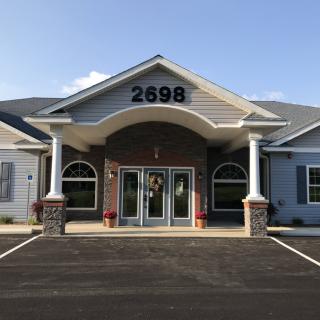
The Fountains at Indiana
$4,300 / month9.3 miles away -
from -$756 / mo

Our Family Home
$3,896 / month22.7 miles away
Overall Review of Wofford's Shady Grove Manor
Pros
 Crystal Waters Personal Care home is the best place for your family member.
- They would be well taken care of.
- A complete criminal background check was conducted by the state police before the hiring of Jeremy Stewart, and was found to be free of any charges.
- Jeremy has been employed by our facility for over 6 months and has done an outstanding job.
- He is well respected by his peers and is a compassionate caregiver to our residents.
Cons
 This place hired a known violent man.
- His records include drug charges and harassment.
- Jeremy Stewart has a terrible temper and has beaten me and my children.
- The human resources have been informed of all his behavior problems including time in the hospital for beating himself.
- But they don't seem to mind putting loved ones at risk.
- It was brought to our attention that his ex-wife had posted a review on Google that was totally false and extremely derogatory to both Jeremy and to our facility.
Review
Wofford's Shady Grove Manor in Home, PA is best suited for families seeking an intimate, home-like personal care setting where a small, closely watched team provides daily assistance and administrators stay visibly involved. The vibe favored here is warmth and continuity: residents who thrive on a familial atmosphere, predictable routines, and staff who feel more like neighbors than nameless aides tend to settle in happily. This environment works well for individuals who do not require complex skilled nursing or highly specialized medical programs and who prioritize personal attention, consistent caregiver contact, and a sense of belonging over sheer amenity count.
Those considering alternatives should note that this kind of setting may not satisfy every need. For families chasing robust clinical oversight, 24/7 licensed nursing presence, or expansive therapy options, larger communities with formal medical staffing and structured memory-care programming might be more appropriate. If safety assurances and uniform staffing reliability are top priorities, it would be prudent to explore facilities with stronger, clearly articulated incident-management systems and fewer reports of inconsistent experiences across residents and families.
The strongest positives in the available feedback point to that intimate, caregiver-focused dynamic. When administrators are present and staff genuinely buy into a culture of comfort and happiness for residents, families hear consistently positive notes about how well their loved ones are treated and how much residents appear to be thriving. The praise is typically anchored in attentiveness, responsiveness, and a sense that residents are valued as part of a family. In such cases, the care team’s hands-on approach translates into calmer days for residents and clearer, reassuring communication for relatives.
However, the reviews also carry a legitimate red flag: safety concerns raised by at least one commenter, including accusations about staffing behavior that would give any family pause. The existence of such claims, coupled with the facility’s overall mixed rating, signals that experience at this community is uneven. Prospective residents should not dismiss these warnings, but rather view them as prompts for thorough due diligence, to confirm what safety measures are truly in place, how incidents are investigated, and whether the staffing culture has been stabilized since any troubling reports.
To make a well-informed decision, pursue concrete assurances before committing. Request current staff rosters and on-site coverage details for evenings and weekends; ask about background checks, ongoing training, and how supervision is organized on each shift. Demand transparent incident and complaint handling procedures, including how corrective actions are tracked and communicated to families. Check recent state inspection reports for the facility’s compliance history and any citations related to resident safety or staff conduct. Finally, insist on speaking with multiple frontline caregivers, as well as several residents’ families, to gauge consistency of care and to hear whether the positive experiences cited by some recur across the community.
The bottom line is pragmatic and pointed: the right fit exists for families who prize a close-knit, attentive atmosphere and are prepared to actively verify safety and staffing reliability. For those who require steady, formal clinical oversight and unwavering safety protocols, alternatives with a clearer track record in these areas should be on the table. Wofford's Shady Grove Manor can be a strong choice for a resident who values personal warmth and daily, hands-on support, provided the care team’s stability, safety practices, and governance are transparently solid and consistently demonstrated during visits, references, and a thorough review of regulatory records.
 Assisted Living
 Activities on-site
 Devotional services off-site
 Indoor common areas
 Ambulatory care
 Diabetic care
 Meals provided



 Vibrant Senior Living: A Comprehensive Guide for Active Older Adults
 When to Transition from Assisted Living to Memory Care: Key Indicators, Steps, and Finding the Right Community
 Assisted Living and Memory Care: Understanding Their Core Differences