
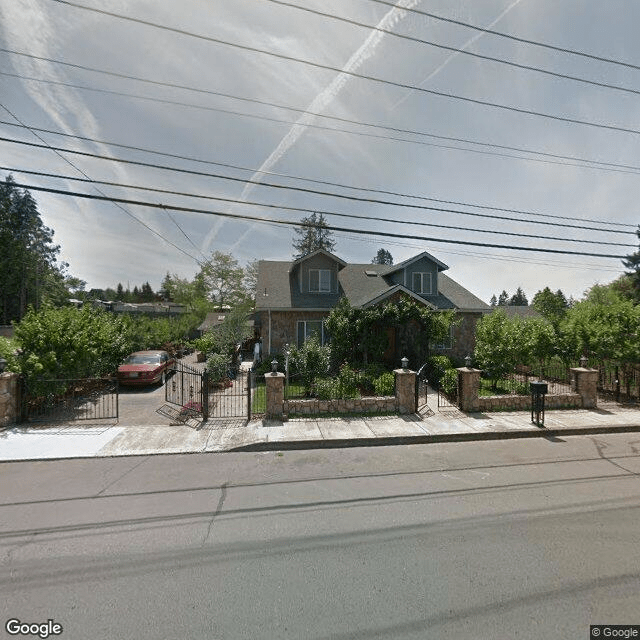
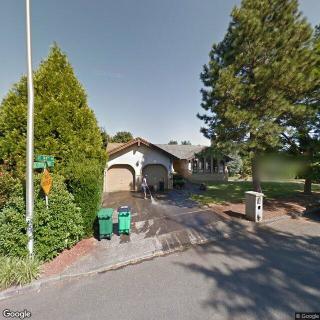
38376 Hood St, Sandy, OR 97055
To contact a resident: (503) 668-1303
For more information about senior living options: (866) 208-4318
Lilac's House Costs & Pricing
Lilac's House offers a compelling value for its private room accommodations at $3,000 per month, positioning itself below the average costs in both Clackamas County and the broader state of Oregon. In Clackamas County, the average monthly cost for a similar private room stands at $3,373, while the state average is slightly higher at $3,424. This pricing not only highlights Lilac's House as an economically attractive option for residents but also suggests a commitment to providing quality care without compromising on comfort or service. By maintaining competitive rates that are well-aligned with local and state market trends, Lilac's House ensures that it remains a viable choice for individuals seeking supportive housing solutions.
| Floor plans | Lilac's House | Clackamas County | Oregon |
|---|---|---|---|
| Private | $3,000 | $3,373 | $3,424 |
Senior living communities with a similar price nearby
-
About the same
A Piece of Heaven
$3,000 / month16.3 miles away -
from -$500 / mo

Mapleview Manor, LLC
$2,500 / month15.7 miles away -
About the same
Yamhill Senior Care Home
$3,000 / month14.0 miles away -
About the same
Peaceful Lighthouse Adult Care Home
$3,000 / month13.1 miles away -
from -$500 / mo
A Gentle Care Home
$2,500 / month12.8 miles away
Overall Review of Lilac's House
Pros
 The owner kept the facility clean.
- The owner took care of hygiene and food.
- The cleanliness and food were well managed.
Cons
 The owner was not friendly to visitors.
- The owner lied about visiting hours and claimed a 1–4 window, despite state regulation of an 8-hour visiting period.
- If someone arrived a minute before 1, she would yell that she was busy and tell them to go away.
- She would signal that it was time to leave by tapping her wrist at 4 o'clock and avoid eye contact.
- She yelled at the visitor for parking and made them move the car across the street.
- The friend was kept mostly in her room with little exercise or socialization, and staff did not take her out.
- The resident died from pneumonia due to lack of movement.
- The owner charged $3,000 for the room and $250 per care need.
- It was not a good experience overall.
Review
Lilac's House in Sandy, Oregon appears best suited for residents who require only the most minimal level of daily support and whose families are prepared to accept a brisk, rules-driven environment where warmth and personal connection are not predictable priorities. The facility earns points for basic cleanliness and dependable hygiene, as well as consistent attention to meals and general grooming. However, those advantages are overshadowed by a staff and ownership dynamic that is distant at best and hostile at worst, with visitation policies and communication that feel punitive rather than supportive.
Families should consider alternatives if compassionate staff interactions, transparent and fair visiting rules, and meaningful resident engagement are non-negotiables. For anyone seeking an environment that prioritizes social activity, regular movement, and proactive wellness checks, Lilac's House is unlikely to meet expectations. Prospective residents who insist on warmth from caregivers, collaborative care planning, and visible effort to involve families in daily life should look at other options with stronger reputations for person-centered care and open communication.
The positive aspects, clean rooms, reliable hygiene, and consistent food service, do not meaningfully mitigate the core drawbacks. The most alarming failings center on how residents are treated emotionally and socially: a pattern of unwelcoming behavior from the owner, limited or misrepresented visiting hours, and a hands-off approach to daily movement and socialization. When a resident’s activities are reduced to a bare routine with little encouragement to move or interact, the risk to health and well-being escalates, as one case reportedly culminated in a hospitalization for pneumonia tied to inactivity and withdrawal.
Cost transparency is present in the numbers, but the pricing model raises concern. A base room charge of around $3,000 plus per-care charges, with additional fees for activities like bathroom assistance or night calls, creates a financial dynamic that incentivizes minimal engagement rather than comprehensive, proactive care. In practice, the charges can feel punitive rather than supportive, especially when paired with limited staff warmth and a perceived lack of alignment between costs and the quality of life provided. The financial structure thus amplifies the risk of dissatisfaction and discourages families from seeking needed clarifications or negotiating a more resident-centered plan.
The resident experience, as described, raises serious red flags about quality of life and safety. A resident who spends long hours alone in a room, without regular exercise or social interaction, risks physical deconditioning and emotional distress. Visitors report being met with cold decorum, and there are accounts of punitive responses to simple requests, such as visiting scheduling or parking, along with an insistence on control over personal photos and private moments. The combination of limited movement, social isolation, and a managerial stance that appears guarded rather than nurturing creates an environment where deterioration is a real threat rather than an unlikely outcome.
In short, Lilac's House is unlikely to be the right fit for families prioritizing compassionate, resident-centered care, transparent communication, and active engagement of both residents and families. For those evaluating options, this community should be a clear cautionary tale: verify staff responsiveness in person, demand a detailed, written care plan with measurable mobility and social goals, and seek there better alignment between charges and the level of daily support and interaction. Prospective residents should compare with alternatives that demonstrate warmth, consistent social programming, and a collaborative approach to care, rather than a culture that emphasizes rules and distance over real connection.
 Board and Care Home
 Bath tubs
 Indoor common areas
 Outdoor common areas
 Private
 Respite or short term stays offered
 Wheelchair accessible showers
 Portland International (21 miles away)
 Ambulatory care
 High acuity care
 Incontinence care
 Meals provided
 Christian services

 Financing Long-Term Nursing Home Care Through Social Security: A Thorough Exploration
 Essential Knowledge on Pneumonia in Older Adults
 Exploring Palliative Care in the Home: A Comprehensive Overview