

3950 Lone Oak Road SE, Salem, OR 97302
To contact a resident: (503) 385-8126
For more information about senior living options: (866) 208-4318
A Place Like Home AFH #2 Costs & Pricing
At A Place Like Home AFH #2, the monthly cost for a private room is set at $3,500. This rate is slightly below the average for Marion County, which stands at $3,564, and also offers a competitive price compared to the broader state average in Oregon of $3,424. This pricing reflects both the quality of care provided and the personalized services available to residents, positioning A Place Like Home AFH #2 as an appealing option for families seeking affordable yet high-quality assisted living solutions in the region.
| Floor plans | A Place Like Home AFH #2 | Marion County | Oregon |
|---|---|---|---|
| Private | $3,500 | $3,564 | $3,424 |
Senior living communities with a similar price nearby
-
from -$500 / mo

Willows Adult Foster Care
$3,000 / month2.3 miles away -
from +$300 / mo
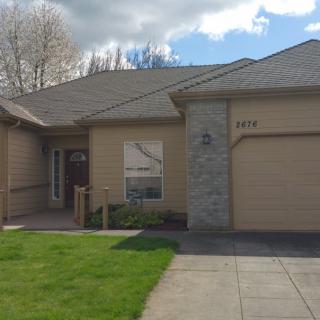
Felicity Haven Adult Foster Home
$3,800 to $4,000 / month2.5 miles away -
About the same

Avery Rose
$3,500 / month22.9 miles away -
About the same
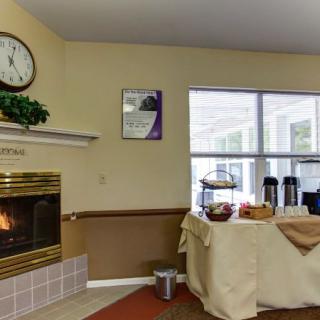
Davenport Place
$3,496 to $3,983 / month15.5 miles away -
from -$615 / mo

The Springs at Sunnyview
$2,885 to $3,640 / month5.4 miles away
Overall Review of A Place Like Home AFH #2
Pros
 Initially, the staff were very nice and helpful, accommodating whatever the family member wanted.
- They reassured the family that the transition from cash pay to Medicaid would be no problem.
Cons
 The staff barely spoke English and had little or no training in caregiving.
- They were trained “on-the-job.”
- They wondered if the staff even had visitor visas (green cards).
- They assured a Medicaid transition would be no problem, but then did everything to make him want to move out.
- They implied the motive was money, saying they needed someone who would pay more for the room.
- They threatened to have a second person move into the room, despite the state limit of five residents.
- When he was moved out, medications in his room should have been locked up, and nearly-expired medication that did not belong to him was given.
- They accused the reviewer of taking mattress pads, which was denied.
- The outcome turned sour, contradicting the initial good impressions.
Review
A Place Like Home AFH #2 in Salem is best positioned for families seeking a low-cost, intimate, home-like setting where a resident can settle in with personal attention in the early months. The model appears to prioritize warmth and accessibility, with staff who respond to preferences and make residents feel welcomed. This can be appealing for someone who mostly needs help with daily living rather than ongoing, high-acuity medical care. The caveat is that this environment relies on informal, on-the-job training and front-line staff who speak limited English. When care needs are modest and family supervision is strong, this can function for a time, but the arrangement quickly exposes vulnerabilities in training, language support, and adherence to care standards.
Who should consider alternatives? Families facing ongoing medical needs, complex medication regimens, or residents who require consistent English-speaking caregiving should look elsewhere. Licensed facilities with certified caregivers, nurses, and standardized training reduce risks and provide predictable care. Prospective residents should also demand transparent policies around Medicaid transitions, room assignments, and medication control. The absence of robust regulatory compliance and the risk that staff communication gaps translate into safety lapses makes options with stronger oversight, larger staff pools, and clear escalation pathways more reliable for long-term stability.
Pros versus cons: The strongest asset is a seemingly supportive, friendlier first impression in which staff appear responsive to preferences. The largest liabilities, however, are structural: minimal formal caregiving training, language barriers among front-line workers, and signs of pressured or inconsistent care practices. The mix creates a scenario where short-term comfort can quickly collide with safety concerns, especially when timely medication administration and secure storage are at stake. The critique about Medicaid transitions, being pushed toward costly arrangements or being deprived of options, adds a troubling financial and ethical dimension that undermines trust. In short, warmth cannot compensate for systemic gaps.
Medication handling is where the clearest red flags emerge: reports of nearly expired meds, meds not belonging to the resident present in the room, and allegations of misplacement or theft. Such lapses undermine safety and create a volatile caregiving environment for anyone with even moderate medical needs. The sense that financial leverage could be used to influence stay duration or payment terms further destabilizes trust and raises questions about resident rights and discharge options. The tight state limit on residents signals occupancy pressure, not patient-first planning, and this pressure can accelerate sloppy practices as the operation scrambles to fill beds.
Practical steps for families considering this community include demanding current, verifiable credentials for all caregivers, a written policy on language support and training standards, and a licensed supervisor overseeing medication administration. Insist on a clear roommate and room-mate policy, and obtain copies of medication storage procedures, MAR records, and up-to-date medication inventories. Request recent inspection reports and references, and insist on a defined trial period with explicit metrics for safety, communication, and satisfaction. If these safeguards cannot be provided, alternatives, such as larger, licensed assisted living facilities or home-care agencies with trained staff, become the prudent choice.
Bottom line: A Place Like Home AFH #2 may appeal to families prioritizing affordable, personal attention and an uncomplicated care profile, provided strong oversight is possible from outside the facility. For anyone with ongoing medical needs, language barriers that impede communication, or a desire for transparent, regulated medication handling, alternatives with certified staff and formal policies are strongly advised. The decision should hinge on whether family members can sustain rigorous oversight and demand robust safeguards; otherwise the risks evident in the current pattern outweigh the potential savings. Informed choices should center on safety, communication clarity, and long-term stability rather than initial warmth alone.
 Board and Care Home
 Private
 Ambulatory care
 Diabetic care
 High acuity care
 Incontinence care
 Medication management







 Understanding Home Health Care: A Comprehensive Guide
 Home Health Care Demystified: A Comprehensive Guide for Families and Caregivers
 Seniors and Modern Transportation: Exploring Uber, Lyft, and Other Ride-Hailing Options