
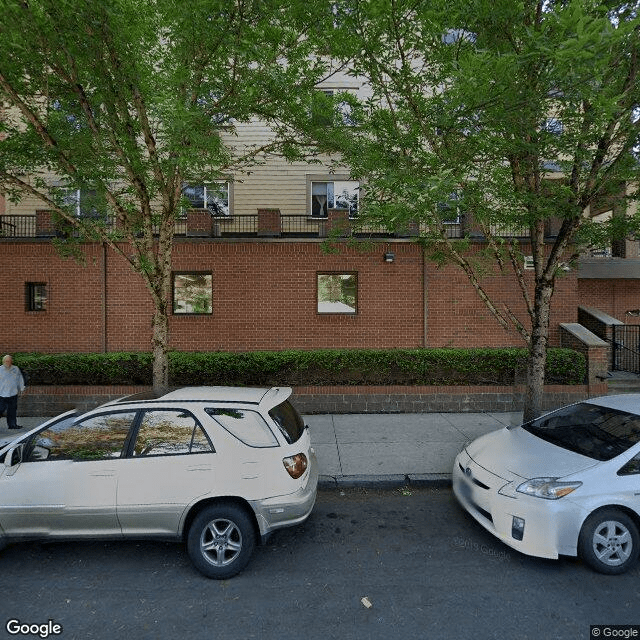
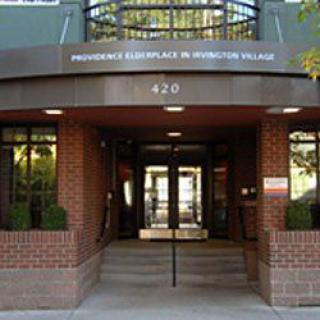
420 NE Mason St, Portland, OR 97211
To contact a resident: (503) 546-9292
For more information about senior living options: (866) 208-4318
Irvington Village Costs & Pricing
Irvington Village offers competitive pricing for residential living compared to the broader market in Multnomah County and the state of Oregon. For instance, the monthly cost of a studio apartment at Irvington Village is $1,900, significantly lower than the county's average of $3,455 and the state average of $3,815. Similarly, a one-bedroom unit is priced at $2,100, again well below the county's rate of $3,402 and Oregon's average of $3,904. Even for private accommodations at Irvington Village, costing $2,570 per month, it remains more affordable than both regional figures - $3,227 in Multnomah County and $3,424 statewide. This makes Irvington Village an attractive option for those seeking quality housing without the premium typically associated with the area.
| Floor plans | Irvington Village | Multnomah County | Oregon |
|---|---|---|---|
| Studio | $1,900 | $3,455 | $3,815 |
| 1 Bedroom | $2,100 | $3,402 | $3,904 |
| Private | $2,570 | $3,227 | $3,424 |
Assisted Living communities with a similar price nearby
-
from +$100 / mo

Markham House
$2,000 to $6,935 / month7.8 miles away -
from -$125 / mo
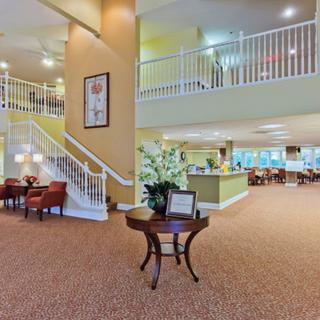
Brookdale Wilsonville
$1,775 to $3,565 / month17.5 miles away -
from +$375 / mo
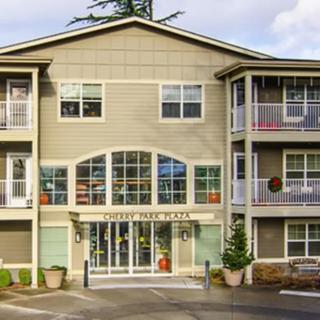
Cherry Park Plaza
$2,275 to $4,250 / month12.7 miles away -
from +$200 / mo
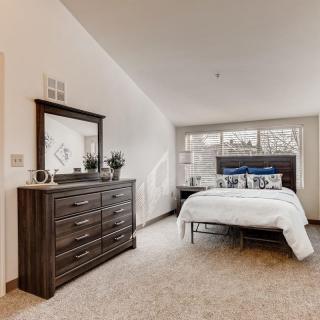
Hawthorne Gardens
$2,100 / month2.9 miles away -
from +$150 / mo
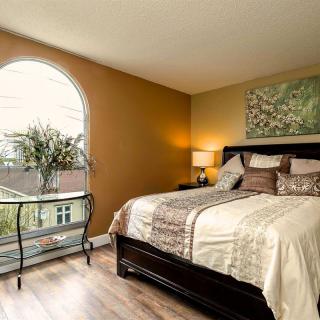
Pacifica Senior Living Calaroga
$2,050 to $3,200 / month1.4 miles away
Overall Review of Irvington Village
Pros
 The facility is described as nice and homey.
- The staff members are very good, kind, and helpful.
- There is an on-site clinic with medical doctors and rehab services.
- Physical therapy is available on site.
- The library and sitting area provide a pleasant space.
- A courtyard area is available, and the community enjoys it.
- Three meals a day are provided.
Cons
 The food at Irvington Village is not very good.
- The rooms themselves are terribly small.
- The facility isn’t well equipped to accommodate many couples.
- There is a long waiting list to get into one of the units.
Review
Irvington Village is best suited for seniors who want a homey, low‑key atmosphere and practical access to care, rather than a flashy, luxury experience. The community tends to attract residents who value a non‑corporate feel, where staff are described as genuinely kind and helpful and where daily life centers on belonging to a small, engaged community. Most units are studios, with only a few one‑bedroom options, and the 104‑unit campus moves at a pace that suits single occupancy more than couples. The on‑site clinic, doctors, and rehabilitation services deliver essential medical continuity without the need to navigate outside providers. For those who want predictable meals, straightforward social spaces, and dependable support, Irvington Village checks the right boxes.
Those considering alternatives should note that the same traits can become constraints for some residents. Couples who want to share a living space may find the studios too tight, and the building isn’t set up for easy dual occupancy. A longer waitlist for standard units means planning ahead is essential, and the absence of in‑unit cooking facilities limits independence for anyone who prefers to prepare meals. If private apartment space, a broader culinary toolkit, or a more restaurant‑quality dining experience matters, look beyond this campus. Families prioritizing maximum personal freedom, or seeking a more contemporary, less apartment‑style layout, will likely prefer other options in the area.
Yet the strongest positives, friendly staff, a homelike vibe, and robust on‑site care, tend to offset many drawbacks. The ability to access medical doctors and rehabilitation right in the building reduces the friction of aging in place and supports recovery with familiar faces nearby. Social amenities, such as a library, a comfortable sitting area, and a courtyard where residents casually gather, foster routine and companionship that many families expect from assisted living. Three meals a day provide dependable nutrition and structure, even if the meals themselves aren’t gourmet. In short, the convenience of care paired with a warm, small‑community atmosphere often delivers a steadier daily life than larger, more impersonal campuses.
The unit mix and space realities are not minor: 104 units total, mostly studios, with just a handful of true bedrooms, creates a bottleneck for couples or anyone needing more private space. The rooms are described as small, which can feel cramped for two, and the layout isn’t ideal for couples who want to share a bedroom or a living area. The long wait list compounds the issue, turning a potential move into a months‑long process. For single residents or those who value mobility and social access over square footage, the stock and turnover may be workable; for couples or dementia care scenarios requiring more separation or larger common areas, this may be a hard constraint.
Medical visibility is Irvington Village’s core strength. The in‑building clinic, available doctors, and rehabilitation services such as physical therapy position the community as a practical choice for those with ongoing health needs or recovery goals. Staff friendliness enhances safety and daily comfort, turning what could be a sterile medical experience into a supported, human environment. These elements are especially valuable for families seeking continuity of care, as transitions between services stay centralized and predictable. The downside remains that medical routines occupy space and pace the day, which is less appealing for residents who want fully autonomous living.
Bottom line: Irvington Village serves as a practical, community‑driven option for seniors who prize support, social connection, and predictable meals over expansive private space or refined dining. It is less suitable for couples seeking larger homes, for residents desiring in‑unit cooking, or for those who require a high level of culinary variety. Pros like the warm staff, accessible healthcare, and intimate campus life largely offset the compact units and the waitlist, but families should enter with a clear sense of priorities and a storyboard for the move. A visit with floor plans, a candid talk about room size, and a discussion of move‑in timelines will reveal whether this is the right fit, or whether a larger, more independent option should be pursued.
 Assisted Living
 Activities on-site
 Devotional services off-site
 Indoor common areas
 Portland International (4 miles away)
 Ambulatory care
 Diabetic care
 Meals provided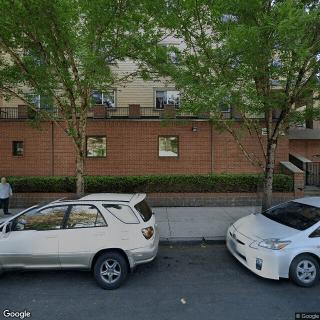



 Assisted Living Support for Veterans: A Complete and Detailed Overview
 Exploring the Contrasts Between Assisted Living and Skilled Nursing
 8 Key Indicators That Suggest It May Be Time to Transition from Assisted Living to Skilled Nursing Care