
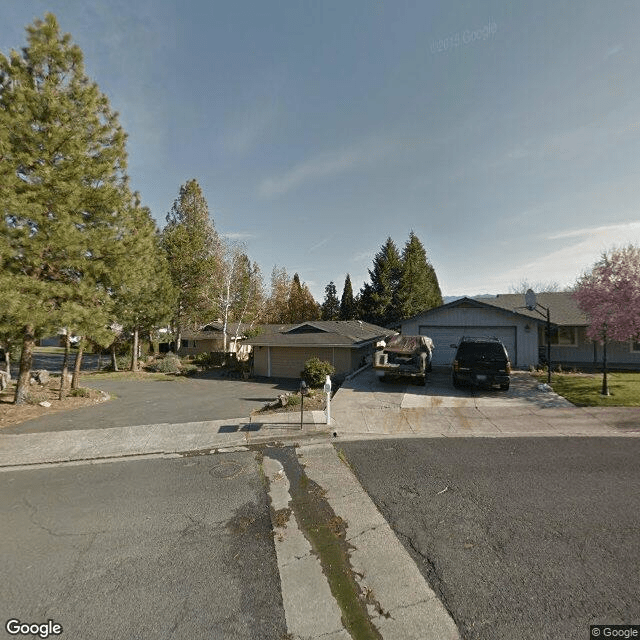
480 Piccadilly Circle, Medford, OR 97504
To contact a resident: (541) 858-1070
For more information about senior living options: (866) 208-4318
Piccadilly Circle Adult Foster Home Costs & Pricing
Piccadilly Circle Adult Foster Home offers a range of competitive pricing for its residents, especially when compared to both Jackson County and the broader state of Oregon. For a studio room, residents can expect to pay $2,120 per month, significantly lower than the county average of $4,239 and the state average of $3,815. The one-bedroom option at Piccadilly Circle is priced at $2,790, again offering notable savings compared to Jackson County's $4,461 and Oregon's $3,904. Even for private rooms and two-bedroom accommodations - priced at $3,000 and $3,290 respectively - Piccadilly Circle remains more affordable than the higher costs found in both the county and statewide averages. These pricing structures highlight Piccadilly Circle as an economically appealing choice for adult foster care without compromising on quality.
| Floor plans | Piccadilly Circle Adult Foster Home | Jackson County | Oregon |
|---|---|---|---|
| Studio | $2,120 | $4,239 | $3,815 |
| 1 Bedroom | $2,790 | $4,461 | $3,904 |
| Private | $3,000 | $3,899 | $3,424 |
| 2 Bedrooms | $3,290 | $6,695 | $4,436 |
Senior living communities with a similar price nearby
-
from +$180 / mo

Barnett Woods
$2,300 to $2,750 / month0.5 miles away -
from +$375 / mo
Weatherly Inn
$2,495 to $6,000 / month2.6 miles away -
from +$287 / mo

Avamere at Waterford
$2,407 to $3,518 / month1.8 miles away -
from +$70 / mo

Serenity Harbor AFH
$2,190 to $3,800 / month0.6 miles away
Overall Review of Piccadilly Circle Adult Foster Home
Pros
Cons
 The reviewer believes the restaurant intentionally makes its customers sick.
- The meat loaf tonight caused the reviewer to vomit.
- The reviewer views the meals as unsafe for consumption.
Review
Piccadilly Circle Adult Foster Home in Medford is best suited for families seeking a very small, home-like living arrangement where daily life can be tailored to individual routines and personal attention is plausible due to a low resident count. The model typically promises intimate interaction with caregivers and a setting that feels more like a private residence than a larger campus. However, the sole consumer report raises a grave concern that cannot be dismissed and must be weighed heavily in any decision.
Those who should consider alternatives are families for whom health and safety in dining are nonnegotiable. If transparent food preparation, consistent menu quality, and robust oversight matter, pursue alternatives such as licensed assisted living facilities with proven inspection histories or other adult foster homes that provide documented compliance and multiple independent reviews. The absence of corroborating testimony, coupled with a single troubling claim, makes it essential to demand verifiable safeguards before committing.
The main con exposed by the report centers on a striking allegation about meal safety. A resident reportedly became ill after a meat loaf meal, with the complaint framed as a deliberate harm rather than an isolated kitchen mishap. This kind of claim, whether fully substantiated or not, signals potential gaps in food sourcing, preparation, sanitation, and staff training. In a setting this small, even a single lapse can indicate systemic vulnerabilities, and the absence of additional confirmations makes the risk harder to gauge. The danger is not merely personal discomfort; it implicates ongoing health risk for vulnerable residents.
The potential advantages of a close-knit, personalized care model are real and meaningful, but they do not automatically compensate for a credible food-safety concern. A tiny, attentive staff can mean quicker responses to requests, more flexible meal accommodations, and amplified resident comfort. Yet those positives are undermined if meals routinely fail basic safety standards or if there is perceived or real intent behind harmful practices. For families seriously evaluating this option, the critical insight is to test the dining operation head-on: obtain a current menu, request to review the kitchen staffing and training records, verify health department licenses, and insist on direct confirmation of each recent inspection outcome. Without transparent food-safety practices, the value of intimate care collapses.
Practical due diligence is non-negotiable. Arrange an on-site mealtime observation to assess food handling, hygiene, and portion controls; request copies of the latest health inspection, licensing, and any incident reports; speak with current residents about meal experiences and safety concerns; review staff credentials, background checks, and ongoing training. Demand an open line of communication about dietary accommodations, allergy management, and how feedback is addressed. Consider a trial stay or sitter-supported visits to gauge daily routines, response times, and whether changes are implemented promptly when concerns arise. Above all, insist on written assurances that food-safety standards meet or exceed state requirements and are consistently maintained.
In the end, the strongest action is a cautious, data-driven approach that prioritizes verifiable safety over intimate setting alone. Given the negative report and the absence of corroborating evidence, this community warrants a high threshold of scrutiny before placement. Explore safer, well-documented alternatives first, and only pursue this AFH if comprehensive, independent confirmations of dining safety and facility oversight are provided. When proceeding, secure clear, enforceable guarantees and concrete monitoring to ensure that the claimed intimate care does not come at the expense of essential health protections.
 Board and Care Home
 Bath tubs
 Devotional services off-site
 Indoor common areas
 Outdoor common areas
 Private
 Respite or short term stays offered
 Wheelchair accessible showers
 Rogue Valley International (4 miles away)
 Diabetic care
 High acuity care
 Incontinence care
 Medication management
 Meals provided
 Affordable private rooms ($3,500/mo) with diabetic care, engaging activities, and convenient access to nearby amenities and healthcare.





 Encouraging Participation in Adult Day Care: A Guide to Supporting a Hesitant Parent
 Comprehensive Exploration of Living Wills and Other Advance Directives
 A Detailed Exploration of Living Wills and Advance Directives