
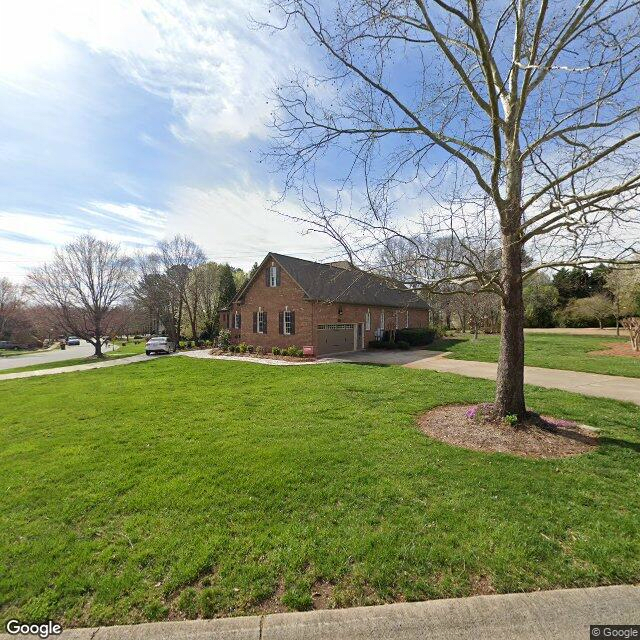
12001 Olympic Club Drive, Charlotte, NC 28277
To contact a resident: (704) 814-6929
For more information about senior living options: (866) 208-4318
Grandma's House Costs & Pricing
At Grandma's House, the monthly costs reflect a competitive pricing structure when compared to both Mecklenburg County and the broader North Carolina state averages. For a semi-private room, residents pay $4,000, which is notably lower than the county average of $4,191 and provides an attractive option for families seeking quality care without exceeding budget constraints. In terms of private accommodations, Grandma's House charges $4,900 - slightly above the county rate of $4,417 yet closely aligned with the state average of $4,425. This positioning highlights Grandma's House as a viable choice for those looking for personalized care in a nurturing environment while remaining mindful of overall affordability in comparison to local and state benchmarks.
| Floor plans | Grandma's House | Mecklenburg County | North Carolina |
|---|---|---|---|
| Semi-Private | $4,000 | $4,191 | $3,584 |
| Private | $4,900 | $4,417 | $4,425 |
Senior living communities with a similar price nearby
-
from -$300 / mo
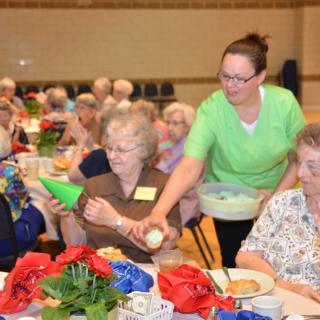
Wellness Watchers - Matthews, NC
$3,700 / month9.1 miles away -
About the same

UP at 14009 Thompson
$4,000 to $5,000 / month9.8 miles away -
from -$200 / mo
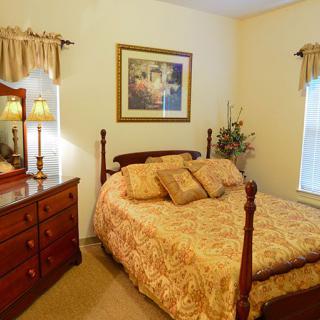
Lancaster Grove Senior Living
$3,800 to $6,825 / month20.3 miles away -
from -$500 / mo

The Ivey- Adult Day Services
$3,500 to $4,500 / month8.3 miles away -
from -$500 / mo

Liberty Family Care
$3,500 to $5,500 / month8.2 miles away
Overall Review of Grandma's House
Pros
 Director is such a joy.
- An absolutely beautiful home.
Cons
 The price is a little high for her budget.
Review
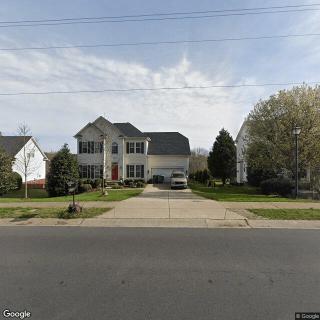
Grandma’s House in Charlotte, NC is best suited for families seeking a warm, intimate, home-like environment where personality and charm carry real weight in daily life. The single testimonial emphasizes a beautifully kept home and a director who is a genuine, joyful presence. It reads as a small, human-scale setting rather than a clinical or impersonal facility, with clear emphasis on personal connection and a felt sense of pride in the living space. For seniors who prize atmosphere and a cheerful, approachable leadership style, this community offers a compelling proposition that centers on heart and hospitality as much as on care tasks.
Those evaluating alternatives should consider budget sensitivity and the scope of services as primary decision factors. The review notes that the price point is “a little high for her budget,” signaling that affordability can become a decisive constraint for many families. If the budget is fixed or tight, or if there is a need to maximize value for every dollar, whether through all-inclusive pricing, shorter-term stays, or more predictable monthly costs, other options with different pricing structures or larger economies of scale may deserve a closer look. A prudent approach is to compare comprehensive cost sheets and what is included (meals, activities, transportation, staffing levels) before proceeding.
The strongest pro, the director’s engaging, positive presence, must be weighed against the financial consideration. The director’s warmth and the veteran sense of a comfortable, welcoming home are the kind of leadership that often translates into smoother transitions, meaningful daily routines, and attentive family communications. This is not a facility measured by clinical metrics alone; it is judged by the quality of daily interaction and the ease with which families feel confident that their loved one is accounted for and treated with respect. When those intangible benefits align with a budget that a family can sustain, the setting becomes a natural fit.
Where the analysis tends to falter is in the absence of detailed service information. Prospective residents and families should seek clarity on staffing ratios, level of personal assistance available, medication management, and what specific caregiver supports are included in the stated price. The beauty of the home and the director’s charisma are meaningful, but real-life care requires reliable staffing, predictable routines, and transparent cost structures. To convert a favorable impression into a solid decision, demand a tour that includes conversations with direct caregivers, a review of daily schedules, and sample menus that reflect the home-like ethos described in the testimonial.
From a decision-making standpoint, Grandma’s House should be evaluated against similar intimate, residential settings in the area. The key comparison points include how much value is added by the environment and leadership versus what is offered at competing homes with perhaps broader activity calendars, more formal programming, or different pricing models. The takeaway is practical: if the aim is a heartfelt, aesthetically pleasing small home with a leader who knows residents by name, this option is hard to beat. If instead, the priority is long-term predictability of costs, or care needs that may escalate and require more formalized medical oversight, a careful price-and-service comparison may push families toward alternatives.
In sum, Grandma’s House stands out for a few core reasons: a beautiful, homelike setting and a director who can positively shape the daily experience, making residents feel seen and valued. The main caveat is budget alignment, without a budget cushion, the elevated cost becomes a meaningful barrier. For families who can balance price with the promise of genuine warmth and personal attention, this community can deliver a deeply reassuring living chapter. For those who must push further on pricing or who anticipate evolving care needs, exploring comparable small homes or larger campuses with transparent pricing and clearer service packages is strongly advised. A decisive next step is a personal visit to measure alignment of budget, expectations, and the lived reality of daily life under the director’s leadership.
 Board and Care Home
 Private
 Charlotte Douglas International (15 miles away)
 Diabetic care

 Managing Nursing Home Expenses After Medicare Coverage Ends
 Is a Geriatric Care Manager the Right Choice for Your Family?
 Compassionate Conversations: How to Comfort Someone Who Is Grieving