

65 Lisa Drive, Northport, NY 11768
For more information about senior living options: (866) 208-4318
Dawn Hill Adult Home Costs & Pricing
Dawn Hill Adult Home offers competitive pricing for its accommodations when compared to both Suffolk County and the broader New York state averages. For a two-bedroom unit, residents can expect a monthly cost of $2,800, significantly lower than the county's average of $6,101 and the state average of $4,786. Semi-private rooms at Dawn Hill are priced at $3,000, which is well below Suffolk County's average of $3,706 and New York's statewide rate of $4,389. For those preferring studio apartments, Dawn Hill's fee of $3,200 again stands favorably against local and state averages - $5,129 in Suffolk County and $4,532 across New York. Overall, Dawn Hill Adult Home provides affordable options amidst the higher costs typically associated with senior living in the region.
| Floor plans | Dawn Hill Adult Home | Suffolk County | New York |
|---|---|---|---|
| 2 Bedrooms | $2,800 | $6,101 | $4,786 |
| Semi-Private | $3,000 | $3,706 | $4,389 |
| Studio | $3,200 | $5,129 | $4,532 |
Assisted Living communities with a similar price nearby
-
from +$200 / mo
The Kensington White Plains
$3,000 to $6,588 / month20.6 miles away -
from -$220 / mo
Sunrise of Dix Hills
$2,580 to $6,000 / month5.3 miles away -
About the same

Atria Huntington
$2,795 to $4,095 / month4.7 miles away -
from -$400 / mo
Babylon Beach House
$2,400 to $7,082 / month14.5 miles away -
from -$300 / mo
The Mews
$2,500 to $3,400 / month17.1 miles away
Overall Review of Dawn Hill Adult Home
Pros
 The owner cares deeply about the residents.
- The residents and the owner are like one big happy family.
Review
Dawn Hill Adult Home in Northport, NY is best suited for seniors who want a tightly knit, home-like living environment where the owner is deeply involved and residents feel like family. This setting rewards those who value personal attention, a warm daily rhythm, and a sense of belonging over the impersonal feel of larger facilities. It is particularly appealing for residents who do not require the highest level of medical oversight and who appreciate easy access to a familiar, conversational routine in a small, intimate setting.
For families weighing choices, those needing extensive on-site medical services, round-the-clock nursing supervision, or specialized memory care should consider alternatives. Larger assisted living campuses or dedicated memory care communities typically offer broader clinical resources, structured programming, and more predictable staffing patterns. If clear pricing transparency, a wider array of on-site amenities, and formalized care pathways are priorities, these factors may tilt the decision toward a bigger provider.
The strongest pro is unmistakable: the owner’s genuine care and the sense that residents and owner function as one extended family. That dynamic tends to translate into attentive, responsive day-to-day support, with issues likely addressed quickly and with a personal touch. The warmth of the environment can foster trust, reduce social isolation, and create a feel of security where residents aren’t just occupants but known individuals who matter to the household. This relational strength can be the decisive factor for families seeking peace of mind through people-centric care.
However, the review offers no detail on staffing levels, nighttime availability, or the breadth of services beyond the obvious warmth. Missing information about transportation, meal variety, housekeeping standards, medication management, and emergency procedures means families must actively verify these operational basics. In practical terms, that absence signals potential gaps for residents who require substantial daily support, frequent medical oversight, or consistent, predictable programming. Those gaps aren’t fatal but are critical to assess in person.
When the positives are weighed against these potential gaps, the owner-led, intimate setting can offset limitations through trust, flexibility, and a tailored daily routine. The personal attention that comes from a smaller operation often means requests are accommodated more readily, and changes can be implemented with less bureaucracy. For seniors who prize belonging and direct access to the person overseeing care, this environment can outperform larger communities that feel less personal, even if they offer more structured programming.
Ultimately, families evaluating Dawn Hill should approach with a practical checklist. Schedule a visit to observe day-to-day interactions between residents and the owner, and ask to meet any other staff who would support care needs. Request a sample menu and an activities calendar, and obtain written details about what's included in the monthly fee, transportation options, housekeeping and laundry, medication administration, and emergency procedures. Compare these details against alternatives with a clear, side-by-side assessment to determine where comfort, safety, and measurable needs align best. Dawn Hill presents a compelling choice for those prioritizing warmth and close community ties, while alternatives may be preferable for those requiring broader clinical resources and formalized care pathways.
 30 resident community capacity
 Assisted Living
 Respite Care
 Activities off-site
 Beauty salon
 Cable or satellite TV
 Devotional services off-site
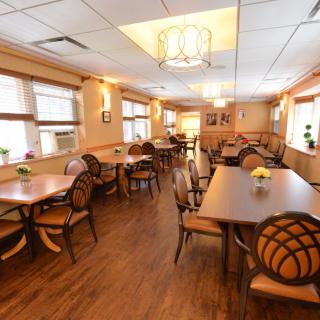
 Dining room
 Fully furnished
 Garden
 Housekeeping services
 Indoor common areas
 Kitchenette
 Move-in coordination
 Outdoor common areas
 Restaurant-style dining
 Small library
 Telephone
 Wi-Fi/high-speed internet available
 Long Island - MacArthur (15 miles away)
 24-hour call system
 Ambulatory care
 Assistance with bathing
 Assistance with dressing
 Assistance with transfers
 Diabetes diet
 Diabetic care
 Medication management
 Mental wellness program
 Special dietary restrictions



 Assisted Living Expenses and Long-Term Care Insurance: A Comprehensive Exploration
 Securing Financial Support for Assisted Living: A Comprehensive Overview
 Social Security Benefits and Assisted Living: Navigating Options Across the U.S.