

104 S Park Ave, Aztec, NM 87410
To contact a resident: (505) 333-2604
For more information about senior living options: (866) 208-4318
Overall Review of Crane's Roost Care Home
Pros
 The staff demonstrated unparalleled care and compassion for the father from admission to his passing.
- They were exceptionally accommodating to the mother and family’s needs.
- Kelly Armstrong, the owner, went above and beyond to ensure the family received the necessary support.
- The entire staff’s unwavering dedication is sincerely appreciated.
- Crane's Roost is presented as the best care home in the Four Corners, with a compassionate, patient, communicative, and thorough team.
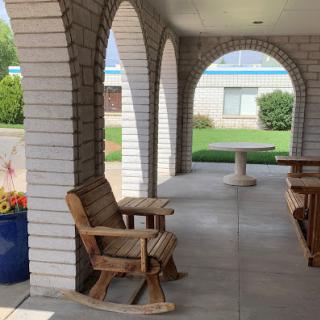
- The facility is clean and feels like a home, and the staff cared for the loved one like family.
Cons
 The management/ownership is described as unprofessional.
- They did not provide the appropriate 30 days' written notice to move their father to a different facility.
- There was effectively no notice given, which was against state law.
- Staff repeatedly asked to move him today, rather than honoring the required notice period.
- The reviewer was not impressed by these actions.
Review
Crane's Roost Care Home in Aztec, NM is best suited for families seeking a small, home-like setting where daily care feels genuinely personal and staff engagement is deeply human. This community excels for residents who benefit from close, continuous caregiver relationships, honest and open communication, and a sense of belonging that mirrors a family atmosphere. It is especially appropriate for end-of-life scenarios or short-stay hospice-like care where during-visit support and compassionate presence matter as much as clinical attention. Those who require a highly procedural, impersonal, or institution-like environment may want to explore alternatives. For families prioritizing warmth, accessibility, and a staff that treats residents like kin, Crane's Roost stands out as a compelling option.
The strongest positives emerge from the caregiving culture. Staff are repeatedly described as compassionate, patient, communicative, and thorough, delivering care that feels attentive and individualized. The owner, Kelly Armstrong, is highlighted as a driving force in ensuring families receive needed support, going beyond ordinary expectations. The facility itself is portrayed as clean and home-like, reinforcing the impression that residents live in a dwelling rather than a hospital. This combination, dedicated frontline caregivers paired with active owner involvement, tends to lessen family anxiety and fosters trust that the resident’s daily routine will be met with dignity and kindness.
However, a notable warning sits alongside the praise: management and administrative processes. One review flags unprofessional handling of transfers, specifically a lack of proper notice and an apparent deviation from state law mandating a 30-day written notice. While care quality at the bedside may be excellent, leadership gaps can create real risk during transitions, complicate planning, and erode confidence in the placement. This incongruity between the warmth of caregiving and the potential fragility of governance is an important tension to recognize when evaluating suitability.
Ultimately, the strong care environment can offset the chief drawbacks only when the governance framework is clarified and reliable. For families that can secure explicit transfer policies, written notices, and predictable decision-making processes, Crane's Roost offers an unusually favorable balance of humane daily care and a comforting, home-like setting. The contrast between exceptional frontline service and inconsistent administrative reliability means the decision hinges on an appetite for managing potential administrative risk. Prospective residents should press for concrete policies, demand transparency about transfers, and verify alignment between caregiving excellence and governance discipline.
This community is worth considering for families who can tolerate occasional leadership gaps in exchange for standout frontline care. Those prioritizing strict regulatory compliance, formalized timelines, and highly predictable transitions may wish to compare other options with documented transfer procedures and stronger administrative accountability. If the resident’s needs include longer-term medical coordination or a setting with rigorous discharge planning, exploring alternatives with more clearly defined governance may be prudent. The key is to balance the evident kindness and attentiveness of staff with a clear, reliable framework that holds leadership accountable.
Practical next steps solidify the decision: visit to observe daily routines and interactions, and speak directly with both the owner and caregiving staff about admission, transfer, and notice policies. Request written documentation of current procedures, licensing status, and any recent regulatory actions. Seek references from other families about how transfers were handled and whether communication remained consistent through transitions. If possible, arrange a trial stay to assess fit, and obtain a transparent breakdown of costs and care-plans to ensure the warmth of the staff is matched by dependable, governable processes.
 Board and Care Home



 Navigating Medicare Coverage for In-Home Care Services
 In-Home Care Costs in 2025: A Detailed State-by-State Exploration
 Understanding Home Health Care: A Comprehensive Guide