
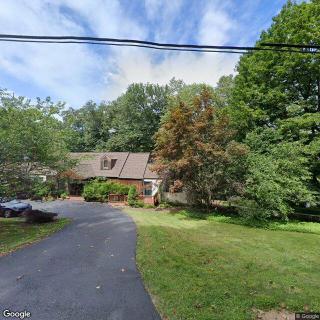
19 Spruce Run Rd, Glen Gardner, NJ 08826
To contact a resident: (908) 537-4113
For more information about senior living options: (866) 208-4318
Newton's Guest Home Costs & Pricing
Newton's Guest Home offers a competitive pricing structure when compared to both Hunterdon County and the broader New Jersey market. For semi-private accommodations, residents pay $2,000 per month, which is significantly lower than the county average of $3,320 and the state average of $5,068. Similarly, for those seeking private rooms, the monthly fee is set at $2,500 - again more affordable than Hunterdon County's average of $2,350 and considerably less than the state's higher average of $5,799. This pricing positions Newton's Guest Home as an attractive option for individuals looking for quality care without the premium costs typically associated with assisted living facilities in the region.
| Floor plans | Newton's Guest Home | Hunterdon County | New Jersey |
|---|---|---|---|
| Semi-Private | $2,000 | $3,320 | $5,068 |
| Private | $2,500 | $2,350 | $5,799 |
Senior living communities with a similar price nearby
-
from +$200 / mo
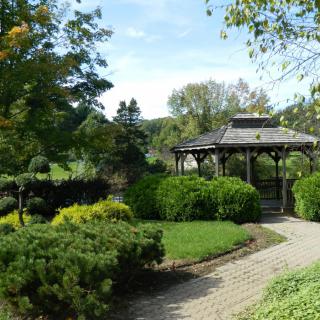
Colonial Manor at Panther Valley
$2,200 to $3,400 / month14.3 miles away -
from -$100 / mo
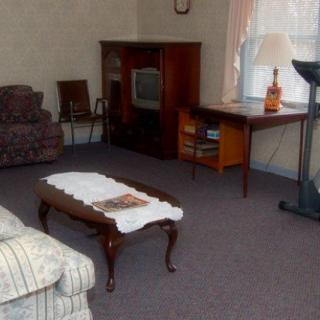
Walden III
$1,900 to $3,200 / month21.4 miles away -
from +$360 / mo
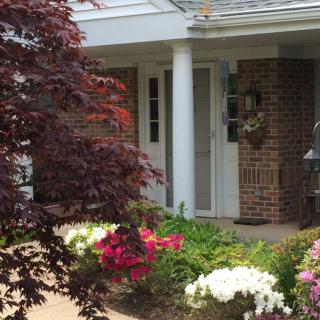
Laurel Circle
$2,360 to $3,464 / month20.1 miles away -
from +$287 / mo

Abington Manor
$2,287 / month14.5 miles away -
About the same
Cobblestone Residential Health
$2,000 / month15.2 miles away
Overall Review of Newton's Guest Home
Pros
 The owner and staff are very knowledgeable and compassionate.
- Their clients' loved ones become part of their extended family.
- They provide the special attention that is important to their clients.
- The business has been family-owned and operated since 1973.
Review
Newton's Guest Home in Glen Gardner, NJ is best suited for families seeking a small, family‑owned, home‑like setting where residents are treated as extended family and where the care team knows each resident’s story. The environment rewards personal connections, with staff and ownership delivering knowledgeable, compassionate care rooted in long-standing community presence. The home’s lineage, family‑run since 1973, signals consistency, accountability, and a culture that prioritizes individual attention over corporate rigidity. For seniors who value warmth, predictability, and a trusted caregiver relationship built over years, this is a compelling match.
Those weighing options should consider alternatives if medical complexity or scale matters more than intimacy. A smaller, family‑operated home may not deliver the level of on‑site nursing, specialized therapies, or extensive activity programming that larger communities provide. Families with residents needing intensive medical oversight, memory‑care programming, or a broad continuum of services may find it essential to verify exact capabilities, after‑hours coverage, and access to affiliated professionals. In short, if a highly structured program, broad amenities, or robust transportation networks are non‑negotiable, a larger facility could be more appropriate.
The strongest advantages center on the staff’s knowledge and compassionate approach. When caregivers treat residents as members of an extended family, daily routines feel individualized rather than commodified, safety checks become seamless, meals reflect personal preferences, and moments of choice are honored. The owner’s direct involvement reinforces reliability and responsiveness, translating into quicker resolution of concerns and a palpable sense of trust for families. The enduring, family‑owned model further supports steady staffing culture; residents and families encounter fewer disruptive handoffs, which can be especially meaningful for those who prize continuity and personal connection.
Because the testimonial highlights only positives, it’s prudent to acknowledge potential questions that naturally arise. Prospective residents should seek concrete details about daily life: what a typical day looks like, how medical oversight is structured, how medications are managed, and how emergencies are handled after hours. The size and intimate setting can limit the breadth of activities, specialized equipment, or on‑site therapies, so verifying offerings in line with personal interests and care needs is essential. Price transparency matters as well, since inclusions and add‑ons can vary; families should confirm what is included in monthly fees and what might incur additional charges.
Yet the core strengths, personal attention, a sense of belonging, and owner-led accountability, often offset these potential gaps. The intimate setting can reduce miscommunication and simplify care coordination, while the stability of a long‑standing family operation tends to yield consistent expectations and a dependable caregiving ethos. For a senior whose needs are modest but require daily assistance and strong emotional support, Newton’s Guest Home can deliver a dignified, low‑stress living experience with a genuine sense of community. The decisive factor is ensuring that the care level and budget align with the resident’s trajectory and preferences, and that the home’s offerings can scale gracefully if needs evolve.
In the end, families evaluating Newton's Guest Home should organize a focused visit designed to uncover practical truths: staffing patterns, night coverage, meal customization, activity depth, transportation options, and the specifics of care planning. Request a sample weekly schedule, ask to meet the care team, and discuss how plans are updated as the resident’s condition changes. If the resident values a home‑like atmosphere, regular personal contact, and a philosophy of care rooted in familial trust, this community presents a practical and prudent choice. The fit hinges on confirming alignment between care needs, the anticipated budget, and the continuity of the intimate, compassionate caregiving that defines Newton’s Guest Home.
 Board and Care Home
 Activities off-site
 Beautician on-site
 Devotional services off-site
 Indoor common areas
 Outdoor common areas
 Private
 Private bathrooms
 Diabetic care
 Meals provided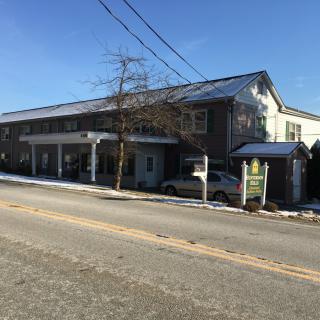
 Financing Long-Term Nursing Home Care Through Social Security: A Thorough Exploration
 Essential Knowledge on Pneumonia in Older Adults
 Exploring Palliative Care in the Home: A Comprehensive Overview