1 South Imeneau Lane, Swanzey, NH 03446
For more information about senior living options: (866) 208-4318
Overall Review of The Carpenter Home
Pros
 The people are good.
- Carpenter Home is a unique place held together by Donna Allen and nine licensed nursing assistants.
- It is a true home for residents who need care.
- The staff are caring and treat residents with respect and patience.
- It offers an active recreation program and outdoor opportunities for residents in warm weather.
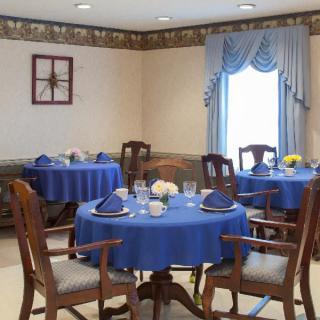
- It creates a family environment, serves home-cooked meals, offers activities, and welcomes community involvement.
- Most rooms are private and more affordable than other facilities.
- The staff is highly praised and the facility is highly recommended for a loved one who needs an assisted living facility.
Review
The Carpenter Home in Swanzey, NH is best suited for seniors who want a genuinely home-like assisted living experience where care feels personal and daily life carries a warm, familial rhythm. It works well for residents who need hands-on assistance with activities of daily living, bathing, dressing, laundry, and housekeeping, and who prize private rooms, home-cooked meals, and a setting that prioritizes relationship-building over showroom polish. The atmosphere is intimate, with residents engaged in everyday moments and shared laughter, making it a practical sanctuary for those who value steady routines, personal attention, and a sense that “home” really means being known and cared for every day.
Families should explicitly consider alternatives if the priority centers on clinical intensity or upscale amenities. For seniors requiring around-the-clock medical oversight, constant physician presence, or a facility with expansive memory-care programming, The Carpenter Home may not satisfy those needs. Similarly, if the goal is a resort-like environment with a broad menu of high-end services and accommodations, larger campuses with more diversified on-site resources will be a more suitable match. In short, the home’s charm and practicality come with tradeoffs that many higher-end or more medicalized settings are designed to minimize.
The strongest pros reinforce the decision to choose a home-like community. A key strength is the care team, dedicated LNAs and the family founders who have kept the operation focused on real people and real needs rather than corporate formality. Residents experience genuine camaraderie, as demonstrated by the general mood and the eight- to ten-person social energy described in reviews, including lively activities and outdoor opportunities when weather permits. The program emphasizes a holistic approach: meals that feel homemade, a structured daily routine that attends to physical, emotional, and recreational needs, and a willingness to involve the broader community in residents’ lives. Private rooms and an affordable pricing structure amplify the appeal, making reliable, respectful care accessible without the financial strain common in more luxurious settings.
Yet the cons, though few, are meaningful for certain families. The setting is not a high-end showcase; the charm lies in authenticity rather than marble and glass, which may disappoint those who equate quality with opulence. There is an implied tradeoff in clinical depth and breadth of services, since the home relies on a hands-on, intimate model rather than a large staff of specialists or a full slate of advanced therapies. While daily care tasks are well covered, the absence of explicit, on-site medical teams or dementia-specific programming could leave some families seeking more structured clinical support wishing for more. Those who want a facility with abundant on-site programming and expansive amenities should be prepared for a different, bigger environment.
Balancing strengths against the limitations, The Carpenter Home often wins on the most practical axes: warmth, continuity, and control over everyday life. The personal attention provided by staff translates into predictable, dependable routines that minimize the anxiety many families feel about aging in place. The intimate setting helps residents maintain dignity and autonomy within clearly defined care boundaries, while the home-cooked meals and the option to engage with the community create meaningful daily purpose. Affordability is not merely a lower price point; it translates into ongoing access to high-quality, attentive care without the financial stress that accompanies more upscale options. When these relational and economic advantages align with a family’s priorities, the pros more than offset the drawbacks.
For families navigating this decision, a practical approach is essential. Begin with a visit focused on human connection: observe how staff interact with residents, test how crises are handled in real time, and listen to current residents and family members about day-to-day life. Confirm private-room availability and obtain a clear understanding of what is included in the rate, plus any additional costs. Evaluate whether on-site clinical needs are likely to arise and how they would be addressed, whether through referrals, partnerships, or an in-house capability, if available. If memory care or extensive medical oversight will be prominent, explicitly verify the facility’s capacity in those areas. If warmth, routine, and a sense of home trump luxury and breadth of services, The Carpenter Home stands out as a practical, well-grounded choice that keeps aging in place both dignified and approachable.
 22 resident community capacity
 Assisted Living
 Board and Care Home
 Beauty salon
 Cable or satellite TV
 Dining room
 Fully furnished
 Garden
 Housekeeping services
 Kitchenette
 Move-in coordination
 Outdoor space
 Telephone
 Wi-Fi/high-speed internet available
 24-hour call system
 Activities of daily living assistance
 Assistance with bathing
 Assistance with dressing
 Assistance with transfers
 Diabetes diet
 Meal preparation and service
 Medication management
 Mental wellness program
 Special dietary restrictions
 Transportation arrangement (medical)
 Transportation to doctors appointments


 Vibrant Senior Living: A Comprehensive Guide for Active Older Adults
 When to Transition from Assisted Living to Memory Care: Key Indicators, Steps, and Finding the Right Community
 Assisted Living and Memory Care: Understanding Their Core Differences