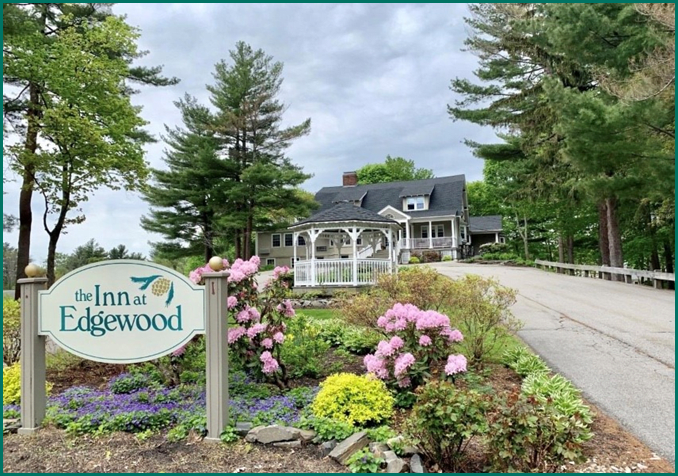
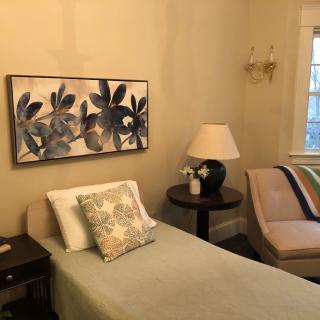
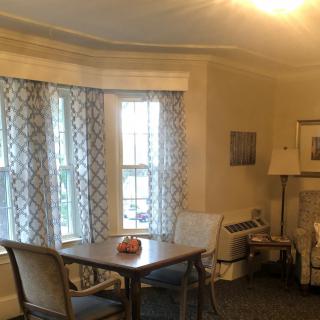
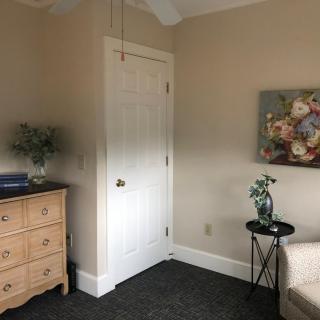
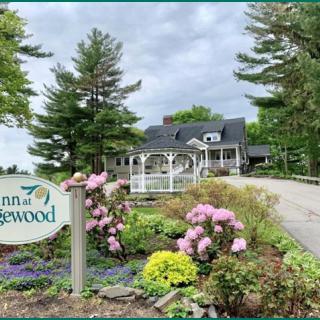
936 South Street, Portsmouth, NH 03801
To contact a resident: (603) 431-5327
For more information about senior living options: (866) 208-4318
The Inn At Edgewood Costs & Pricing
The Inn At Edgewood offers competitive pricing for its accommodations in comparison to the broader market of Rockingham County and the state of New Hampshire. For a studio apartment, residents can expect a monthly cost of $4,500, which is notably lower than the county average of $5,403 and state average of $5,346. Similarly, the 1-bedroom units at The Inn are priced at $4,650 - more affordable than both Rockingham County's average of $5,528 and New Hampshire's statewide figure of $4,444. This makes The Inn At Edgewood an appealing option for those seeking quality housing while enjoying cost efficiencies in a vibrant community setting.
| Floor plans | The Inn At Edgewood | Rockingham County | New Hampshire |
|---|---|---|---|
| Studio | $4,500 | $5,403 | $5,346 |
| 1 Bedroom | $4,650 | $5,528 | $4,444 |
Overall Review of The Inn At Edgewood
Pros
 The Inn is described as a hidden gem with every category rated five.
- It provided great value, and the staff became like family.
- The staff offered heartfelt support when the mom passed, sharing in the family's grief.
- The mom enjoyed individualized time with the staff, with conversations that kept her comfortable and gave her the time of her life.
- The staff stayed in touch afterward, with some becoming like sisters, and the overall experience is celebrated as extraordinary.
Cons
 None found in the provided review.
Review
The Inn At Edgewood in Portsmouth is best suited for seniors who want a small, intimate environment where relationships drive daily life. This community excels when families seek a place that treats residents like individuals rather than numbers, with staff who become trusted allies and ongoing companions. It rewards those who value meaningful conversation, personalized attention, and a socially engaged atmosphere over large-board programming. For residents who want to linger in comfortable routines, share meals that spark dialogue, and rely on caregivers who know their history and preferences, this setting offers a compelling, high-touch experience that can feel like a close-knit extended family.
That said, some families may want to consider alternatives. If a loved one requires intensive medical oversight, highly structured clinical programming, or a dedicated memory-care environment with specialized staff and security features, a larger or more medically oriented campus may be a better fit. Similarly, if a preference exists for a wide array of on-site amenities, destination activities, or a formal, campus-style feel, other communities could deliver the breadth of options that a highly active retirement lifestyle sometimes demands. While value is highlighted here, due diligence on current costs and what is included remains essential to ensure alignment with financial expectations and care needs.
The strongest positives, staff engagement, emotional warmth, and individualized time, more than compensate for any potential downsides of a smaller setting. The core advantage lies in genuine, day-to-day interactions that translate into emotional security and enhanced quality of life. When caregivers know a resident’s stories, music preferences, and favorite Portsmouth memories, daily life becomes richer and more reassuring. This kind of consistency reduces the impersonality that can accompany larger facilities and helps residents feel seen, valued, and hopeful about the days ahead. In practical terms, that relational depth often translates into calmer days, better mood, and a sense of belonging that residents carry with them.
The testimonial paints a vivid picture of a staff group that earns trust through consistent presence and heartfelt responses. Families witness care teams that celebrate triumphs and navigate loss together, with staff members forming long-standing bonds that extend beyond a single resident’s tenure. The emphasis on personal interaction, whether through conversations at meals, tailored activities, or the simple act of listening, creates a living environment where residents can reflect on their lives with dignity and humor. This kind of social fabric is not incidental; it becomes a defining feature that differentiates Edgewood from more transactional senior housing options.
For decision-makers, the practical move is to assess fit through a few targeted questions: what is the staff-to-resident ratio across day and evening shifts, and how are individualized programs designed and documented? How deeply does the community involve families in care planning, and what kind of ongoing communication exists after transitions or endings? Prospective residents should observe meal times and communal activities to gauge whether the atmosphere feels genuinely welcoming or merely managed. Clarify how the community handles end-of-life care discussions and what kind of emotional and logistical support is available to families during and after a loved one’s stay.
Ultimately, The Inn At Edgewood stands out as a top option for families seeking a warm, relationship-driven senior living experience in a compact, homelike setting. It delivers a level of emotional investment and personal connection that is rare in larger communities, and it excels at turning daily life into meaningful moments. It is less appropriate for those demanding intensive medical services, broad-scale programming, or a campus with extensive amenities, where alternatives may deliver a more robust clinical footprint. For families prioritizing dignity, companionship, and a sense of being truly cared for in the final years, Edgewood presents a persuasive, well-grounded choice.
 16 resident community capacity
 Assisted Living
 Activities off-site
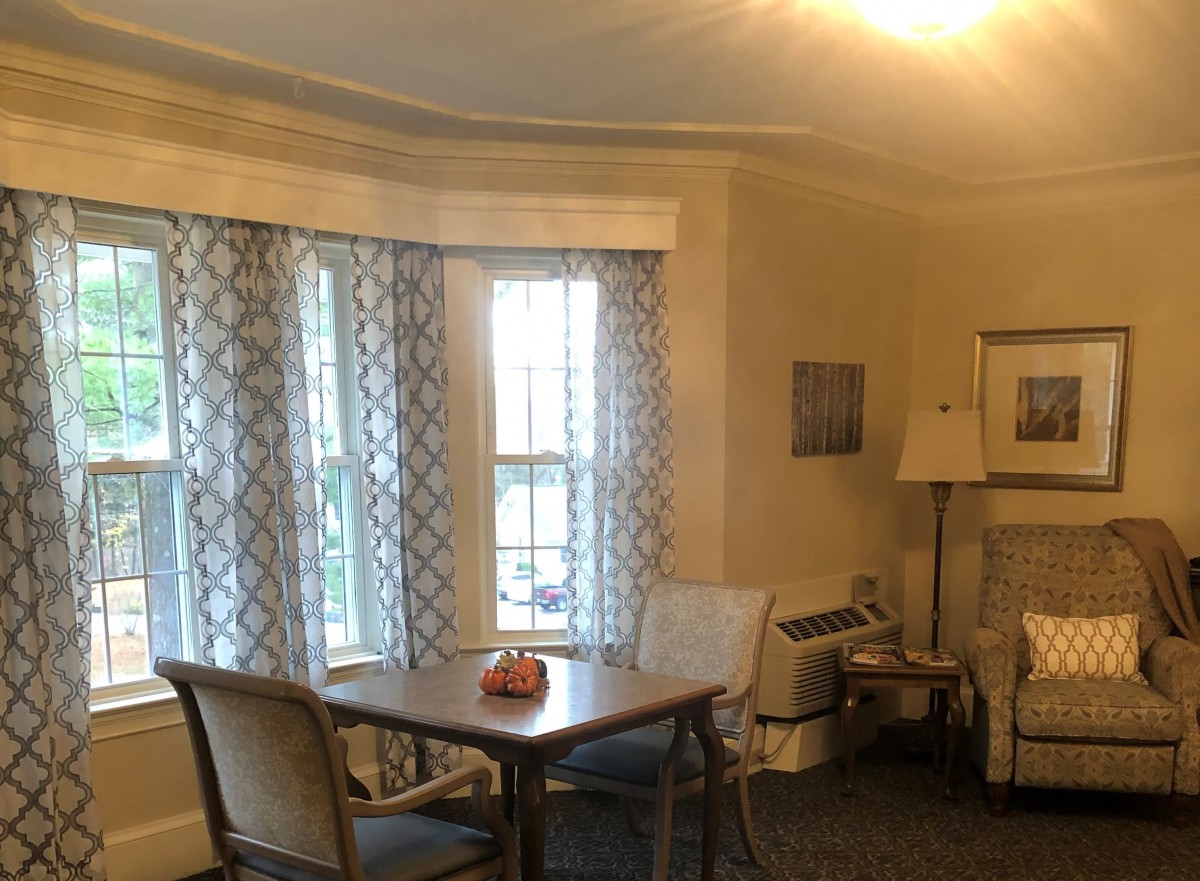
 Air-conditioning
 Beautician on-site
 Cable or satellite TV
 Devotional services off-site
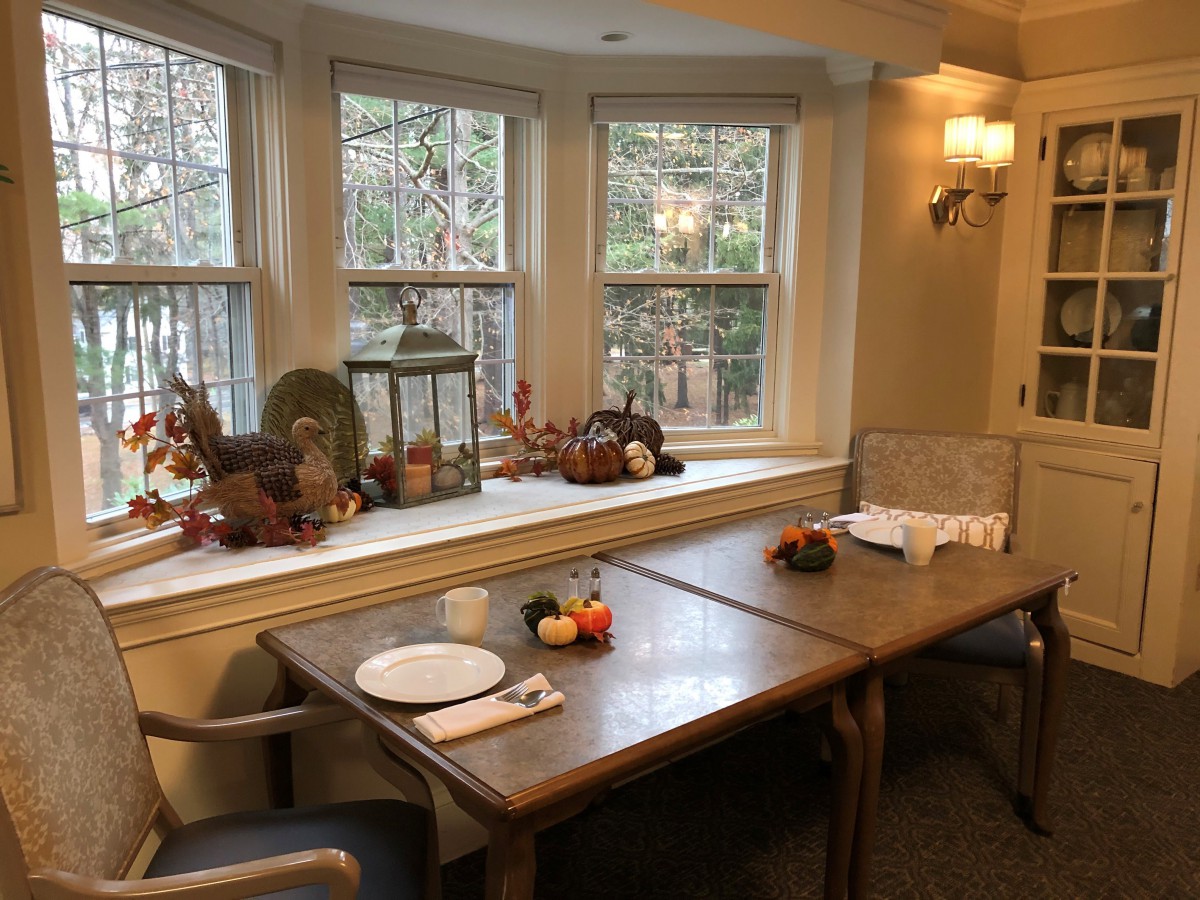
 Dining room
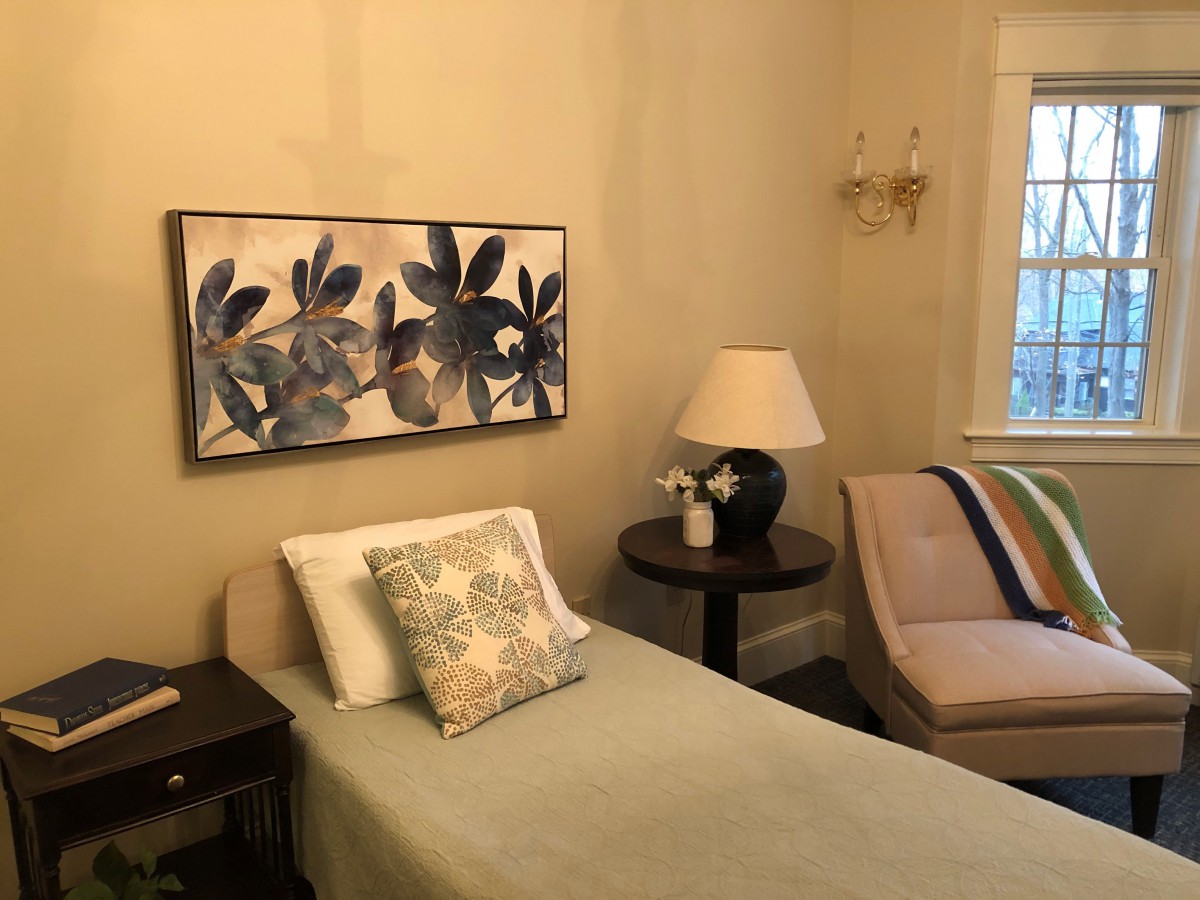
 Fully furnished
 Garden
 Ground floor units
 Housekeeping services
 Indoor common areas
 Move-in coordination
 Outdoor common areas
 Respite or short term stays offered
 Telephone
 Wheelchair accessible showers
 Wi-Fi/high-speed internet available
 24-hour supervision
 Ambulatory care
 Assistance with bathing
 Assistance with dressing
 Assistance with transfers
 Diabetes diet
 Incontinence care
 Meal preparation and service
 Medication management
 Special dietary restrictions
 Transportation arrangement (medical)
 Transportation to doctors appointments
 Art classes
 Brain fitness
 Cooking classes
 Day trips and outings
 Forever fit
 Live musical performances
 Stretching classes
 Trivia games
 Visiting chaplain or priest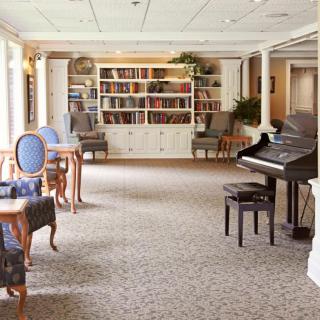


 Assisted Living and Memory Care: Understanding Their Core Differences
 Beyond the Bingo Hall: 50+ Enriching Activities for Seniors in Assisted Living
 Understanding the Distinctions: Assisted Living and Memory Care Explained