
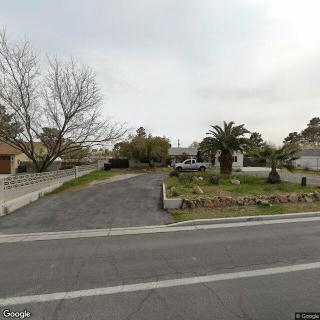
4149 Jory Trail, Las Vegas, NV 89108
For more information about senior living options: (866) 208-4318
As Time Goes By V Costs & Pricing
As Time Goes By V offers a private room at a monthly cost of $5,500, which is notably higher than both the county average of $4,758 and the state average of $4,628 in Nevada. This pricing suggests that As Time Goes By V provides distinctive features or services that differentiate it from other facilities in the area. While the costs are above local and state benchmarks, potential residents may find value in the quality of care, amenities, or specialized programs offered at this facility.
| Floor plans | As Time Goes By V | Clark County | Nevada |
|---|---|---|---|
| Private | $5,500 | $4,758 | $4,628 |
Assisted Living communities with a similar price nearby
-
from -$370 / mo

Sunrise of Henderson
$5,130 to $6,840 / month18.1 miles away -
from -$800 / mo
Elkhorn Jones Memory Care
$4,700 / month3.8 miles away -
About the same

Poet's Walk Henderson
$5,500 to $6,800 / month18.1 miles away -
from -$700 / mo

Blue Sky Memory Care
$4,800 / month14.0 miles away -
from -$750 / mo

Merrill Gardens At Green Valley Ranch
$4,750 to $5,850 / month17.5 miles away
Overall Review of As Time Goes By V
Pros
 As Time Goes By Butler House is highly recommended.
- The care provided there is much more personal and the rates are reasonable.
- The administrator, June, is consistently helpful and responsive.
- The reviewer is highly satisfied and would have placed their mother there first.
Review
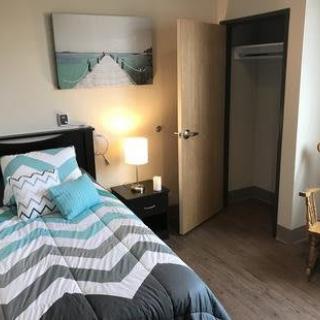
As Time Goes By Butler House in Las Vegas is best suited for families seeking a small, home-like setting where care feels personal and rates stay transparent and affordable. This community appeals to those who value direct, ongoing access to leadership and a staff that seems to know residents by name rather than by a room number. It is not a sprawling campus, but a calm, domestic environment where routines are predictable and caregivers respond quickly and warmly. In practice, the strongest message from families is that the care feels more hands-on and attentively tailored than what larger facilities typically offer, and that is the decisive advantage.
Those considering alternatives should weigh the trade-offs carefully. For residents with complex medical needs, constant 24/7 nursing oversight, or a demand for highly structured memory-care programming, a bigger community with dedicated clinical teams may deliver the level of medical coverage and specialized programming that this smaller home-like setting cannot guarantee. If rapid escalation of health issues, a broad activity catalog, or access to extensive on-site therapies is a priority, parents and guardians may find a larger operation more aligned with those expectations. In short, this home thrives on relational, day-to-day support; it may fall short for those who require comprehensive clinical breadth.
The most compelling pros are crystal clear: care feels distinctly personal, with staff who truly know residents and respond with consistency. The price point is consistently described as more reasonable than many nearby options, reducing ongoing financial stress for families. The administrator, June, emerges as a standout, reliable, helpful, and responsive, creating a sense that leadership is accessible and involved. Those elements translate into smoother transitions, fewer care Gaps, and a collaborative dynamic where families feel heard and respected. When daily life hinges on dependable reminders, mobility assistance, meals, and routine supervision, these advantages become practical, meaningful differences.
Yet a straightforward pros-and-cons calculation must acknowledge the inherent trade-offs of a smaller operation. The intimate scale can mean fewer on-site clinicians, a more limited menu of specialized programs, and a leaner activity calendar than what larger facilities routinely offer. Personal attention and affordability do not automatically replace robust nursing coverage or a broad spectrum of therapies. Consequently, families should avoid assuming medical emergencies will be managed with hospital-level precision simply because the setting is warm and well-regarded. The offset rests on the administrator and caregiving team’s ability to anticipate needs early, make pragmatic decisions, and recruit external resources when specialized expertise is required.
The real-world implication for families is shaped by a meaningful transition narrative: a member moved from a larger assisted-living facility into As Time Goes By Butler House and the experience was marked by a calmer pace, enhanced attention, and lower costs. This kind of feedback signals that the home-like structure excels when warmth, continuity, and affordability are the priority. Prospective residents should verify staffing coverage during nights and weekends, ask about medication management processes, and assess how meals, housekeeping, and safety features align with the individual health profile. Above all, observe whether daily life feels orderly and dignified, with caregivers who anticipate needs rather than merely respond.
In sum, As Time Goes By Butler House stands out as a practical, right-sized option for seniors who prize personalized attention and financial predictability within a home-like atmosphere. It is particularly well-suited for residents whose needs skew relational rather than medical, and for families that want direct, hands-on access to a responsive administrator who can tailor care to individual rhythms. Those seeking intense medical oversight, rapid access to a broad menu of therapies, or specialized memory-care services should explore alternatives that align with those clinical demands. For the right resident, the combination of warmth, attentiveness, and affordability offers a compelling case to choose this community over larger, more impersonal options in the Las Vegas market.
 6 resident community capacity
 Assisted Living
 Cable or satellite TV
 Dining room
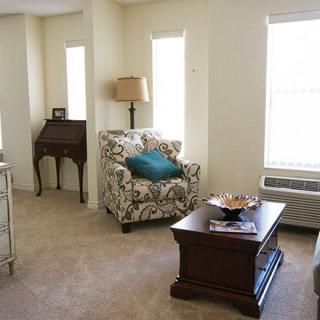
 Fully furnished
 Garden
 Housekeeping services
 Move-in coordination
 Outdoor space
 Telephone
 Wi-Fi/high-speed internet available
 McCarran International (12 miles away)
 24-hour supervision
 Activities of daily living assistance
 Assistance with bathing
 Assistance with dressing
 Assistance with transfers
 Diabetes diet
 Meal preparation and service
 Medication management
 Special dietary restrictions
 Transportation arrangement (medical)
 Transportation to doctors appointments




 Vibrant Senior Living: A Comprehensive Guide for Active Older Adults
 When to Transition from Assisted Living to Memory Care: Key Indicators, Steps, and Finding the Right Community
 Assisted Living and Memory Care: Understanding Their Core Differences