

501 W 2nd Street, Holden, MO 64040
To contact a resident: (816) 732-6789
For more information about senior living options: (866) 208-4318
Bristol Manor of Holden Costs & Pricing
Bristol Manor of Holden offers competitive monthly costs that stand out positively when compared to both Johnson County and statewide averages in Missouri. For instance, a studio at Bristol Manor is priced at $1,890, which is significantly more affordable than the county average of $2,578 and the state average of $3,418. One-bedroom units also showcase this financial advantage, costing $2,800 compared to Johnson County's $4,761. The facility's semi-private rooms at $3,200 remain cost-effective relative to the county's $3,046 and the state level of $3,772. Lastly, private rooms are priced at $4,400; while this matches Johnson County's rate, it remains slightly lower than Missouri's state average of $4,483. Overall, Bristol Manor of Holden positions itself as an economical yet comfortable option for those seeking assisted living in a desirable locale.
| Floor plans | Bristol Manor of Holden | Johnson County | Missouri |
|---|---|---|---|
| Studio | $1,890 | $2,578 | $3,418 |
| 1 Bedroom | $2,800 | $4,761 | $3,349 |
| Semi-Private | $3,200 | $3,046 | $3,772 |
| Private | $4,400 | $4,400 | $4,483 |
Assisted Living communities with a similar price nearby
-
from +$140 / mo
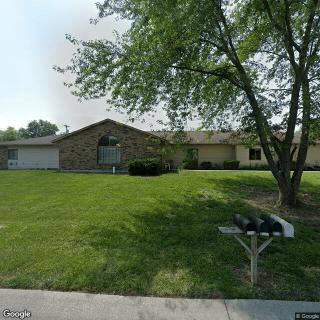
Bristol Manor of Oak Grove
$2,030 to $3,030 / month22.0 miles away -
from +$210 / mo

Bristol Manor of Raymore
$2,100 to $3,100 / month24.9 miles away -
from +$140 / mo

Bristol Manor of Odessa
$2,030 to $3,030 / month19.6 miles away -
from +$140 / mo

Bristol Manor of Pleasant Hill
$2,030 to $3,030 / month16.2 miles away -
from +$110 / mo

Essex Of Grain Valley
$2,000 to $3,300 / month23.0 miles away
Overall Review of Bristol Manor of Holden
Pros
 The facility is clean and staffed by caring personnel.
- The current manager was very good and will be missed.
- Residents enjoy the meals.
- The residents are nice people and know each other well.
- The smaller environment is a good fit for the residents.
- The staff are kind and take good care of the patients.
Cons
 The reviewer believes the facility should work on its family ethic with respect to its employees.
- There will be another change in management, which is viewed negatively because the current manager was very good and will be missed.
- Many residents are alone, indicating loneliness.
- Ongoing staff turnover is seen as destabilizing.
Review
Bristol Manor of Holden is best suited for seniors who want a small, home-like setting where staff know residents by name, meals are reliably satisfying, and neighbors form a tight, supportive circle. The campus’ compact, clean environment appeals to those who value personal attention and a predictable routine. When a loved one thrives on familiar faces and easy, low-stress daily life, this Holden option delivers a sense of belonging and quiet stability that many families seek in a smaller community.
Those who should consider alternatives include families seeking unwavering leadership continuity or a busier, more comprehensive program. The reviews flag an upcoming management transition, signaling potential shifts in day-to-day routines and policy. There is also a call for a stronger “family ethic” among staff, suggesting care is present but not uniformly woven into every interaction. For families prioritizing a robust activities calendar, deeper medical oversight, or long-term leadership stability, exploring larger campuses with a more established leadership track record would be prudent.
How the positives offset the drawbacks becomes the practical hinge for decision-making. The strongest offset is that cleanliness, genuinely caring staff, and a small, intimate atmosphere translate into reliable daily attention and a peaceful, predictable environment. Residents tend to know each other well, which reduces social anxieties and fosters a supportive micro-community where staff can tailor care more readily. When the current manager is on site and engaged, the atmosphere feels tranquil and family-like, and meals, consistently appreciated by residents, become a meaningful daily highlight that enhances overall quality of life.
A closer look at the concrete strengths reinforces the decision framework. The tight-knit setting encourages personalized interactions and frequent staff contact, with families noting that residents enjoy meaningful social moments, including volunteers who bring cheer to the halls. The cleanliness and overall tone contribute to a sense of dignity and homeliness, rather than a clinical feel. The combination of a smaller resident pool and attentive staff often means quicker responses to needs, more individualized meal options, and a sense that someone is paying attention to each resident’s routine and preferences.
The caveats to weigh are straightforward but important. Leadership turnover is the most salient risk, with the current manager’s good rapport and steady presence cited as a key feature that may fade during transition. This could temporarily unsettle schedules, routines, and the consistency families rely on. Additionally, the smaller scale may limit the breadth of spontaneous social opportunities or on-site amenities found in larger communities. For families whose loved one requires a very stable leadership team and a full calendar of activities, Bristol Manor Holden runs the risk of feeling less expansive than preferred.
In the end, Bristol Manor of Holden serves well those who value a calm, intimate, well-kept setting with friendly staff and dependable daily care, where neighbors form genuine connections and meals are a daily plus. It is less ideal for families prioritizing long-run leadership certainty, aggressive activity programming, or a vast array of on-campus options. Prospective settlers should engage directly with the administration about the transition plan, ask how continuity of care will be preserved during leadership changes, and assess whether the new leadership style aligns with the loved one’s needs and preferences. With that clarity, the choice aligns with a preference for quiet familiarity, personal attention, and a caring, clean home-like environment.
 Assisted Living
 Day Program
 Independent Living
 Cats allowed
 Dogs allowed
 Air-conditioning
 Cable or satellite TV
 Devotional services off-site
 Ground floor units
 Indoor common areas
 Outdoor common areas
 Respite or short term stays offered
 Ambulatory care
 Diabetic care
 Incontinence care
 Medication management
 Guest meals
 BBQs or picnics
 Birthday parties
 Brain fitness
 Gardening club
 Intergenerational programs
 Trivia games




 Exploring the Path to Senior Living: A Comprehensive Look at Independent Living and Assisted Living
 Is Assisted Living Deductible on Your Taxes? Understanding the Complexities of Assisted Living Expenses and Deductions
 Assisted Living Support for Veterans: A Complete and Detailed Overview