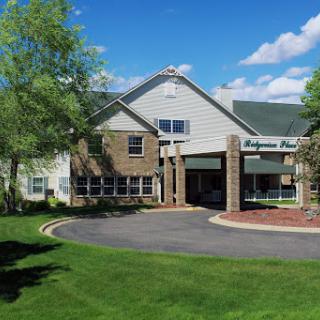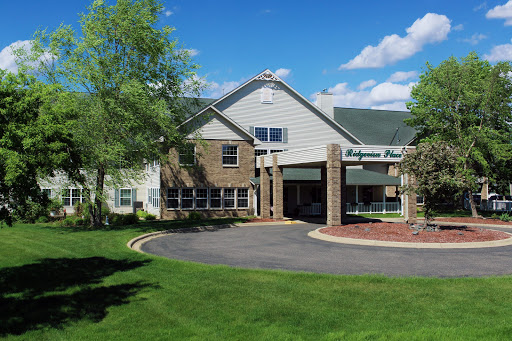
1009 10Th Avenue Ne, Sauk Rapids, MN 56379
For more information about senior living options: (866) 208-4318
Ridgeview Place Costs & Pricing
Ridgeview Place offers competitive pricing for its accommodations, with monthly costs that reflect the unique value of its services and amenities. For a one-bedroom unit, residents can expect to pay $2,616, which is slightly above the Sherburne County average of $2,392 but below the broader Minnesota state average of $2,893. In the two-bedroom category, Ridgeview Place's cost of $3,024 stands out as higher than both Sherburne County's average of $1,945 and Minnesota's state figure of $2,955. The studio apartments in Ridgeview Place are priced at $3,717, which is on the higher end compared to local and state averages of $3,132 and $3,617 respectively. Overall, while some prices exceed county averages significantly - particularly for two-bedroom units - the offerings at Ridgeview Place may provide unique advantages that justify their premium.
| Floor plans | Ridgeview Place | Sherburne County | Minnesota |
|---|---|---|---|
| 1 Bedroom | $2,616 | $2,392 | $2,893 |
| 2 Bedrooms | $3,024 | $1,945 | $2,955 |
| Studio | $3,717 | $3,132 | $3,617 |
Overall Review of Ridgeview Place
Pros
 The current management team and care staff are absolutely fabulous.
- They are so good to residents and provide such excellent care.
- The staff have become part of the residents' extended family.
- The facility offers roomy apartment homes with lots of daily activities, outings, and in-house services, making residents feel at home.
- The staff are amazing and the facility has a warm, homey feel.
- Ridgeview is less expensive than many other facilities in the area.
Cons
 There have been ups and downs with management and staff.
- The last year in the memory care facility was very poor.
- The constant turnover with the staff was very disconcerting.
- The staff was always short-handed and seemed exhausted.
- Older residents deserve far better.
- An injury occurred when a staff member didn’t follow proper procedures and it went unreported for a day.
- CNAs and HHAs are paid too little for their hard work, and pay across the industry needs revamping.
Review
Ridgeview Place in Sauk Rapids, MN is best suited for families seeking a genuinely home-like assisted living environment where residents can settle into a true sense of community. The appeal rests on roomy, apartment-style living, abundant daily activities, and a tangible focus on personal relationships between caregivers and residents. Families that prize hands-on, individualized care delivered by staff who feel like an extended part of the family will find Ridgeview compelling. The facility also stands out for its affordability relative to nearby options and for its integrated services, including on-site nursing, therapy, and an attached memory-care offering, all of which support a stable, long-term living arrangement.
However, alternatives deserve consideration for those who cannot compromise on memory-care continuity or flawless day-to-day operation. Several reviews highlight past memory-care turnover and periods of understaffing, which can translate into uneven care experiences for residents with higher needs. A few families emphasize that incident reporting and adherence to procedures were not consistently thorough, creating hesitation about safety and accountability. Those with a hard requirement for rock-solid, 24/7 staffing stability or for near-perfect shift-to-shift communication may want to cast a wider net and compare Ridgeview with other local options that emphasize stringent oversight and lower risk of staff turnover.
The strongest positives, staff quality, a genuine homey feel, and value, tend to offset the more frequent, weaker notes. Current leadership and care staff are repeatedly described as fabulous, with examples of caregivers who go above and beyond and become part of the resident family. The combination of lower-than-average area pricing, extensive in-house medical supports, and a robust slate of daily activities creates a compelling value proposition. Prospective residents will find that the apartments are nicely appointed, the campus emphasizes personal connections, and on-site therapy and religious services add meaningful dimensions to daily life. For families prioritizing long-term relationships with caregivers and a sense of daily normalcy, these factors weigh heavily in Ridgeview’s favor.
That said, the downsides are not negligible. The most persistent concerns center on when staffing shifts, communication between teams, and memory-care leadership may falter. Reviews recount experiences of miscommunication across shifts and a history of staff turnover in memory care, which can lead to uneven care during transitions. A notably troubling incident involves a scooter-related injury where procedures were not followed and the response to the incident was delayed; this type of occurrence raises legitimate questions about accountability and incident reporting. While some staff members receive glowing recognition, the presence of such incidents means vigilance is essential for families weighing Ridgeview against competitors with stronger, more transparent safety and staffing protocols.
For families navigating this decision, practical steps provide clarity. Schedule a tour with a focus on meeting care coordinators and, where possible, current residents or family members to gauge day-to-day atmosphere. Inquire directly about current staffing ratios, shift handoffs, and how incidents are tracked and escalated. Request recent examples of safety and quality improvements, especially in memory care, and ask to review the latest memory-care staffing model. Compare Ridgeview’s rates, included services, and availability of on-site OT/PT to nearby facilities, and assess whether the attached memory care aligns with long-term expectations. Clarify what enhanced medical services are truly included and which are optional add-ons.
The bottom-line recommendation is nuanced. Ridgeview Place offers a warm, engaging environment with meaningful activities and strong staff relationships, backed by a comparatively favorable price point for the area. It is a strong fit for families who value a dependable, home-like setting and who can tolerate, at least for now, some variability in staffing and incident handling, with a willingness to monitor ongoing performance. For those whose top priorities are flawless memory-care continuity, rigorous safety protocols, and unassailable day-to-day consistency, it remains prudent to widen the search to alternatives that foreground stability and transparent governance. Ridgeview deserves serious consideration, but it should be weighed against the specific care priorities and risk tolerance of each family before making a final commitment.
 21 resident community capacity
 Assisted Living
 Memory Care
 Activities on-site
 Beautician on-site
 Cable or satellite TV
 Devotional services off-site
 Dining room
 Fully furnished
 Garden
 Housekeeping services
 Indoor common areas
 Kitchenette
 Move-in coordination
 Outdoor space
 Telephone
 Wi-Fi/high-speed internet available
 St Cloud Regional (5 miles away)
 24-hour call system
 Ambulatory care
 Assistance with bathing
 Assistance with dressing
 Assistance with transfers
 Diabetes diet
 Diabetic care
 Hospice waiver
 Incontinence care
 Meal preparation and service
 Medication management
 Mental wellness program
 Special dietary restrictions
 Transportation arrangement (medical)
 Transportation to doctors appointments

 An In-Depth Look at Reminiscence Therapy in Dementia Care
 Dementia-Related Hallucinations: Causes, Experiences, and Practical Approaches
 Illuminating Insights About Alzheimer's Disease: Ten Crucial Realities