
2726 17Th Avenue East, North St. Paul, MN 55109
For more information about senior living options: (866) 208-4318
Overall Review of Options Residential Division
Pros
 They provide very good service.
- Options Residential is an amazing company that actually cares about the success of its clients.
- Management is extremely well trained in mental health, traumatic brain injuries, and co-occurring chemical dependency, with a focus on independent skill building.
- Clients are empowered and set up for success, and staff advocate on their behalf above and beyond what is expected.
- Other providers, and Dakota County, should be taking notes.
Cons
 There is a horrible lack of communication between staff members and horrible care of clients/residents.
- The care is described as poor.
- The reviewer warns that people with disabilities should not move into these group homes, as staff will sweet talk them with promises of care and then let them down.
- Half of the staff do not clean and dump all those cleaning duties on the few who do, miss medication doses, and ignore multiple sanitation complaints.
- The program director is a joke and clearly doesn’t care about the clients and their well-being.
Review
Options Residential Division in North St. Paul, Minnesota is best suited for adults who are relatively independent but still need structure, skill-building support, and an advocate on their behalf. The setting appeals to families that value empowerment and a programmatic approach to daily living, where staff focus on building independence rather than merely supervising someone in a common living space. The community carries a wide range of impressions: a few highly favorable accounts exist, but the overall rating sits at 2.8 from nine reviewers, signaling that outcomes depend heavily on leadership and on who is on shift. This is a place where strong, consistent direction can make a decisive difference, but one should enter with eyes open to history and personalities running the program.
The most persistent warnings center on care quality and reliability. Reviewers repeatedly cite poor care, broken communication among staff, missed medication doses, and sanitation problems that go unaddressed. There is a sense that cleaning and caregiving tasks are unevenly distributed, leaving some residents with unmet basic needs while overworked staff shoulder a disproportionate share of duties. Several accounts describe a pattern of complaints about safety and responsiveness that never seem to yield durable solutions. In some narratives, the director is depicted as disengaged, which families interpret as a breakdown in accountability and clear ownership of problems.
Against these concerns, a smaller cluster of reviews offers a markedly different perspective. They describe a company culture that genuinely cares about outcomes, with management trained in mental health, traumatic brain injury, and co-occurring chemical dependency. In these views, residents are empowered to pursue independent skills, with staff acting as advocates who push beyond the minimum requirements to support real progress. That portrayal suggests a care philosophy oriented toward growth, autonomy, and sustained coaching, an approach that can deliver meaningful results for the right resident. The contrast with the broader negative sentiment is sharp, indicating substantial variability in experience across shifts and programs.
The key to understanding options here lies in weighing the alleged strengths against the persistent weaknesses. If the management practices described by the positive accounts are active and consistent, residents can expect better advocacy, clearer program planning, and a framework that prioritizes independent living skills. Those elements can mitigate some operational rough edges and provide a path to progress for self-marters and motivated residents. However, the recurring care gaps, medication lapses, and sanitation concerns remain material risks. In practical terms, the positives could offset deficiencies for a highly engaged resident, but they do not erase safety and reliability concerns for any resident who relies on steady, hands-on support.
Who should pause and consider alternatives? Families caring for individuals who require dependable, hands-on daily care, precise medication management, and immaculate hygiene should look elsewhere. This community may not be the best match for residents with high medical complexity, significant mobility needs, or behavioral challenges that demand constant supervision and rapid response. Prospective families should insist on tangible proof: a detailed care plan, current staffing ratios, incident and medication logs, and licensing disclosures. Then, arrange multi-shift visits to gauge consistency, speaking directly with frontline caregivers and supervisors to verify that promises align with day-to-day practice rather than hopeful hypotheses.
Ultimately, the decision hinges on risk tolerance and care expectations. The Options Residential Division can deliver meaningful gains for residents who can engage with an empowerment-centered program and who are confident in the administrative leadership’s commitment to accountability. For the majority seeking dependable daily care, however, the risk profile is substantial enough to warrant exploring alternatives in the North St. Paul area that emphasize reliability, transparent communication, and rigorous infection-control and medication processes. In practice, this facility should be approached with a clear plan for oversight, concrete milestones, and a readiness to pivot to a higher-support option if care quality does not stabilize promptly.
 20 resident community capacity
 Assisted Living
 Beauty salon
 Cable or satellite TV
 Dining room
 Fully furnished
 Garden
 Housekeeping services
 Kitchenette
 Move-in coordination
 Outdoor space
 Telephone
 Wi-Fi/high-speed internet available
 Minneapolis-St Paul International (15 miles away)
 24-hour call system
 Activities of daily living assistance
 Assistance with bathing
 Assistance with dressing
 Assistance with transfers
 Diabetes diet
 Meal preparation and service
 Medication management
 Mental wellness program
 Special dietary restrictions
 Transportation arrangement (medical)
 Transportation to doctors appointments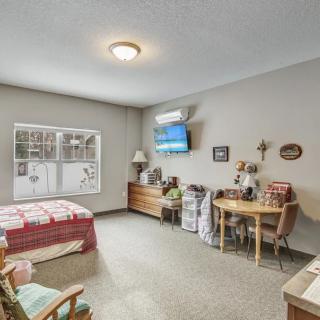




 When to Transition from Assisted Living to Memory Care: Key Indicators, Steps, and Finding the Right Community
 Assisted Living and Memory Care: Understanding Their Core Differences
 Beyond the Bingo Hall: 50+ Enriching Activities for Seniors in Assisted Living