
1247 Terrace Avenue, Maplewood, MN 55109
For more information about senior living options: (866) 208-4318
Equitable Healthcare Services Costs & Pricing
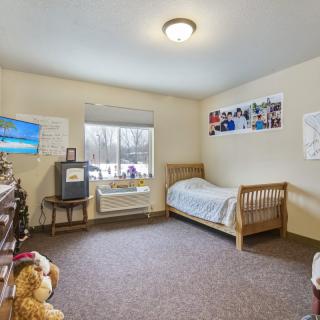
Equitable Healthcare Services offers competitive pricing for its room accommodations compared to both Washington County and Minnesota. For a semi-private room, Equitable's rate of $3,433 per month is notably lower than the county's average of $4,649 and Minnesota's average of $4,051. Similarly, for private rooms, Equitable maintains a favorable position with a cost of $4,119, which stands in contrast to Washington County's higher rate of $4,952 and Minnesota's even steeper average of $5,090. This pricing structure positions Equitable Healthcare Services as an appealing option for individuals seeking quality care without incurring exorbitant costs.
| Floor plans | Equitable Healthcare Services | Washington County | Minnesota |
|---|---|---|---|
| Semi-Private | $3,433 | $4,649 | $4,051 |
| Private | $4,119 | $4,952 | $5,090 |
Assisted Living communities with a similar price nearby
-
from -$433 / mo
Highland on Graham
$3,000 to $4,000 / month11.3 miles away -
from -$663 / mo
MainStreet Lodge
$2,770 to $3,130 / month10.9 miles away -
About the same

Our Lady Of Peace Home Care
$3,500 to $6,000 / month8.7 miles away -
from -$633 / mo

Trails of Orono
$2,800 to $3,790 / month24.6 miles away -
from +$167 / mo

Hayden's House
$3,600 to $6,200 / month16.3 miles away
Overall Review of Equitable Healthcare Services
Pros
 She is very friendly.
- Ana, a nurse, was the only helpful person.
- Quality care was provided.
Cons
 The agency needs more homemakers.
- The homemaker is not able to perform the required tasks.
- Care is limited to four hours per day.
- The homemaker tires easily and is not in good condition.
- She takes no initiative to do things unless asked.
- The service is poor, especially in helping people with disabilities; the staff gave the runaround to the daughter and would not help.
- They pay less per hour than other facilities.
- There are many other companies that pay better than this.
Review
Equitable Healthcare Services in Maplewood is best suited for seniors who primarily need light, day-to-day assistance and a degree of companionship, coupled with a family or caregiver willing to actively coordinate and supervise care. This community may work for residents whose needs don’t demand consistent, proactive, skilled nursing or rapid response to new medical issues. It is not a good fit for someone with significant disabilities, recent stroke recovery, or any situation that requires reliable, continuous monitoring, timely interventions, or a tightly structured care plan that adapts without delay. In short, it rewards families who can fill gaps and manage scheduling rather than relying on the staff to anticipate every need.
Those weighing options should also consider alternatives. The most immediate red flag is the inconsistency in care quality and responsiveness, which makes this community risky for residents who depend on steady, dependable support. Families expecting proactive problem-solving, rapid escalation of issues, or comprehensive disability care will want to explore facilities with stronger staffing stability and higher care ratios. In Maplewood, this means looking at communities with robust nursing coverage, clearer accountability, and a published track record of dependable coordination between caregivers, nurses, and families.
The strongest positives in occasional staff performance do not compensate for the prevailing drawbacks. Instances of genuine warmth and competence, such as a nurse who stands out for helpfulness, highlight that capable professionals are present, but they appear episodic rather than systemic. The care team as a whole tends to be perceived as under-resourced, with caregivers who tire easily and do not take initiative unless prompted. A fundamental limit noted by families is the reliance on a low daily cap for homemaker support, which stings when needs extend beyond routine tasks. The disconnect between pleasant personalities and dependable execution becomes the dispositive factor for many care decisions.
On balance, the value proposition hinges on whether a resident’s needs align with a care model that assumes heavy family involvement. If the plan includes steady nursing oversight, a predictable schedule, and a strong outside support network, there is some offset to the shortcomings: a compassionate staff member, occasional quality care, and the possibility of tailoring assistance through additional services. However, the system does not inherently deliver the proactive, reliable response required by someone managing a post-stroke condition or escalating disabilities. In such cases, the gaps in coverage and the difficulty in obtaining timely help can quickly undermine daily functioning and peace of mind.
Prospective residents should demand concrete evidence of stability before committing. Ask for the typical caregiver-to-resident ratio, the frequency of nurse visits, and a written escalation protocol for urgent needs. Request a detailed daily schedule, and insist on a trial period that includes supervised care coordination and real-time problem-solving demonstrations. Clarify how four hours of homemaker assistance per day translates into actual outcomes for common tasks, and whether additional paid services can be easily added when needs intensify. It’s also prudent to compare compensation practices and staff turnover with competing providers, since lower pay is repeatedly tied to higher turnover and less consistent care.
In the end, Equitable Healthcare Services presents a mixed proposition. It can work for families who anticipate frequent hands-on oversight, who can supplement limited homemaker hours with external caregivers, and who value a human touch from staff who occasionally excel. For residents with greater care needs, especially post-stroke recovery, significant disabilities, or expectations of near-immediate response to changes in condition, this community is not the strongest option. The practical recommendation is to consider alternatives with stronger staffing stability, clearer accountability, and higher care-quality consistency, unless the family is prepared to act as an active care partner and manage the inevitable gaps that arise.
 21 resident community capacity
 Assisted Living
 Beauty salon
 Cable or satellite TV
 Dining room
 Fully furnished
 Garden
 Housekeeping services
 Kitchenette
 Move-in coordination
 Outdoor space
 Restaurant-style dining
 Small library
 Telephone
 Wi-Fi/high-speed internet available
 Minneapolis-St Paul International (13 miles away)
 24-hour call system
 Activities of daily living assistance
 Assistance with bathing
 Assistance with dressing
 Assistance with transfers
 Diabetes diet
 Medication management
 Mental wellness program
 Special dietary restrictions




 Securing Financial Support for Assisted Living: A Comprehensive Overview
 Social Security Benefits and Assisted Living: Navigating Options Across the U.S.
 An Extensive Exploration of the VA Aid and Attendance Benefit