Medication management is described as on-time and closely monitored.
Residents and families describe a nurse-led approach to medication ordering, organizing, and monitoring, with adjustments when prescriptions change. Others also mention meds being given on time during a short post-surgery period, along with staff who knew what to do and when.
common10 reviews mention this
Caregivers feel consistent and familiar
Families value seeing the same caregivers whenever possible.
Multiple reviews emphasize the importance of a consistent rotation of caregivers and a familiar face, especially for help with personal care and daily routines. Several families also describe peace of mind from reliability over long stretches, while noting that staff adapt as needs change. Even when schedules shift, residents and families highlight that support keeps coming and stays professional.
common5 reviews mention this
Help with bathing and mobility
Personal care and mobility support are repeatedly mentioned.
Reviews frequently mention assistance with bathing and showering, along with help with getting around safely. Families also describe support during mornings/evenings routines and extra attention to balance and fall risk. Care notes and discreet help with intimate tasks are described as especially reassuring for families.
common5 reviews mention this
Flexible scheduling for appointments
Scheduling support works for recurring needs and urgent requests.
Families describe staff as responsive when help is needed quickly, including overnight support with less than a day’s notice. Reviews also mention reliable coordination for transportation to medical appointments and the ability to accommodate changes in how many hours or days are required. Several caregivers are described as willing to run errands and provide help for outings when requested.
How we summarize
Counts show how many written reviews mention each theme; a review can touch several themes, and only frequently mentioned themes are displayed.
Features
Housing
21 resident community capacity
Types of Care
Assisted Living
Amenities
Beauty salon
Cable or satellite TV
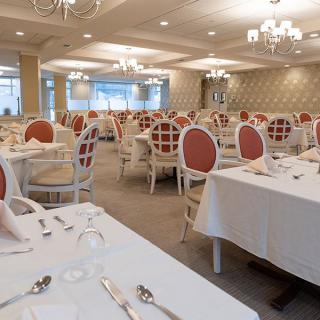
Dining room
Fully furnished
Garden
Housekeeping services
Kitchenette
Move-in coordination
Outdoor space
Telephone
Wi-Fi/high-speed internet available
Transportation
Rochester International (9 miles away)
Care Services
24-hour call system
24-hour supervision
Activities of daily living assistance
Assistance with bathing
Assistance with dressing
Assistance with transfers
Coordination with health care providers
Diabetes diet
Meal preparation and service
Medication management
Mental wellness program
Special dietary restrictions
Transportation arrangement (medical)
Transportation to doctors appointments
Dining
Diabetes diet
Special dietary restrictions
Activities
Community-sponsored activities
Scheduled daily activities
Nearby Places of Interest
Cafes
Caribou Coffee (0.4 miles)
Starbucks (0.5 miles)
Hollandberry Pannekoeken (1.3 miles)
Caribou Coffee (1.3 miles)
Caribou Coffee (1.7 miles)
St James Coffee (1.8 miles)
Panera Bread (2 miles)
Pharmacies
Hunt Silver Lake Drug (0.5 miles)
Hunt Drug Ide01 (0.6 miles)
Mc Be Co. (1.2 miles)
Weber & Judd Co. (1.2 miles)
Weber & Judd Pharmacy (1.2 miles)
Walgreens (1.3 miles)
Guidepoint Pharmacy (1.3 miles)
Physicians
Rochester Metro (0.7 miles)
Psimos Oral Surgery (0.7 miles)
Clear Wave Hearing Instruments (0.9 miles)
Rochester Family Eye Clinic (1.3 miles)
Charlton Building - Mayo Clinic (1.4 miles)
Mid America Orthopaedic Assoc (1.5 miles)
Brackenridge Building - Mayo Clinic (1.6 miles)
Restaurants
McDonald's (0.7 miles)
Taco John's (1 miles)
Taco Bell (1.1 miles)
Forager Brewing Company (1.1 miles)
Whistle Binkies Olde World Pub (1.2 miles)
Al Madina Restaurant (1.4 miles)
Victoria's Ristorante & Wine Bar (1.5 miles)
Places of Worship
Gloria Dei Lutheran Church (0.9 miles)
St Luke's Episcopal Church (1.2 miles)
Bethel Lutheran Church (2.1 miles)
Parks
Silver Lake Park (1.1 miles)
Mayo Park (1.7 miles)
Quarry Hill Park (1.7 miles)
Field of Fun (2 miles)
Quarry Hill Nature Center (2.1 miles)
Essex Park (2.3 miles)
Century Hills Park (2.6 miles)
Hospitals
Southeastern Minnesota Emergency Medical Service (1.1 miles)
Olmsted Medical Center (1.3 miles)
Rochester Methodist Hospital (1.4 miles)
Erickson Hair & Skin Care Center (1.4 miles)
Mayo 19 (1.5 miles)
Domitilla Building - Saint Marys Hospital (1.7 miles)
Visiting Angels IX is located at 302 Elton Hills Drive North West #200, Rochester, MN 55901 in Olmsted County, Minnesota
Nearby Communities
River Bend Senior Living
Rochester, MN
4.1 from 96 reviews
$3,330 to $4,750 / month
Friendly, welcoming staff; active social programs and well-maintained amenities.
Rosemount Home Care II
Rochester, MN
3.9 from 43 reviews
24-hour staff with comprehensive amenities and move-in coordination.
River Bend Assisted Living
Rochester, MN
3.9 from 43 reviews
Strong memory care specialty with 24/7 supervision and a wide range of on-site amenities (dining, fitness, salon, library, outdoor spaces) that support independence.
Robland Home Health Care
Rochester, MN
4.9 from 7 reviews
24/7 supervision with comprehensive care and a mental wellness program.
Smart Choice Home Care Corpora
Rochester, MN
5 from 24 reviews
24/7 supervision with comprehensive care and extensive amenities in furnished apartments.
Samaritan Bethany Heights
Rochester, MN
Excellent access to nearby dining, parks, worship, theaters, and medical services.
Madonna Towers Nursing Care
Rochester, MN
4.1 from 44 reviews
Good reputation for quality care and a pet-friendly environment that supports residents' well-being.
The Homestead at Rochester
Rochester, MN
3.4 from 50 reviews
$3,450 to $3,595 / month
Spacious, well-maintained apartments with ample activities and pleasant grounds.
The Waters on Mayowood
Rochester, MN
4.6 from 81 reviews
$2,340 to $4,500 / month
Beautiful, well-maintained facility with engaging activities and compassionate staff.
Vibrant Senior Living emphasizes active senior living communities that promote independence and engagement through diverse amenities and activities, fostering wellness and social interaction among older adults. These communities range from independent to assisted living, with a focus on personal growth, family involvement, financial planning, and leveraging technology to enhance residents' experiences.
Transitioning from assisted living to memory care is driven by an individual's cognitive decline and specific needs, requiring careful evaluation of indicators like increased confusion and wandering. The process involves consulting medical professionals, researching suitable communities, considering financial and legal aspects, and ensuring effective communication for personalized care plans.
Assisted living provides moderate support for seniors seeking independence, while memory care offers specialized support for individuals with dementia or cognitive impairments through structured routines and trained staff. Key differences include care approaches, environment security measures, staff training levels, activity types, and cost considerations.
Get PricingAsk A QuestionSchedule A TourContact Senior Advisor
By clicking submit, you agree to our Partner's Terms of Use. You
also consent to receive calls and texts, which may be autodialed, from our Partner. Your consent is not a condition to
using our Partner's service. Please visit our Partner's Privacy Policy for information about their privacy practices.


 21 resident community capacity
 Assisted Living
 Beauty salon
 Cable or satellite TV
 Dining room
 Fully furnished
 Garden
 Housekeeping services
 Kitchenette
 Move-in coordination
 Outdoor space
 Telephone
 Wi-Fi/high-speed internet available
 Rochester International (9 miles away)
 24-hour call system
 Activities of daily living assistance
 Assistance with bathing
 Assistance with dressing
 Assistance with transfers
 Diabetes diet
 Meal preparation and service
 Medication management
 Mental wellness program
 Special dietary restrictions
 Transportation arrangement (medical)
 Transportation to doctors appointments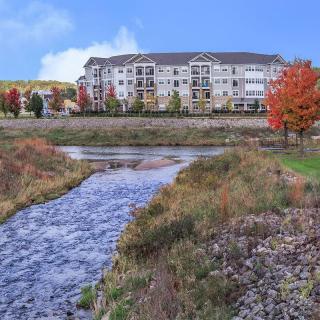
 Friendly, welcoming staff; active social programs and well-maintained amenities.



 Vibrant Senior Living: A Comprehensive Guide for Active Older Adults
 When to Transition from Assisted Living to Memory Care: Key Indicators, Steps, and Finding the Right Community
 Assisted Living and Memory Care: Understanding Their Core Differences