
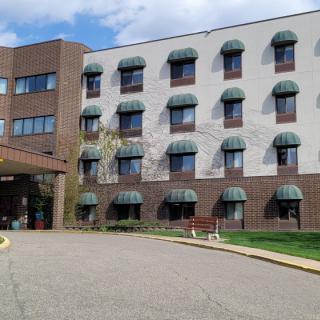
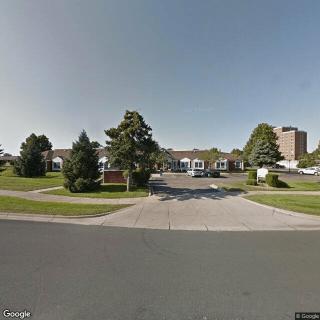
6917 Edgewood Avenue North, Brooklyn Park, MN 55428
For more information about senior living options: (866) 208-4318
Overall Review of Berkeley Heights Home
Cons
 According to the reviews, Berkeley Heights is not a place to place loved ones, clients, or oneself.
- The reviews claim it treats clients more like a paycheck than people with rights, physical needs, and psychological needs.
- The reviews state it allegedly forced the boyfriend to move to avoid restricting his legal rights, arguing that every day not at Berkeley Heights affects insurance payments.
- The reviews say it tried to illegally control clients’ schedules to secure a bigger paycheck, with staff labeling Berkeley Heights as “a business.”
- The reviews assert staff forced the boyfriend out because they couldn’t control his schedule for a bigger paycheck and are currently not helping him find a new place to stay.
- The reviews claim Berkeley Heights does not care about safety, physical health, or psychological health of its clients, and that Dr. Sheikh Dukuly cares more about controlling clients and increasing pay.
Review
Berkeley Heights Home in Brooklyn Park, MN is best suited for families that are price-sensitive and willing to accept a model of care where financial incentives appear to drive decisions more than resident welfare. In practical terms, the reviews describe a setting where billing and revenue concerns seem to predominate over rights, safety, and individualized attention. This is not a fit for seniors who require reliable safety, respectful treatment, and advocacy from staff. If autonomy, transparent operations, and a partner-like approach to care are nonnegotiable, this community should be crossed off the short list. For most situations, this will not be the right choice.
Explicitly, alternatives should be considered by families prioritizing dignity, accountability, and consistent care. Seniors with significant medical or cognitive needs, or those who rely on steady caregiver engagement and proactive safety checks, should look elsewhere. Those who want permission to question scheduling, consent, and placement decisions, or who require robust oversight from independent observers, will likely find this community deeply misaligned with expectations. Before settling, families should consult the state’s licensing and complaint records and compare with other local options that foreground resident rights and transparent governance.
From the available signals, obvious, well-documented advantages are scarce. Two five-star ratings exist, but the content behind those scores is not detailed in the reviews, leaving little to rely on beyond a favorable impression. In practical terms, the absence of clearly articulated, verifiable positives means the few high marks do not meaningfully counterbalance the substantive red flags raised in the critique. The rating, then, offers little reassurance when balanced against repeated concerns about care philosophy and ethical practices.
The core concerns center on a perceived pattern of profit-driven care that undermines trust and long-term well-being. Reviewers allege residents are treated as paychecks rather than people with rights and needs. Specific accusations include coercive scheduling to maximize insurance payments, forcing a relocation when a resident’s autonomy conflicts with billing goals, and a culture in which staff appear to deprioritize safety, physical health, and psychological well-being. Reports describe minimal effort to assist with transitions to new placements and a broader sense that care quality hinges on reimbursement rather than resident welfare. Taken together, the narrative suggests a facility where revenue concerns eclipse responsive, compassionate care, eroding trust and stability.
For families evaluating options, the path forward demands rigorous due diligence. Request written care plans and a clear, policy-backed explanation of consent and scheduling practices. Scrutinize billing statements, verify staffing levels and supervision, and seek independent corroboration from current residents or their families. Unannounced visits can reveal how staff interact with residents and how safety concerns are addressed in real time. Cross-check licensing history and complaint records with the Minnesota Department of Health, and compare with other nearby communities that demonstrate a consistent commitment to resident rights, safety, and transparent governance. If price remains a factor, pair cost considerations with the strongest possible assurances about autonomy and care quality, or consider in-home care and other facilities with clearer, proven track records.
Bottom line: the consensus in these reviews is clear enough to warrant caution. Berkeley Heights Home is not recommended for most families, especially those who demand ethical care, predictable safety, and respect for resident autonomy. Alternatives that emphasize accountability, transparent finances, proactive care planning, and strong resident advocacy should be the default path. If this community remains under consideration due to location or price, pursue a stringent, evidence-based evaluation, preferably with trial arrangements, explicit written policies, and verified oversight, to prevent placing a loved one in a situation where care quality cannot be trusted.
 22 resident community capacity
 Assisted Living
 Beauty salon
 Cable or satellite TV
 Dining room
 Fully furnished
 Garden
 Housekeeping services
 Kitchenette
 Move-in coordination
 Outdoor space
 Telephone
 Wi-Fi/high-speed internet available
 Minneapolis-St Paul International (16 miles away)
 24-hour call system
 Activities of daily living assistance
 Assistance with bathing
 Assistance with dressing
 Assistance with transfers
 Diabetes diet
 Meal preparation and service
 Medication management
 Mental wellness program
 Special dietary restrictions
 Transportation arrangement (medical)
 Transportation to doctors appointments
 Fully furnished with 24/7 supervision and comprehensive care.

 Exploring the Contrasts Between Assisted Living and Skilled Nursing
 8 Key Indicators That Suggest It May Be Time to Transition from Assisted Living to Skilled Nursing Care
 Vibrant Senior Living: A Comprehensive Guide for Active Older Adults