
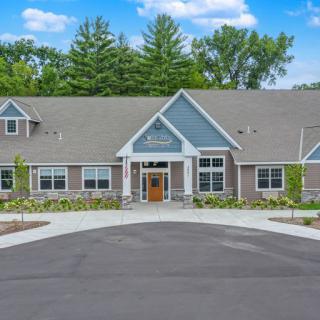
20310 Dodd Boulevard #2, Lakeville, MN 55044
For more information about senior living options: (866) 208-4318
Noah Home Care Costs & Pricing
Noah Home Care offers private room accommodations at a monthly cost of $7,075. This rate is notably higher than the averages observed in both Scott County and the broader state of Minnesota, where costs stand at approximately $5,053 and $5,090 respectively. While Noah Home Care's pricing may reflect enhanced services or amenities that contribute to an elevated standard of care, it is essential for potential clients to weigh these factors against local alternatives. In this context, understanding the value proposition of Noah Home Care can help families make informed decisions about their care options while considering both quality and affordability.
| Floor plans | Noah Home Care | Scott County | Minnesota |
|---|---|---|---|
| Private | $7,075 | $5,053 | $5,090 |
Assisted Living communities with a similar price nearby
-
from -$1075 / mo

Legacy Care Home
$6,000 / month21.0 miles away -
from +$225 / mo

Beehive Homes of Lakeville
$7,300 / month0.3 miles away -
from +$825 / mo
Suite Living of Crystal
$7,900 / month24.8 miles away -
from +$825 / mo

Suite Living of Prior Lake
$7,900 / month7.5 miles away -
About the same

Grace Home Health
$7,000 / month22.7 miles away
Overall Review of Noah Home Care
Pros
 They are the nicest ladies ever.
Cons
 The caregiver reportedly walked out of the client’s home without completing any duties, leaving meds and cups on the table.
- There was a lack of communication by email, which was the client’s preferred method, with contact only by late phone call.
- The caregiver is described as defensive and making excuses for poor communication.
- The supervisor is portrayed as rude, intolerant, and unwilling to listen or take responsibility.
- The agency is criticized for high turnover and poor management.
- The review raises concerns about staff suitability for caring for a vulnerable client, including the placement of someone with a criminal history.
Review
Noah Home Care in Lakeville is best suited for families seeking in-home, non-medical senior support delivered by compassionate caregivers, with an emphasis on daily living assistance and companionship. It works for clients who value the comfort of staying in their own home and who are prepared to actively supervise and adjust care as needed. The caregiving team can be warm, personable, and capable of building rapport, which is a real asset for seniors who resist abrupt changes in routine. However, this benefit comes with a clear caveat: staffing stability, communication reliability, and the quality of medical oversight vary, and the family’s involvement in monitoring and coordinating care remains essential.
Those needing consistent, error-free medication handling and seamless care coordination should consider alternatives. The experiences cited point to serious red flags: a caregiver who left a home visit unfinished and medications unsecured, along with a pattern of communication gaps that the agency’s leadership does not consistently address. For clients on complex medication regimens or with cognitive needs that demand steady oversight, the risk of missed instructions and miscommunication can outweigh the value of friendly companionship. In practical terms, if medical accuracy, predictable staffing, and clear accountability are non-negotiables, this provider may not meet those expectations.
On balance, the positive impression of caring, attentive staff is undeniable and valuable. When caregivers engage warmly and establish trust, they can significantly improve daily living for seniors who remain in their own homes. Yet these strengths do not fully offset the core problems: inconsistent communication practices, and incidents where essential tasks, like medication management, were not completed as promised. The perceived support from management often appears to shield frontline staff rather than enforce rigorous standards, and high turnover compounds these reliability issues. The combination creates a pattern where kindness alone cannot compensate for recurring gaps in safety and accountability.
Families can mitigate risk with proactive due diligence, but it requires strict oversight. A practical approach includes demanding a clearly written care plan with explicit medication management protocols, and a communication framework that the staff will consistently follow (not merely email in theory when a client indicates it is preferred). Inquire about caregiver screening, background checks, and how incidents are documented and escalated. Request to meet potential caregivers in advance, arrange a trial period, and insist on a consistent care team rather than rotating personnel. Confirm how supervision is structured, whether a qualified supervisor or nurse will regularly oversee progress and intervene when issues arise.
For those weighing options against Noah Home Care, the strongest alternative is a provider with longer-tenured staff and tighter governance around medication safety and oversight. Larger home-care organizations often demonstrate more predictable coverage and clearer accountability, reducing the risk of gaps that can endanger vulnerable seniors. For families considering the most controlled environment, transitioning to an assisted living community can offer built-in supervision, standardized procedures, and around-the-clock oversight that eliminates many of the uncertainties seen in in-home care. Every family should weigh the value of companionship and home comfort against the necessity for unwavering safety and reliability.
In the final analysis, Noah Home Care can meet the needs of a subset of families, those who prize personal warmth and home-based routines and are prepared to actively manage and monitor care. For others, especially those managing complex medication routines, significant cognitive impairment, or stringent safety expectations, exploring alternatives is strongly advised. The decision should rest on tangible proof of stable staffing, rigorous background checks, robust medication protocols, and transparent accountability. Begin with a concrete care plan, insist on in-person introductions to caregivers, and set a defined trial period to determine whether the arrangement aligns with the senior’s health needs and the family’s capacity for ongoing coordination.
 21 resident community capacity
 Assisted Living
 Beauty salon
 Cable or satellite TV
 Dining room
 Fully furnished
 Garden
 Housekeeping services
 Kitchenette
 Move-in coordination
 Outdoor space
 Restaurant-style dining
 Small library
 Telephone
 Wi-Fi/high-speed internet available
 Minneapolis-St Paul International (16 miles away)
 24-hour call system
 Activities of daily living assistance
 Assistance with bathing
 Assistance with dressing
 Assistance with transfers
 Diabetes diet
 Medication management
 Mental wellness program
 Special dietary restrictions




 An Extensive Exploration of the VA Aid and Attendance Benefit
 Senior Transition Services: Understanding Their Role, Cost, and Importance
 Exploring the Path to Senior Living: A Comprehensive Look at Independent Living and Assisted Living