

231 Washington Street P.O. Box 10, Holdingford, MN 56340
To contact a resident: (320) 746-9902
For more information about senior living options: (866) 208-4318
Hyatt House of Holdingford Costs & Pricing
The Hyatt House of Holdingford offers a competitive rate for its one-bedroom accommodations, priced at $2,000 per month. This rate is notably lower than the average monthly costs in Stearns County, which stands at $2,124, and significantly below the statewide average of $2,893 for similar housing options in Minnesota. By providing a cost-effective alternative without compromising on quality or amenities, Hyatt House positions itself as an attractive choice for both residents and transient guests seeking comfortable lodging in the area.
| Floor plans | Hyatt House of Holdingford | Stearns County | Minnesota |
|---|---|---|---|
| 1 Bedroom | $2,000 | $2,124 | $2,893 |
Assisted Living communities with a similar price nearby
-
from -$188 / mo

Nature's Point Assisted Living
$1,812 to $2,300 / month20.8 miles away -
About the same

Getty Street Assisted Living
$2,000 to $3,500 / month23.2 miles away
Overall Review of Hyatt House of Holdingford
Pros
 Angie, the director, has been great.
- The facility features big rooms.
- Residents give it a thumbs up.
- The staff are kind and caring.
- The staff have treated residents really nicely.
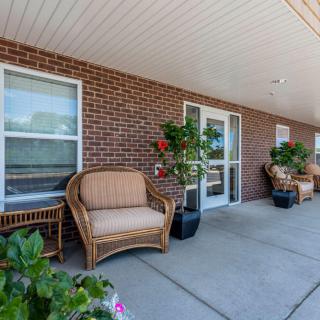
- The facility is clean and feels like home.
- It feels like one big family where everyone knows each other by name.
Cons
 The facility was not very good at first.
- It removed staff who should not have been there.
- The place is not very cheerful and needs help to return to its former state.
- It advises against sending a loved one there.
- Angie’s current leadership is criticized; she should return to running the facility as she used to when she was more caring.
- There are no activities inside or outside the facility and health care is limited to medication, which is sketchy.
- Meals are not diet-appropriate and residents have no access to snacks or to prepare meals themselves.
- The overnight nurse does not stay awake and is reluctant to be awakened except in emergencies.
- The facility lacks air conditioning.
Review
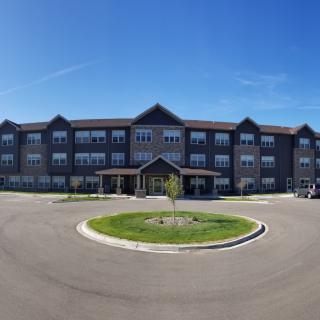
Hyatt House of Holdingford is best suited for residents who value a small, home‑like atmosphere where staff know residents by name and personal interactions matter more than formal programming. The testimonials point to a tightly knit, “one big family” feel in which cleanliness and comfort are tangible positives, and where rooms tend to be roomy for a facility of its size. It works best for individuals who can tolerate a modest level of on‑site services and who do not require intensive medical oversight or a rich activity calendar. For families seeking a warm, intimate environment with straightforward care needs, this community can be a good fit.
Those weighing alternatives should note where the gaps are most acute: there is scant emphasis on organized activities, and the facility provides healthcare only in a limited sense, primarily assistance with medications rather than full on‑site medical care. There is no in‑house activity program to speak of, no guaranteed health services beyond medication administration, and meals that may not align with specialized diets. Additional drawbacks cited in reviews include a lack of air conditioning, uneven staffing quality, and a sense that overnight coverage can be uneven. For families evaluating options, these gaps tend to push toward communities with fuller programming and stronger clinical supports.
The strongest positives center on staff warmth, cleanliness, and the intimate feel of a small, familiar setting. Residents report encounters with kind and caring caregivers, a sense of home rather than a sterile facility, and the benefit of knowing staff members by first names in a tight, manageable community. A number of reviews highlight a noticeable improvement when leadership and staffing align well, especially around the director, Angie, who some residents credit with restoring a more welcoming, resident‑centered vibe. In short, when the team is cohesive and engaged, the environment feels genuinely supportive and comforting.
However, the downsides cannot be ignored and they substantially limit the appeal for a segment of families. The same intimate setting can feel too sparse for those seeking robust activity options and continuous, on‑site health oversight. Reports of staffing inconsistency and mixed leadership temperament create a variability risk: positive experiences hinge on who is on shift and how engaged management remains. The absence of an active, structured program, the lack of widely accessible dietary accommodations, and the practical concerns about safety and security, such as limited snack autonomy and questions about overnight coverage, weigh heavily against the strongest social benefits.
For families visiting with the goal of a practical decision, direct questions should focus on daily life routines and care coverage. Ask about an actual activity schedule, opportunities for resident initiatives, and what level of health care is immediately available beyond medication assistance. Verify room controls and climate comfort, the policy on snacks and kitchen access, and how meals are planned to meet dietary needs. Inquire about overnight nursing presence and response times, and probe for evidence of consistent leadership and caregiver engagement during all shifts. A candid tour should include conversations with current residents about how often staff know their preferences and how reliably those preferences are honored.
Ultimately, Hyatt House of Holdingford serves best as a choice for families prioritizing warmth, familiarity, and a small‑scale, homey environment over formal programming and clinical breadth. It is a reasonable option for those who can live with limited daily activities, modest medical supports, and a willingness to participate in a community where staff relationships are the core value. If concern about the degree of medical oversight, activity opportunities, or climate control weighs more heavily, it is prudent to compare with larger assisted living communities that offer more comprehensive programming and steadier 24/7 clinical coverage. The decision should reflect whether the resident’s comfort with intimate caregiving and a tight community outweighs the needs for ongoing activities, robust dietary options, and stronger on‑site health services.
 Assisted Living
 Activities off-site
 Devotional services off-site
 Indoor common areas
 Outdoor common areas
 Respite or short term stays offered
 Wheelchair accessible showers
 St Cloud Regional (24 miles away)
 Ambulatory care
 Diabetic care
 Incontinence care
 Medication management
 Meals provided


 Understanding Medicaid Coverage for Assisted Living: A Comprehensive Guide
 How and When Medicaid May Cover Assisted Living Costs
 A Detailed Exploration of Assisted Living Medicaid Waivers Across the United States