

2499 Forest Hill Ave., Grand Rapids, MI 49546
To contact a resident: (616) 452-1568
For more information about senior living options: (866) 208-4318
Windsor Manor Costs & Pricing
Windsor Manor offers competitive pricing for its accommodations compared to both Kent County and the broader state of Michigan. For a semi-private room, Windsor Manor's rate is $3,875 per month, slightly below the county average of $3,939 but notably higher than the statewide average of $3,191. In terms of private rooms, customers can expect to pay $4,650 at Windsor Manor - less than the Kent County average of $5,194 while still above Michigan's average of $3,675. Studio apartments are priced at $5,037 per month; this figure exceeds both the county's rate of $3,661 and Michigan's state average of $3,824. Overall, Windsor Manor presents a balanced array of options that caters to various preferences and needs while remaining accessible within its local context.
| Floor plans | Windsor Manor | Kent County | Michigan |
|---|---|---|---|
| Semi-Private | $3,875 | $3,939 | $3,189 |
| Private | $4,650 | $5,194 | $3,674 |
| Studio | $5,037 | $3,661 | $3,824 |
Assisted Living communities with a similar price nearby
-
from +$725 / mo
Woodlawn Meadows Assisted Living & Memory Care
$4,600 to $5,025 / month22.6 miles away -
from +$425 / mo
Royal Atrium Inn
$4,300 / month24.7 miles away -
About the same

StoryPoint Rockford
$3,920 to $6,150 / month13.9 miles away -
from -$325 / mo
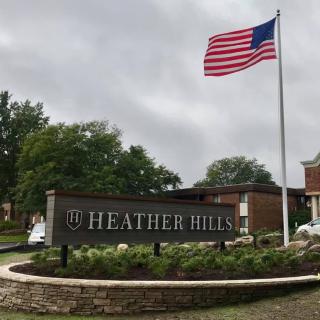
The Village of Heather Hills
$3,550 to $3,850 / month1.8 miles away -
from -$425 / mo
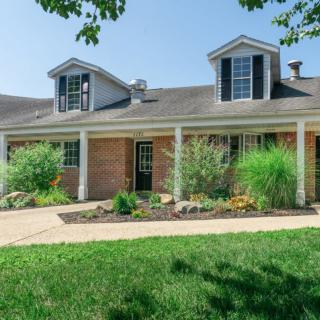
Commonwealth Senior Living at Grand Rapids
$3,450 to $4,950 / month6.3 miles away
Overall Review of Windsor Manor
Cons
 The care at Franklin campus is disappointing.
- The reviewer would not recommend Franklin campus.
- Caregivers are slow to respond.
- Some caregivers are rude and treat patients roughly.
- The third shift is particularly problematic.
- Requests to be changed due to urinary incontinence were met with comments like “you are low priority.”
- The reviewer cautions against putting someone they care about there.
Review
Windsor Manor in Grand Rapids is best suited for families coping with a senior who needs only routine assistance and who can sustain active oversight from relatives or a trusted care partner. The available feedback signals a setting where basic daily care may be provided, but it falls short on responsiveness and on the softness of interactions that families depend on. This community will feel workable for residents who are relatively independent day-to-day, with care tasks that can be tracked and escalated by the family without waiting for long periods. It is not the right fit for anyone counting on consistently prompt help, careful handling, or highly responsive medication support.
Alternatives should be strongly considered for residents with higher needs. Families should rule out Windsor Manor if incontinence care requires delicate handling, if constant supervision is essential, or if cognitive or behavioral issues demand steady, compassionate staff. The single review notes rude treatment and slow responses, especially on the third shift, which signals risk for residents who depend on respectful, timely intervention. In short, seniors who require reliable, 24/7 attentiveness or who cannot tolerate staff variability should look toward communities with higher staffing ratios, stronger caregiver training, and a track record of consistent med administration and sensitive bedside care.
From the account, the supposed strengths of the community do not emerge as offsetting factors to the core drawbacks. The report emphasizes slow response times, rude or rough caregiver interactions, and a perception of low priority when urinary incontinence is involved. Without concrete evidence of dependable med-pass times, proactive communication, or a culture of respectful engagement, the apparent advantages evaporate. In practical terms, the cons appear to outweigh any potential cost or convenience advantages. Pros would need to manifest as reliably timely responses, courteous, well-trained staff, and clear policies for escalation; none of these are demonstrated in the account provided.
To evaluate Windsor Manor effectively, a prospective family should prioritize a tour with a focus on staffing patterns: ask for caregiver-to-resident ratios on each shift, request examples of how quick a standard call light is answered, and probe how medications are managed and delivered. Verify incontinence care protocols, staff training in de-escalation and gentle handling, and the process for requesting changes in caregiving assignments. Observe interactions during a visit and ask about how concerns are tracked and resolved. Request recent incident logs and inquire about staff turnover, third-shift coverage, and any corrective actions taken after complaints.
During a trial period, require active oversight: set specific response-time benchmarks, demand daily updates, and arrange for a point person to review progress midweek. If expectations are not met, escalate promptly to the administrator and request a formal action plan, including potential relocation to a higher-availability unit or a transfer to a facility with a stronger emphasis on compassionate care. Family involvement should be planned as a regular rhythm, daily calls, scheduled checks, and clear accountability. If the facility cannot demonstrate reliable, respectful care in a defined timeframe, it is prudent to pivot to alternatives rather than accepting ongoing uncertainty.
Bottom line: Windsor Manor should be selected only by families who can live with uncertain response times and variable staff conduct, and only after confirming that current shortcomings have a credible path to resolution. For anyone whose priority is consistently prompt, respectful care and precise medication handling, it is wise to explore other Grand Rapids options with documented staffing stability and stronger care protocols. The decision hinges on whether proactive oversight and a willingness to switch providers can compensate for the observed gaps. When those conditions exist, Windsor Manor may deliver basic living stability; when they do not, alternatives will nearly always deliver greater peace of mind.
 Assisted Living
 Independent Living
 Memory Care
 Skilled Nursing Facility
 Activities on-site
 Devotional services off-site
 Indoor common areas
 Kent County International (3 miles away)
 Ambulatory care
 Diabetic care
 Meals provided
 Competitive pricing with private or semi-private rooms.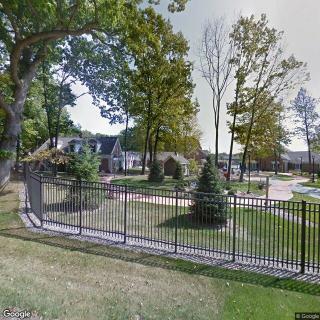

 Exploring the Power of Reminiscence Therapy for Individuals With Dementia
 An In-Depth Look at Reminiscence Therapy in Dementia Care
 Dementia-Related Hallucinations: Causes, Experiences, and Practical Approaches