
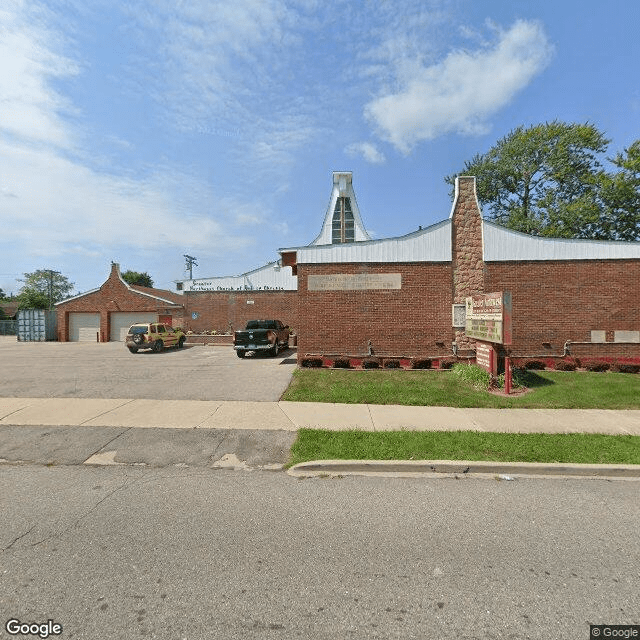
15811 Rosa Parks Blvd, Detroit, MI 48238
To contact a resident: (313) 345-4676
For more information about senior living options: (866) 208-4318
Overall Review of Greater Northwest Church-God
Pros
 The pastor is the best.
- The church feels like home and a place for God.
- The church is beautiful.
- The Bible teaching is good.
- The congregation is loving.
- The church is wheelchair accessible.
- The pastor has touched their heart and they know they are saved.
Review
Greater Northwest Church-God in Detroit is best suited for seniors who want to anchor their daily life in a vibrant, faith-centered community. The clearest value comes from strong pastoral leadership and clear Bible teaching, delivered within a warm, loving congregation. It is a place where residents can derive purpose and reassurance from regular worship, personal spiritual connection, and a sense that their home in faith is steady and welcoming. Wheelchair accessibility is not only a convenience but a practical assurance that participation in services and fellowship won’t be hindered by mobility challenges. For seniors who measure quality by the strength of the pastor’s guidance and by the felt warmth of the church family, this community checks important boxes.
Those considering alternatives should note who this setting is not designed to serve. It leans heavily on spiritual nourishment and communal life rather than on professional caregiving services. There is no explicit emphasis on licensed medical care, memory care, or daily living assistance, nor on meal plans, transportation coordination, or staff-led health management. For seniors whose needs include regular hands-on care, medication management, or highly structured daily routines, other licensed assisted living options will be necessary. Families seeking a secular environment or a setting with robust on-site care should look beyond this church community.
The strengths line up in a way that can offset many common aging-in-place concerns. The pastor’s impact and the message of salvation appear repeatedly as meaningful touchpoints, offering emotional reassurance and a sense of spiritual purpose that can significantly reduce loneliness. The Bible teaching is described as solid, providing intellectual and devotional engagement that can anchor a resident’s day. A loving congregation translates into social connectedness, with peers and volunteers likely to offer encouragement, friendship, and practical kindness. Wheelchair accessibility removes a tangible barrier to participation, enabling attendance at services, study groups, and fellowship events. Taken together, these pros create a compact but powerful support system for someone who values faith-led community life over formal caregiving.
However, the main cons are meaningful enough to consider carefully. The absence of on-site care staff and structured assisted living amenities means daily living tasks and health-related support would fall outside what the church can provide. For individuals who require help with bathing, dressing, medication management, or routine medical oversight, this setting would not substitute for licensed care. The reviews include a handful of lower-rated experiences, signaling variability in member experiences or expectations that may not always align with what a senior seeks in daily living support. In short, the pros deliver spiritual and social vitality, but they do not replace the practical, hands-on support that some seniors will require.
The right trade-off becomes clear when matching needs to benefits. For seniors who are largely independent and who prize a stable spiritual home, the pastor-led care and communal warmth can compensate for the lack of formal caregiving services. The wheelchair-friendly environment and the sense of belonging help sustain mobility, engagement, and emotional well-being. For families prioritizing ongoing religious life and a consistent, welcoming circle, this community can be a meaningful cornerstone. Yet for those whose daily routines demand professional caregiving, memory support, or medical oversight, this option serves best as a supplementary or transitional step rather than a complete solution.
Practical next steps are straightforward. Families should visit to observe worship and fellowship firsthand, speak with church leadership about any informal support mechanisms (volunteer caregivers, visitations, or aid in errands), and assess whether there are any neighbors or partners who provide additional health or personal-care services nearby. Ask about safety considerations, transportation possibilities for events, and how emergencies are handled within the community’s structure. If the priority is a spiritually anchored, socially rich living atmosphere with inclusive access, this church community stands up well. If the priority includes licensed, on-site care and daily living support, pursue licensed senior-living options in Detroit and view this community as a valuable adjacent resource rather than a full replacement.
 Board and Care Home
 Detroit Metropolitan-Wayne County (18 miles away)



 In-Home Care Costs in 2025: A Detailed State-by-State Exploration
 Understanding Home Health Care: A Comprehensive Guide
 Home Health Care Demystified: A Comprehensive Guide for Families and Caregivers