
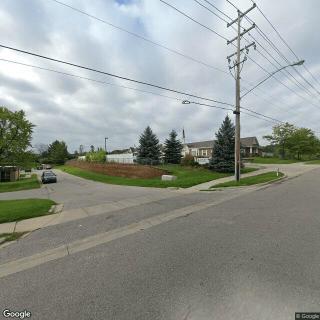
17460 Twelve Mile Road, Big Rapids, MI 49307
For more information about senior living options: (866) 208-4318
Overall Review of Creekside Manor
Pros
 It was a great long-term place that specialized in many of the problems the brother had.
- The staffing was good.
- The reviewer initially perceived the facility as okay.
Cons
 The reviewer describes the place as horrible and the landlord as a slumlord, calling the overall situation bad.
 - The reviewer says they would give zero and accuses the management of lies, theft, and harming their brother’s family relationships.
- The reviewer claims the “independent living” setup is misrepresented as a single-family home, when it is a three-bedroom apartment used for residents.
- The reviewer reports resting water and what appears to be black mold in the basement, indicating unsafe conditions.
- The reviewer alleges the air conditioning was cut to save money, leaving the brother hot and worsening his health.
- The reviewer states guardianship was forced onto the family to remove their brother from the place, and they had to report it to authorities.
- The reviewer characterizes the operators as con artists exploiting special-needs people and collecting money illegally.
- The reviewer warns others not to send their loved ones there.
Review
Creekside Manor in Big Rapids is best suited for families that can practice vigilant oversight and are prepared to address governance and safety concerns firsthand. The community appears to offer basic, nonclinical assistance and can function on days when staffing covers daily needs. For residents who do not require intensive medical management but still need daily supervision, Creekside Manor may seem workable, so long as proactive family involvement remains constant. The real value rests with guardians who can monitor care, respond quickly to issues, and press for transparency. Without that sustained engagement, the risk exposure on matters of safety, housing conditions, and accountability grows, undermining any nominal advantage in cost or routine support.
Families should explicitly consider alternatives if governance, financial integrity, and consistent resident safety cannot be fully guaranteed. For individuals with complex medical needs, cognitive impairment, or a history of sensory or behavioral challenges, Creekside Manor is unlikely to deliver the reliable clinical oversight required. Guarded decision-making is warranted for those relying on guardianship or payee arrangements, given the mixed signals about oversight and potential exploitation reported by some families. More established, fully licensed assisted living communities or AFC homes with transparent ownership and documented complaint processes typically offer steadier governance, clearer staffing protocols, and accessible avenues for accountability.
On the pro side, the reviews note that staffing exists and can be adequate on some shifts, along with the practical reality of lower costs relative to higher-end facilities. Those elements can ease daily living pressures when present, especially in settings where supervision is otherwise limited. However, these modest staffing advantages are overshadowed by the most troubling concerns raised by multiple families: alleged misrepresentation, questionable handling of guardianship arrangements, and unsafe or poorly maintained housing conditions. When safety, trust, and proper care are at stake, staffing quirks lose their bite, and the overall value proposition collapses without robust external oversight and transparent governance.
The most serious red flags center on governance and resident safety. Reports describe patterns of manipulation around guardianship and payee arrangements, with serious questions raised about consent, access, and accountability. Physical conditions burdening resident safety, such as moisture in living spaces, mold risk, and questionable climate control, are repeatedly cited, along with claims that comfort and safety measures were altered or withheld for cost or control reasons. Combined with regulatory complaints and concerns about access to residents, these factors create a risk profile that challenges basic caregiving duties. Even in a setting that claims to provide daily assistance, these issues cannot be ignored.
Practical due diligence is essential before considering Creekside Manor. Prospective families should demand current licensing status, recent inspection reports, and clear corrective-action histories. In-person visits should include candid conversations with administrators about medication management, care planning, and escalation protocols. Direct input from current residents and independent advocates, ombudspersons or state oversight bodies, can illuminate whether actual practices align with stated assurances. Verify guardianship arrangements, ensure transparent financial accounting, and confirm that any payee or guardian actions are properly supervised and legally compliant. Without rigorous verification, the risk profile remains unacceptable for most vulnerable residents.
In the end, Creekside Manor represents a high-stakes option that should not be chosen without strong external safeguards. For families without the bandwidth to police care and housing continuously, alternatives with proven governance, transparent operations, and stable safety records are strongly preferred. If Creekside Manor is on the table, it must be accompanied by an explicit plan for ongoing oversight, independent care quality verification, and a clear exit strategy. The bottom line is practical: this community is unlikely to be the best fit for most seniors or adults with special needs, and only those prepared to enact comprehensive oversight and protection should proceed, fully aware of the significant risks involved.
 12 resident community capacity
 Assisted Living
 Board and Care Home
 Cable or satellite TV
 Dining room
 Fully furnished
 Garden
 Housekeeping services
 Move-in coordination
 Outdoor patio
 Outdoor space
 Telephone
 Wi-Fi/high-speed internet available
 Community operated transportation
 24-hour supervision
 Accept incoming residents on hospice
 Activities of daily living assistance
 Administer insulin injections
 Assistance with bathing
 Assistance with dressing
 Assistance with transfers
 Care with behavioral issues
 Diabetes diet
 Meal preparation and service
 Medication management
 Mild cognitive impairment
 Special dietary restrictions
 Transportation arrangement (medical)
 Planned day trips



 Assisted Living Support for Veterans: A Complete and Detailed Overview
 Exploring the Contrasts Between Assisted Living and Skilled Nursing
 8 Key Indicators That Suggest It May Be Time to Transition from Assisted Living to Skilled Nursing Care