
427 Davis Street, Allegan, MI 49010
For more information about senior living options: (866) 208-4318
Allegan Enrichment Center 1 Costs & Pricing
At Allegan Enrichment Center 1, the monthly cost for a private room is $3,000, which positions it as a more economical option compared to the average rates in Van Buren County and across the state of Michigan. In Van Buren County, private room costs reach approximately $4,247, while the statewide average stands at around $3,675. This favorable pricing not only makes Allegan Enrichment Center 1 an attractive choice for those seeking quality care but also highlights its commitment to affordability without compromising on the levels of service and comfort that residents can expect.
| Floor plans | Allegan Enrichment Center 1 | Van Buren County | Michigan |
|---|---|---|---|
| Private | $3,000 | $4,247 | $3,674 |
Assisted Living communities with a similar price nearby
-
from -$450 / mo

Hubert Assisted Living Home Care
$2,550 to $4,200 / month23.5 miles away -
from -$450 / mo
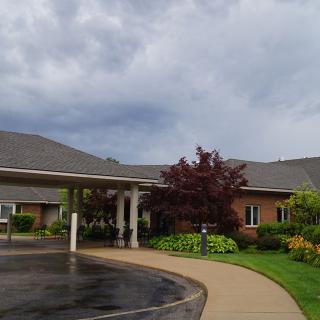
Sheldon Meadows Living Center
$2,550 to $4,000 / month24.5 miles away -
from -$335 / mo
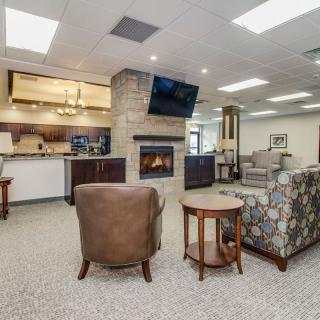
River Ridge
$2,665 to $4,395 / month21.9 miles away -
from -$345 / mo
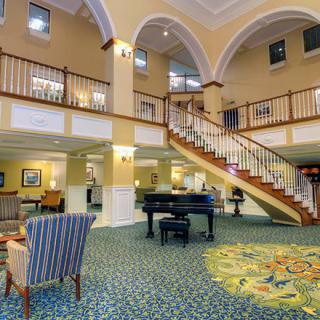
Freedom Village ( Holland )
$2,655 to $5,965 / month21.7 miles away -
from -$500 / mo
Barn Swallow Manor
$2,500 / month20.1 miles away
Overall Review of Allegan Enrichment Center 1
Pros
 The staff are very nice and very helpful.
- It is always a great place to visit.
Cons
 The system is absolutely terrible.
- Gilkey school's bus route has been ridiculous all year long.
- They have left messages and Facebook messages.
- They want a callback.
- They were directed to call every day instead of the man on the phone offering to fix their problem or create a solution.
Review
Allegan Enrichment Center 1 is best suited for seniors who want a welcoming, social environment with genuinely friendly staff and plenty of opportunities to visit, mingle, and participate in engaging activities. The emphasis on a warm in-person atmosphere makes it a good fit for residents who prize daily human connection and a low-key, center-based routine. It suits older adults who can handle their own transportation needs or rely on family and local services for getting to and from events. For someone seeking a highly structured medical or 24/7 assistance scenario, this community’s model may fall short; its strength lies in companionship and accessible, casual programming rather than intensive care.
Those considering alternatives should note transportation and responsiveness gaps. If dependable door-to-door or campus-arranged transport is a must, or if prompt problem-solving from staff is critical, this community may disappoint. Prospective residents with higher medical needs, fall risk, or strict appointment timelines will want to compare options with stronger transportation coordination and a clearer escalation path for issues. Families should also assess whether the social calendar truly fits current interests without sacrificing reliability in schedule and pickups. In short, the center excels in warmth and visit-worthy atmosphere, but transport reliability and administrative responsiveness require scrutiny.
From a practical lens, the identified positives, very nice, helpful staff and the consistency of a pleasant, visit-worthy environment, can make daily life comfortable and enjoyable. That social energy can dramatically lessen loneliness and provide meaningful engagement, which is a genuine value for many seniors. Yet these advantages do not fully mitigate the central weakness: an unreliable transportation system and a reactive, not proactive, approach to problems. When a bus route is routinely delayed or mismanaged, the promise of social participation erodes. If transportation is the primary reason for choosing care, to sustain outings, appointments, or family visits, the drawbacks become the deciding factor.
Specific issues around bus coordination are a deal-breaker for some families. The complaint about the Gilkey school bus route being 'ridiculous all year long' signals a chronic flaw in operations that can derail planned activities or create uncertainty about arrival times. Requests for callbacks were ineffective, with staff directing families to call daily instead of offering a concrete fix. That pattern of handling concerns undermines trust and elevates stress for caregivers and residents alike. While the staff performance on a day-to-day basis remains positive, the transportation and communication bottlenecks overshadow the otherwise favorable environment when reliability is required.
To make an informed choice, prospective residents should probe transportation policy, including schedules, contingencies, and who coordinates the service. Ask for a written plan detailing how issues are escalated, expected response times, and who oversees route integrity. Inquire about alternatives for bad weather, route changes, or trips that run late. Also verify the scope of on-site staff support during outings and whether medical or dementia-related supervision is available on bus trips. The aim is to confirm that the center’s social advantages align with a dependable logistics framework that delivers consistent access to activities and appointments.
When care priority centers on social engagement and a supportive, personable staff, Allegan Enrichment Center 1 delivers warmth and a visit-worthy milieu that reduces isolation. However, for families where transportation reliability and proactive issue resolution are non-negotiable, it is prudent to evaluate alternatives with stronger transport management and clearer accountability. Other nearby options may offer more robust transportation coordination, more predictable scheduling, or deeper medical oversight. If choosing this center, enter with explicit expectations: secure transportation policies, a named coordinator, and a clear plan for elevating problems quickly. With the right checks in place, the community can be a good fit for the right resident.
 12 resident community capacity
 Assisted Living
 Cable or satellite TV
 Dining room
 Fully furnished
 Garden
 Housekeeping services
 Move-in coordination
 Outdoor space
 Telephone
 Wi-Fi/high-speed internet available
 24-hour supervision
 Activities of daily living assistance
 Assistance with bathing
 Assistance with dressing
 Assistance with transfers
 Diabetes diet
 Meal preparation and service
 Medication management
 Special dietary restrictions
 Transportation arrangement (medical)
 Transportation to doctors appointments
 Comprehensive Insights into Activities of Daily Living (ADLs) and Their Assessment
 Medicare Coverage for Assisted Living: An In-Depth Exploration
 Choosing the Right Senior Care: A Detailed Exploration of Assisted Living and Nursing Homes