
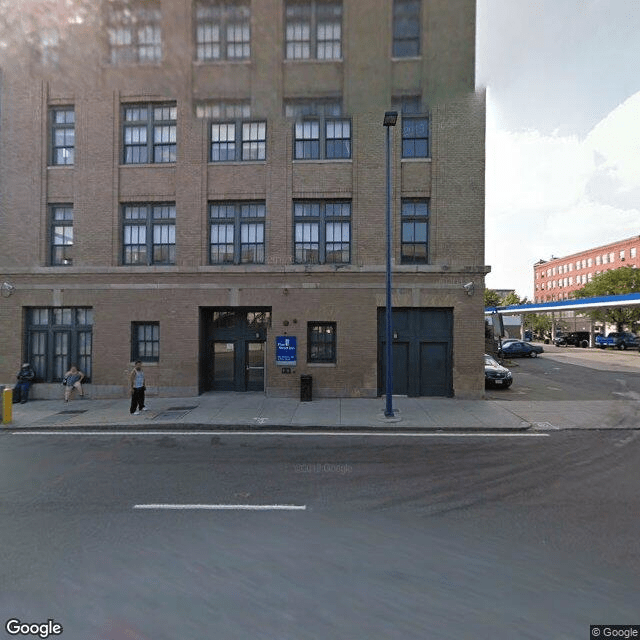
363 Albany Street, Boston, MA 02118
To contact a resident: (617) 892-9307
For more information about senior living options: (866) 208-4318
Overall Review of Women's Inn at Pine Street
Pros
 Pine Street Inn has done them very well and made them feel protected there.
- They feel loved there, have great friends, and benefit from the best counselors and a great medical team.
- They received excellent care for transitioning and for managing blindness, and they feel supported as a transgender individual.
- If anyone is in danger in South Boston, this is the place to go for help and safety.
- At 363 Albany Street, they can obtain essential documents like a social security card and a Mass ID, with full support for any case.
Review
The Women's Inn at Pine Street in Boston is best suited for older adults and adults pursuing a highly supported, community-driven living experience where safety, connection, and access to wraparound services take center stage. The reviews portray a setting that emphasizes protection, friendship, and steady guidance from counselors and a capable medical team. Residents who need practical assistance navigating public benefits, getting a Social Security card or a Massachusetts ID on site, and who rely on ongoing case management will find the program aligns with those needs. The environment appears especially well-suited for individuals who have faced safety concerns or who require a structured, city-based support network rather than a purely private, self-directed living arrangement.
Those who should consider alternatives include families seeking more traditional assisted living with a stronger emphasis on private apartment living, routine independent daily activities, and a clearly defined continuum of medical care in a licensed setting. If the goal is intimate, home-like privacy, a broader range of on-site activities, or a facility focused primarily on aging in place with predictable schedules and dementia care options, this option may not meet those expectations. Additionally, for residents who prioritize autonomy and want a facility with a more conventional “home with services” feel rather than a security-forward environment, exploring other licensed providers could yield a better fit. The review’s emphasis on safety and on-site social services signals a different model than many families expect from typical assisted living.
The strongest positives center on protection, community, and proactive support. A robust medical team paired with attentive counselors suggests a setting where health concerns are monitored and addressed with immediacy. The sense of belonging, built through “great friends” and a dependable social fabric, can dramatically reduce isolation, a common challenge in senior and transitional living. The ability to access essential identity documents and benefits on site, coupled with a pathway to social service support, can remove friction for residents who would otherwise struggle to remain connected to benefits and services. For individuals who are navigating life transitions, whether due to disability, housing instability, or gender-affirming journeys, the described inclusivity and hands-on assistance appear to be meaningful advantages.
Yet the most conspicuous gap is the lack of a clearly described, traditional assisted-living care model. The reviews do not spell out predictable hours of care, staffing ratios, or the availability of on-site skilled nursing for routine medical needs, which are critical for families assessing long-term suitability. The language also hints at a security-forward environment that prioritizes protection, which, while reassuring for some, can feel confining or impersonal to others seeking more independence. The conflation of Pine Street Inn with the Women’s Inn at Pine Street, and the mention of external addresses, introduce questions about consistency and program boundaries. For families, this means diligence is essential: verify licensing, care levels, and what daily life looks like beyond the social and safety supports described.
When weighing how the pros offset the potential drawbacks, the answer hinges on priorities. If the core requirement is a safe, connected setting that actively helps residents obtain important documents, access benefits, and receive comprehensive counseling and medical oversight, the upsides are compelling and may outweigh the lack of a conventional private-apartment feel. However, for those whose primary need is a home-like environment with private living space, a clearly defined medical continuum, and transparent, license-backed daily care, it remains prudent to pursue other options. In short, this community excels as a safety-net, social hub, and resource hub within a city framework; it may fall short for families seeking standard assisted living with private accommodations and a traditional care ladder.
Ultimately, a decisive choice rests on matching personal priorities to program strengths. For families prioritizing safety, inclusive support, and hands-on access to benefits and medical oversight within a close-knit community, this option warrants serious consideration and a direct visit. For those prioritizing private living space, independence, and a clearly delineated continuum of medical services in a licensed facility, alternatives should be explored in parallel. Conduct shortlists, schedule face-to-face tours, and ask pointed questions about licensing, staff-to-resident ratios, care plans, memory-care options, and what daily life looks like beyond the protection and services highlights. The right fit will be the one that blends practical care with genuine autonomy and peace of mind.
 Board and Care Home
 Gen Edw L Logan International (3 miles away)







 Understanding the Sandwich Generation: Stress and Responsibilities for Multigenerational Caregivers
 8 Essential Assistive Devices for Older Adults
 Navigating the Financial Road to Nursing Home Care: In-Depth Guidance and Resources