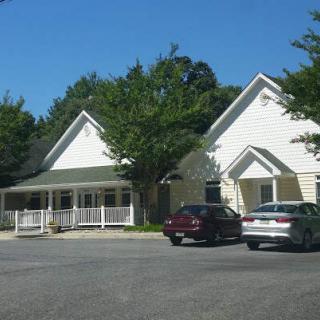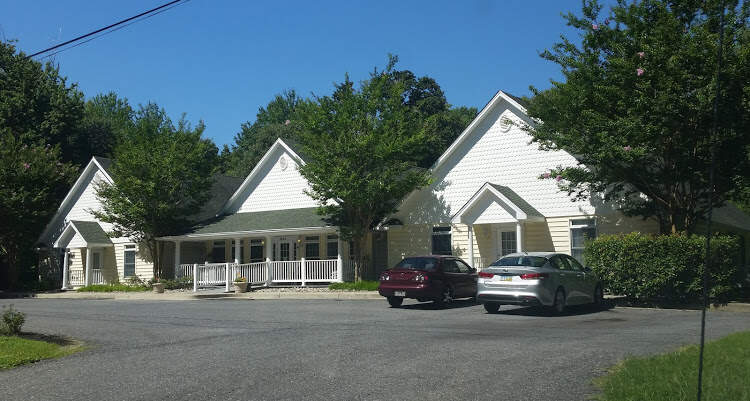
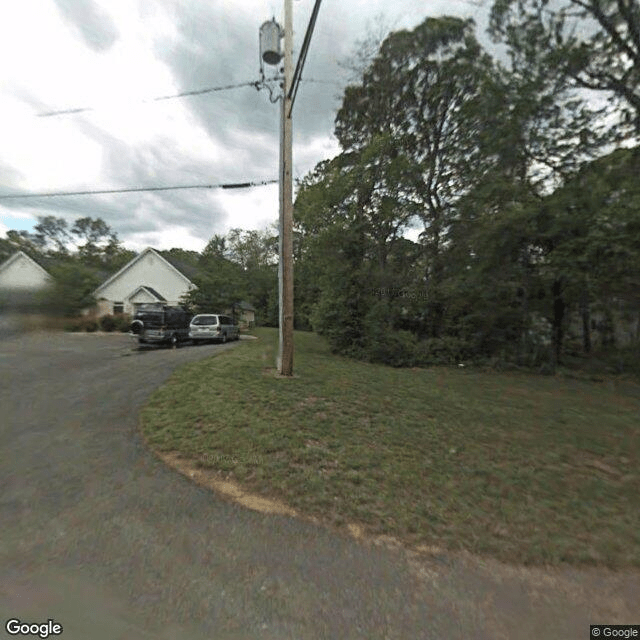
8004 Shadow Oak Lane, Pasadena, MD 21122
To contact a resident: (410) 439-4697
For more information about senior living options: (866) 208-4318
The Peartree House Assisted Living at Shadow Oak - Pasadena, MD Costs & Pricing
The Peartree House Assisted Living at Shadow Oak in Pasadena, MD, offers a monthly cost of $4,500 for a one-bedroom unit, which positions it slightly above the average for Anne Arundel County at $4,469. When considering the broader context of Maryland, the state average is notably lower at $3,904. This pricing reflects the facility's commitment to providing quality care and services tailored to residents' needs in a supportive environment. While The Peartree House may be on the higher end compared to local and state averages, it is important to consider the value derived from its specialized amenities and personalized attention.
| Floor plans | The Peartree House Assisted Living at Shadow Oak - Pasadena, MD | Anne Arundel County | Maryland |
|---|---|---|---|
| 1 Bedroom | $4,500 | $4,469 | $3,904 |
Skilled Nursing Facilities with a similar price nearby
-
from -$212 / mo

Winter Growth-Maryland Memories
$4,288 / month23.6 miles away -
from +$700 / mo

Brightview Towson
$5,200 to $7,825 / month20.1 miles away -
from -$821 / mo

Roland Park Place
$3,679 to $5,189 / month17.3 miles away -
from -$668 / mo

Crofton Convalescent Center
$3,832 / month13.9 miles away -
About the same
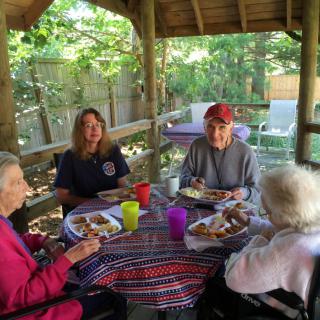
Arcadia of Chester
$4,500 to $5,400 / month13.6 miles away
Overall Review of The Peartree House Assisted Living at Shadow Oak - Pasadena, MD
Pros
 The staff are friendly, experienced, and able to assist with residents’ needs, including bed dependency and dementia.
- The smaller size is a plus because all staff know the resident and her needs, and callers get answers directly from the person who answers the phone.
- The facility can accommodate bed-dependent residents who require a two-person lift.
- With only about 15 residents, every staff member knows the resident’s needs.
- The price fits into the budget.
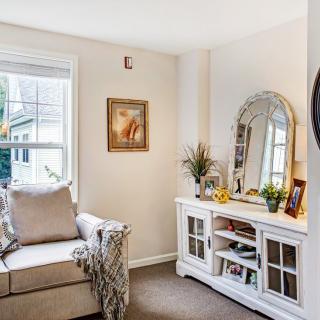
- All rooms are singles and nicely sized, with a good-sized bed and attached bath.
- The staff always have a smile on their faces when greeting residents and families.
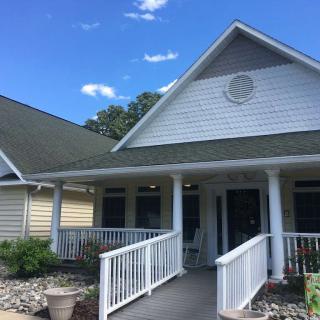
- The facility is beautiful, with comfortable recliners and a sunny day room.
- The campus offers lots of activities (music, bingo, trips, holiday parties) and has a delivery-on-site pharmacy.
Cons
 They felt Peartree House was too far from their mother’s home.
- They found the price to be out of their budget.
- They experienced difficulty obtaining a UTI test for their mother and had to visit a specialist and the ER to get the needed antibiotics.
Review
The Peartree House Assisted Living at Shadow Oak in Pasadena, MD is best suited for families seeking highly personalized, hands-on care for a bed-dependent, dementia-affected senior who thrives in a small, intimate setting where staff familiarity translates into reliable daily responsiveness. With only about 15 residents, the community functions like a close-knit home rather than a large institution. This translates into staff who know each resident’s routines, preferences, and triggers, and who can provide updates without being shuffled between multiple people. For families prioritizing continuity of care, clear lines of communication, and a homelike atmosphere, this property stands out.
Those weighing alternatives should consider factors that this small scale may not satisfy. If a loved one requires less hands-on attention but more expansive programming, bigger-scale social opportunities, or broader medical oversight, a larger community could be a better fit. Distance from family can also be a deal-breaker; the Roaring practicality of a two-mile proximity to a familiar former home is a strong plus here, but for families living farther away or who want more turnkey access to specialists, other options may offer greater convenience. Price sensitivity is another consideration: for some, the monthly cost can stretch budgets, especially when compared to facilities with different financing structures or economies of scale. Finally, when urgent or complex medical testing and rapid antibiotics coordination are needed, some families may prefer settings with broader on-site resources.
The strongest advantages of Peartree House cluster around its intimate environment and the way care is delivered. The small size ensures every staff member knows each resident well, which means quicker, more precise answers when questions arise and fewer hand-offs that can blur responsibility. The facility’s ability to accommodate bed-dependent residents with a two-person lift is a concrete, practical win for families facing significant mobility challenges. Singles apartments with adequate room for personal furnishings, attached baths, and consistently cheerful staff create a dignified, comfortable daily life. The on-site pharmacy capability that delivers medications further reduces friction, and the array of activities, music, Bingo, trips, holiday parties, keeps residents engaged without requiring a trek to a larger campus. Family members repeatedly note the sunroom and common spaces that foster sociability and a sense of community rather than a corner-of-the-building feel.
Yet, the review slate does identify meaningful caveats. Price tension is real for some families, even with a modest footprint; several visitors mention affordability as a primary factor in determining fit. The clinical side can feel uneven at times; one review highlights the challenge of obtaining timely testing and antibiotics for a urinary tract infection, requiring external specialists and ER visits. While this underscores the importance of coordination with outside medical providers, it also exposes a potential gap in rapid, on-site clinical response that some prospective residents will want to weigh against the level of personalized daily care. Finally, the compact size, though a strength for companionship, may limit the sheer variety of specialized programming that larger communities can offer.
The interplay between advantages and drawbacks points decisively toward a practical verdict: for a resident who values trusted daily contact, continuity of care, and a comforting, home-like milieu, Peartree House delivers far more than it costs in emotional and logistical friction. Families with a high need for two-person assistance, dementia-friendly routines, and a staff culture that greets every inquiry with familiarity will find this setting especially reassuring. The on-site conveniences, the pharmacy, singles rooms, and the ability to attend local church services, further anchor a sense of normalcy and routine that can be hard to maintain in bigger communities. In short, the pros align tightly with needs centered on intimate care, predictable communication, and resident dignity.
For those where the scales tip toward breadth over depth, more social avenues, broader medical oversight, or tighter budgeting, alternatives should be seriously considered. But for families prioritizing dependable, person-centered attention in a compact, manageable environment, The Peartree House offers a compelling, practical solution. It is a community where the day-to-day experience is driven by relationships: residents are known by name, questions land with familiar staff, and the environment feels like a thoughtfully run home rather than a hospital wing. That clarity of purpose makes it a strong recommendation for the right fit, with clear boundaries on when it may be prudent to look elsewhere.
 1-bedroom apartments
 Assisted Living
 Skilled Nursing Facility
 Activities on-site
 Devotional services off-site
 Financial aid
 Guasts at mealtime
 Indoor common areas
 Respite or short term stays offered
 Baltimore-Washington International (11 miles away)
 Ambulatory care
 Diabetic care
 Hospice care
 Incontinence care
 Meal preparation and service
 Medication management
 Physical therapy
 Fitness programs
 English


 Comprehensive Residential Support and Assisted Living Solutions for Individuals with Disabilities
 Comprehensive Supportive Living Arrangements for Adults with Disabilities
 Funding and Affording Assisted Living: A Thorough Overview