

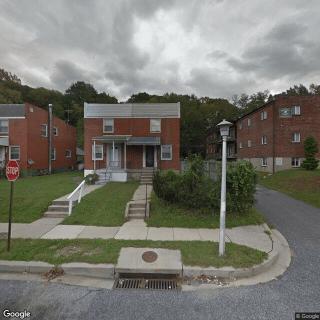
3604 White Avenue, Baltimore, MD 21206
For more information about senior living options: (866) 208-4318
Royal Heart Costs & Pricing
Royal Heart offers competitive pricing for its accommodations compared to both Baltimore city and the broader Maryland area. For a semi-private room, residents at Royal Heart can expect to pay $1,800 per month, which is significantly lower than the average costs of $3,116 in Baltimore city and $3,545 throughout the state. Those opting for a private room will also find Royal Heart's rate of $2,500 to be more economical, particularly when compared to Baltimore city's $3,729 and Maryland state's average of $4,112. This pricing structure underscores Royal Heart's commitment to providing quality care while maintaining affordability in a market where costs can be quite steep.
| Floor plans | Royal Heart | Baltimore city | Maryland |
|---|---|---|---|
| Semi-Private | $1,800 | $3,116 | $3,545 |
| Private | $2,500 | $3,729 | $4,112 |
Assisted Living communities with a similar price nearby
-
from +$200 / mo

Young at Heart Assisted Living
$2,000 to $2,500 / month13.5 miles away -
from -$300 / mo
Dee's House of Care
$1,500 to $2,000 / month0.3 miles away -
from -$100 / mo

Moms & Pops Place
$1,700 to $2,000 / month2.4 miles away -
from +$200 / mo

Pearls of Wisdom
$2,000 to $3,500 / month19.8 miles away -
About the same

Pleasant Garden II
$1,800 to $2,500 / month9.3 miles away
Overall Review of Royal Heart
Cons
 The facility serves only canned and frozen foods, with no fresh options.
- The staff did not assist the dad with basic care, including getting dressed.
- The cook apparently does not know what she is doing.
- They were working on the floor where the dad slept; when he asked them to leave the door open to avoid inhaling dust, the cook yelled that it was state rules to close the door.
- A night-shift worker yelled at the dad because he couldn't understand English.
- The dad is being moved, and others are warned not to send their loved ones there.
Review
Royal Heart in Baltimore, MD is best suited for families seeking a low-to-moderate cost option where they can actively supervise and advocate for a resident who has relatively modest care needs. It may function for someone who is mostly independent and can rely on family or outside caregivers for more intensive assistance. For anyone relying on consistent, hands-on daily care, reliable nutrition, and a respectful, responsive care culture, this community is unlikely to meet those demands. The available signals suggest success hinges on vigilant oversight rather than seamless, self-sufficient operation.
Those weighing alternatives should focus on options that demonstrably deliver dependable, compassionate assistance and clear accountability. The most troubling accounts describe neglect in activities of daily living, substandard meal quality, and staff interactions that feel dismissive or even hostile. Language barriers coupled with perceived disrespect amplify safety concerns and undermine trust in daily operations. In short, families should pursue communities with transparent staffing practices, documented care standards, and proactive problem resolution, rather than accepting a patchwork of uneven experiences.
On balance, the few positive notes from other reviewers imply some basic functionality, likely related to affordability or occasional satisfactory staff interactions, but those benefits do not erase the severity of the core failures cited. The contrast between isolated praise and a stark, negative incident pattern makes the true quality of care highly unpredictable. Pros that exist are insufficient to offset risks tied to daily living assistance, hygiene, nourishment, and a climate where residents may feel unheard or disrespected.
The most concrete cons center on daily care gaps and environment quality. A resident with a leg amputation reportedly received no help with dressing, which signals insufficient hands-on support for essential activities. Food quality appears questionable, described as canned or frozen rather than fresh, raising concerns about nutrition and dining experience. Dust and an unsettled or unsafe atmosphere were mentioned, with staff behavior contributing to a sense of fear rather than reassurance. Taken together, these elements point to real safety concerns and a troubling culture that does not consistently honor resident dignity.
Families evaluating this community should demand verifiable, up-to-date evidence of quality and safety. Inquire about staff-to-resident ratios, hands-on assistance procedures, and caregiver training focused on ADLs and respectful communication. Request the kitchen’s standards for meal preparation, menu variety, and accommodations for dietary restrictions, along with a plan for regular quality audits. Take a thorough tour at different times, speak directly with residents about their day-to-day experiences, and meet the administrator to understand escalation and remediation processes. If responses feel evasive or stagnant, that hesitation should be treated as a meaningful warning sign.
In sum, the practical takeaway is clear: Royal Heart is a choice best avoided for families prioritizing reliable, compassionate daily care and a consistently respectful environment. Alternatives with proven care quality and transparent operations should be pursued, especially for residents needing regular assistance and careful supervision. If this community remains under consideration, insist on aggressive due diligence, services, staffing, food, and culture must be verifiably strong before any commitment is made. The recommendation is to proceed only with caution, and only if other options prove insufficient and must be balanced against stringent, ongoing oversight.
 10 resident community capacity
 Assisted Living
 Board and Care Home
 Activities off-site
 Cable or satellite TV
 Devotional services off-site
 Dining room
 Fully furnished
 Garden
 Housekeeping services
 Indoor common areas
 Move-in coordination
 Outdoor common areas
 Private
 Respite or short term stays offered
 Telephone
 Wi-Fi/high-speed internet available
 Baltimore-Washington International (14 miles away)
 24-hour supervision
 Ambulatory care
 Assistance with bathing
 Assistance with dressing
 Assistance with transfers
 Diabetes diet
 Diabetic care
 Incontinence care
 Meal preparation and service
 Medication management
 Special dietary restrictions
 Transportation arrangement (medical)
 Transportation to doctors appointments
 Extensive care options and amenities (private bathrooms, on-site/off-site activities, vegetarian meals, and medical support).





 A Detailed Exploration of Assisted Living Medicaid Waivers Across the United States
 Comprehensive Residential Support and Assisted Living Solutions for Individuals with Disabilities
 Comprehensive Supportive Living Arrangements for Adults with Disabilities