
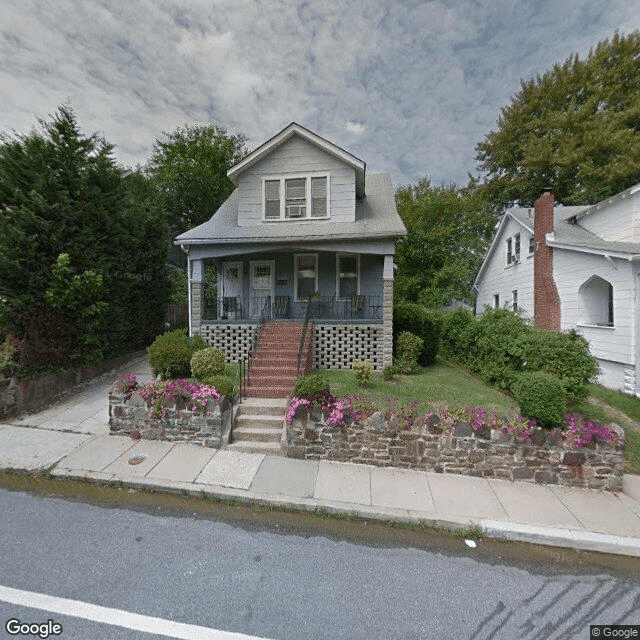
5008 Walther Avenue, Baltimore, MD 21214
For more information about senior living options: (866) 208-4318
Overall Review of Ebenezer House
Pros
 Ebenezer House is clean and bright.
- The staff are friendly and pleasant.
- The residents appear happy and well cared for.
- The facility is absolutely spotless, with daily custodial service.
- Meals are provided three times a day plus snacks.
- The place has a nice backyard and seating areas for outdoor enjoyment.
- The atmosphere is welcoming and the environment feels organized.
- The director and staff are sincere, dedicated, and attentive to residents.
- The bedrooms are adequately sized for comfort.
Cons
 It wouldn't fit her mother's needs.
- There weren't any activities for the residents.
- The rooms were small.
- There wasn't much they could offer in terms of amenities.
- No transportation was provided.
- The house had two levels with a lot of steps, which was not good for her mother.
Review
Ebenezer House is best suited for seniors who want a genuinely homey, intimate setting where staff know residents by name and care remains personal rather than clinical. This Baltimore-area residential home emphasizes small-scale living, with clean, bright spaces and a management style that keeps daily life simple and predictable. It works well for someone who values straightforward meals, light social interaction, and a comfortable, clutter-free atmosphere, including a pleasant backyard and porch for fresh air. It is not a fit for those desiring a full-fledged assisted-living campus with extensive on-site services or aggressive medical oversight; families should consider alternatives if ongoing skilled nursing, regular transportation to appointments, or a broader range of amenities are top priorities.
The strongest positives are tangible and consistent. The facility earns praise for being clean and well maintained, with staff described as friendly and genuinely caring. Residents often appear happy, and the leadership, notably the director, comes across as organized, sincere, and devoted to delivering attentive, person-centered care. Mealtimes are solid, with three meals daily plus snacks, and there is evidence of social activity and small-group outings that break up the day. The setting itself, a residential home with a backyard and a welcoming outdoor porch, supports a calm, homelike routine where residents can feel at ease rather than overwhelmed by institutional surroundings. For families seeking a low-key, dependable daily rhythm, this environment can be an important offset to its modest footprint.
Yet the reviews do flag clear drawbacks that matter in real-world decision-making. The utmost caveat is scalability: with a very small staff footprint in a home that houses multiple residents, staffing ratios can feel lean, one reviewer noted a single caregiver for as many as eight residents. The physical layout compounds limitations: two levels with a number of steps makes mobility and safety a concern for residents who use walkers or will eventually require more level-access living. Space is tight in common areas and dining rooms, and several accounts point to a lack of robust, formal programming beyond occasional outings or activities. Transportation to appointments and errands is not provided, which can create practical friction for families without reliable private transport or external arrangements.
These strengths and limitations interact in a practical way. For a resident who values a close-knit, home-like atmosphere and can manage with a lighter activity calendar, the care model can feel intimate and reassuring, the kind of place where staff greet residents by name, meals arrive consistently, and neighbors gather for simple social moments on a porch or in a shared living space. The absence of a large-scale activity schedule is less consequential if personal connections become the centerpiece of daily life, and if the family is comfortable supplementing outings or programs on weekends. Cleanliness and a sense of pride in presentation, plus firsthand impressions of a well-run, caring team, pull weight when deciding against larger, more impersonal facilities.
Alternatives become attractive when the gaps identified above align with a resident’s needs. Those requiring ongoing, higher levels of mobility assistance, detailed medical oversight, or a robust, on-site activity program will likely be better served elsewhere. If a resident cannot tolerate stairs, needs a ramped entrance or elevator access, or insists on in-house transportation to appointments, Ebenezer House’s current configuration likely won’t meet those expectations. Similarly, families seeking a campus with more expansive amenities, structured therapy options, and plentiful group programming should look at larger assisted living communities or continued-care settings that can scale care more aggressively as needs evolve.
For families seriously evaluating Ebenezer House, a practical, mission-critical approach is advised. Visit with a clear checklist: confirm current staff-to-resident ratios and whether a designated caregiver covers certain shifts; inspect the two-level layout for accessibility, confirm whether any stairlifts or ramps are available, and verify the possibility of improving mobility safety. Inquire about transportation arrangements, meal variety and dietary accommodations, and the cadence of activities, are there regular outings, and who coordinates them? Speak with several residents about daily routines and perceived quality of life to gauge consistency, not just first impressions. When alignment exists between the elder’s priorities, home-like feel, consistent meals, friendly staff, and social opportunities, and the realities of limited space and staffing, Ebenezer House offers a compelling option worth prioritizing in the decision table.
 7 resident community capacity
 Detached homes
 Assisted Living
 Skilled Nursing Facility
 Activities off-site
 Bath tubs
 Cable or satellite TV
 Dining room
 Fully furnished
 Garden
 Housekeeping services
 Indoor common areas
 Laundry
 Move-in coordination
 Outdoor common areas
 Respite or short term stays offered
 Telephone
 Wi-Fi/high-speed internet available
 Baltimore-Washington International (13 miles away)
 24-hour supervision
 Ambulatory care
 Assistance with bathing
 Assistance with dressing
 Assistance with transfers
 Companion care
 Diabetes diet
 Diabetic care
 High acuity care
 Hospice care
 Incontinence care
 Meal preparation and service
 Medication management
 Special dietary restrictions
 Transportation arrangement (medical)
 Transportation to doctors appointments
 Games
Games Live musical performances
 Stories


 Understanding the True Cost of Assisted Living in 2025: A Comprehensive Guide
 Understanding Medicaid Coverage for Assisted Living: A Comprehensive Guide
 How and When Medicaid May Cover Assisted Living Costs