
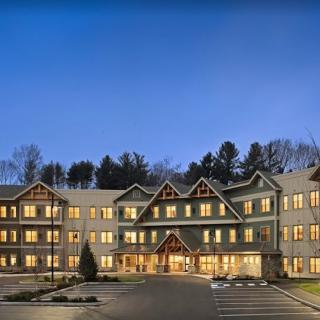
11 Bishop Drive, Windham, ME 04062
For more information about senior living options: (866) 208-4318
Overall Review of Bishop House
Pros
 Windham Pines is a great place.
- The staff at Windham Pines is amazing.
- It is a very amazing and helpful place.
- The services and staff there are absolutely amazing.
- It is an excellent place for families.
Cons
 They are understaffed.
Review
Bishop House in Windham, Maine is best suited for families valuing a quiet, privacy-forward setting where staff show genuine warmth and residents can enjoy a homelike atmosphere. This community tends to attract families who want to stay closely involved in daily care and who prioritize personal dignity, calm routines, and a discreet, low-noise environment. It suits residents who are comfortable with a smaller, more intimate operation and who place a premium on relational care over high-energy programming.
That said, this is not the right fit for everyone. Families needing relentlessly reliable, around-the-clock staffing with rapid response times or a sunrise-to-sunset activity calendar should plan to look elsewhere. The facility’s footprint and staffing model appear to support a serene, home-like vibe, but it can leave gaps for those requiring intensive daily assistance, frequent medical oversight, or highly structured engagement. In short, when heavy medical needs collide with a lean staffing model, alternatives with larger teams and more extensive on-site resources become compelling.
The strongest pro is unmistakably the quality of care delivered by caregivers who are described as caring, attentive, and deeply committed to residents. When staff are praised as “amazing” and capable of forming meaningful connections, the resulting sense of security and dignity for residents stands out. Another clear advantage is the emphasis on privacy, the location itself is described as discreet, which protects resident confidentiality and reduces everyday bustle. For families, the combination of compassionate oversight and a quiet, private setting can translate into meaningful peace of mind, especially for residents who thrive on predictable routines and personal attention.
The principal drawback centers on staffing levels. Several observers flag understaffing as a real constraint, suggesting that even the best-intentioned teams can struggle to respond promptly or deliver a broad range of activities. This shortfall can translate into slower-paced care, limited real-time assistance, and occasional frustration for families seeking consistent, immediate attention. The tension between high-quality, person-centered care and a lean staffing model is the defining trade-off; when needs escalate, the system’s weaknesses may become more apparent, even if the core team remains devoted.
Despite the staffing challenge, the pros can sufficiently offset the cons for many families, provided expectations align with the community’s realities. The composed, respectful environment and strong caregiver-resident relationships offer a level of comfort that is hard to replicate in busier settings. Privacy and a family-friendly culture allow relatives to participate meaningfully in care planning and daily routines without feeling overwhelmed by noise or constant programming. Prospective residents should verify current staffing ratios, acuity capacity, and the care plans in place for emergency and after-hours coverage, then weigh these against their own needs for speed of service and breadth of activities.
In the end, Bishop House is a practical choice for those who prize quiet dignity, a homey feel, and hands-on, compassionate staff who genuinely care about residents. It is less compelling for families seeking robust, high-intensity programming, extensive medical integration, or a facility with large, round-the-clock teams. For decision-making, focus questions should center on staffing stability, the availability of on-site medical oversight, and how the community accommodates residents with higher care needs without compromising the privacy and calm that define its appeal. If those elements align with a resident’s priorities, Bishop House stands as a solid, well-intentioned option; if not, exploring alternatives with stronger staffing models and more comprehensive on-site resources is strongly advised.
 4 resident community capacity
 Assisted Living
 Cable or satellite TV
 Dining room
 Fully furnished
 Garden
 Housekeeping services
 Move-in coordination
 Outdoor space
 Telephone
 Wi-Fi/high-speed internet available
 Portland International Jetport (10 miles away)
 24-hour supervision
 Activities of daily living assistance
 Assistance with bathing
 Assistance with dressing
 Assistance with transfers
 Diabetes diet
 Meal preparation and service
 Medication management
 Special dietary restrictions
 Transportation arrangement (medical)
 Transportation to doctors appointments


 Understanding Medicaid Coverage for Assisted Living: A Comprehensive Guide
 How and When Medicaid May Cover Assisted Living Costs
 A Detailed Exploration of Assisted Living Medicaid Waivers Across the United States