
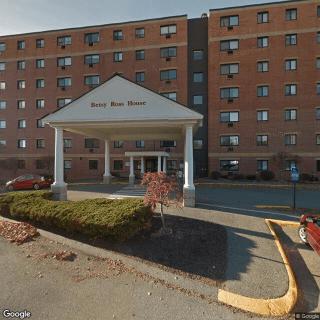
165 Cumberland Avenue, Portland, ME 04101
For more information about senior living options: (866) 208-4318
Overall Review of Mainestay
Pros
 The place feels like home and supports growth, learning, and becoming one’s best self.
- The staff demonstrate love and unwavering commitment across the board, fostering lasting friendships.
- They help residents find doctors and other resources when needed.
- They support residents to learn basics and pursue college, promoting independence.
- They have improved communication and trust, with accountability among staff.
- Mainestay is described as a creative environment with recreational activities that support healing and recovery.
- The lower-ranked staff members are kind, caring, and hardworking, doing the real hard work of the program.
- Newcomers are welcomed with love and politeness, and the food is praised.
- The program has saved lives and can be a pivotal place for those at rock bottom.
Cons
 The program has a history of client rights violations and punitive programming.
- Under the new director, it moved toward manipulation, gaslighting, and punitive practices framed as restorative justice.
- It misuses restorative practices in a harmful and sometimes abusive manner.
- A documented incident showed two clients being sexually abused by another client, with disclosure in a circle that retraumatized the victims.
- The program talks about rights but often frames them as conditional, casting doubt on whether residents belong.
- Residents are pressured to sacrifice basic human rights or face homelessness, hindering independence.
- Leadership and state gatekeeping rely on numerical scores to guide treatment, undermining healing and safety.
- Staff are described as inadequately trained, even though lower-ranked staff members are said to be kind and caring.
- Some reviewers state that clients are harassed and the care environment is not adequately trained.
Review
Mainestay in Portland, ME, is best suited for young adults aged 18–25 who need transitional living with mental health support or co-occurring substance use recovery in a small, community-like setting. The model leans on peer networks and frontline staff to provide daily structure, accountability, and practical independence skills. It works best for residents who can tolerate a tightly knit environment where staff engagement feels personal, and where healing emerges through consistent, hands-on support from lower-rank staff who genuinely care. This is not a passive, hands-off placement; it demands active participation, but it can offer a path to growth for those who respond well to close-knit accountability and a creative, living-learning atmosphere.
Those who should consider alternatives are families and young adults with heightened safety concerns or a history of trauma where trust in leadership is fragile. If robust, trauma-informed supervision at all levels is non-negotiable, the risk profile here becomes too high. Admissions may not be the right fit for individuals who require consistently professional oversight, clear boundaries enforced by a stable director, and a program that reliably avoids punitive programming or misused restorative practices. For anyone whose prior experiences include retaliation, gaslighting, or retraumatization, a more regulated setting with transparent, well-trained clinicians and independent safety checks is likely a wiser match.
The strongest positives lie with the frontline staff and the culture they try to cultivate. When residents experience warmth, genuine care, and daily practical support from the people on the ground, meaningful progress, such as establishing routines, learning basic life skills, and rebuilding trust, can occur. The environment can feel like a real home and offers a sense of belonging that supporters emphasize as transformative. There is unmistakable value in a program that can mobilize its lower-tier staff to deliver authentic compassion and hands-on guidance, and in the creative energy the house can foster when leadership is oriented toward growth rather than punitive control.
Yet the most significant drawbacks temper those strengths. There are documented and persistently troubling concerns about client rights violations and punitive programming, including allegations of manipulation and harmful uses of restorative practices. Incidents described by former residents point to retraumatization and undermined safety when participants are pressured to accept policies framed as “choices” that still funnel them toward compliance or homelessness. Reports of staff inadequacies at higher levels, inconsistent leadership, and a culture driven by numerical goals rather than individualized healing create a precarious climate. The combined effect can erode confidence in long-term safety and predictable outcomes, even as some residents report positive daily interactions with frontline workers.
Understanding how the pros and cons interact is crucial for decision-making. The genuine care shown by entry-level staff can deliver real, immediate relief and a sense of belonging that supports recovery, but this potential is vulnerable to governance failures and a leadership mismatch. If proceeding, families should insist on transparent protections: clear documentation of staff training, formal mechanisms for reporting abuse or misconduct, independent oversight of restorative practices, and a concrete, crisis-safe plan that prioritizes residents’ safety over obedience to program rules. A strong exit strategy and guaranteed access to alternative services should be part of the admission plan.
In practical terms, this community may be suitable for someone who can anchor themselves in a supportive but imperfect system, with strict oversight and an active safety net. For most families seeking stability, predictable professional oversight, and consistently trauma-informed care, alternatives with stronger governance and fewer red flags are worth exploring. The decision should hinge on whether the current leadership trajectory can demonstrate tangible reforms, the reliability of staff training, and a credible, enforceable commitment to resident safety. If those assurances cannot be secured, exploring other transitional housing or intensive outpatient options is the prudent course.
 8 resident community capacity
 Assisted Living
 Cable or satellite TV
 Dining room
 Fully furnished
 Garden
 Housekeeping services
 Move-in coordination
 Outdoor space
 Telephone
 Wi-Fi/high-speed internet available
 Portland International Jetport (3 miles away)
 24-hour supervision
 Activities of daily living assistance
 Assistance with bathing
 Assistance with dressing
 Assistance with transfers
 Diabetes diet
 Meal preparation and service
 Medication management
 Special dietary restrictions
 Transportation arrangement (medical)
 Transportation to doctors appointments





 Exploring the Contrasts Between Assisted Living and Skilled Nursing
 8 Key Indicators That Suggest It May Be Time to Transition from Assisted Living to Skilled Nursing Care
 Vibrant Senior Living: A Comprehensive Guide for Active Older Adults