
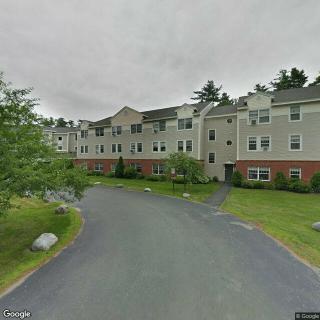
52 Division Street, Bangor, ME 04401
For more information about senior living options: (866) 208-4318
Overall Review of Ohi - 52 Division Street
Pros
 OHI is a much-needed organization that helps many people.
- OHI is a great organization that helps people in need every day.
- The staff are the most caring and compassionate individuals who go above and beyond for their clients.
- OHI is awesome.
- Loved ones are truly cared for by OHI.
Cons
 The reviewer was not impressed with the care provided to their family member, noting that medical care was refused for four days and their family member was made to do things she did not want to do.
- Things looked grim for their family member.
- Someone answered and hung up on them.
Review
OHI at 52 Division Street in Bangor is best suited for families seeking a mission-driven, supportive-housing option for an elderly loved one or an adult with ongoing daily-living needs who values warmth, routine, and steady social contact. This community appears most effective for households that prioritize a relationship-based environment where staff are visibly invested in residents and where stability and daily structure can compensate for advancing independence challenges. It is less appropriate for families seeking intensive medical oversight or a facility that mirrors a traditional nursing home. Those who require rigorous clinical management or highly standardized care protocols should consider alternatives with stronger on-site medical staffing and defined clinical routines.
The strongest positives revolve around the staff and the organization’s core purpose. Reviewers repeatedly describe staff as caring and compassionate, with one observer noting an exceptionally hopeful, resident-centered approach. The sentiment that the organization “helps people in need every day” underscores a mission-driven culture where residents are seen and valued. For families who want to feel that their loved ones are not forgotten, these interpersonal dynamics can be the difference between a sense of safety and one of isolation. In that sense, the human element at OHI often shines brighter than in facilities where care staff turnover or impersonality undermine daily life.
Yet the stories that travel with this community cannot be ignored. A notable portion of feedback questions the consistency of care, including a serious charge of medical care being refused for multiple days. Such allegations, if true, strike at the heart of safety and trust and cannot be dismissed when evaluating suitability. Additional concerns center on communication gaps, reports that calls are not answered or are answered abruptly, creating a perception that administrative responsiveness is uneven. With a rating of 3.3 from ten reviews and several one-star experiences, the inconsistency in care delivery and communication emerges as a real risk that families must weigh against the evident warmth of the staff.
The key question becomes how the visible pros balance the major cons. On the one hand, the compassionate staff and the sense of being part of a caring, purpose-driven operation can deliver meaningful daily life improvements, reduce loneliness, and provide dependable routine, benefits that matter deeply for long-term well-being. On the other hand, the possibility of delayed or denied medical attention and unreliable communication erode trust and safety, especially for residents with chronic conditions or escalating needs. For families whose priority is a predictable medical safety net and proactive clinical oversight, these gaps make alternatives with stronger licensed nursing presence more compelling.
For families deciding whether to pursue OHI, several practical steps refine the decision. During visits, insist on speaking directly with the care coordinator and ask for a transparent outline of medical oversight practices, including who makes medical decisions, how emergencies are handled, and how refusals are documented and escalated. Request recent references from families with residents having similar needs, and review staffing patterns, shift coverage, and on-site availability after-hours. Ask to observe a typical day in terms of activities, meals, and ADL support, and press for a clear, written care plan that confirms accountability. If there is any lingering doubt, arrange a trial period or a structured review with a documented set of milestones and decision points.
In the end, OHI may be a viable fit for those who prize a warm, mission-driven environment and strong, day-to-day interpersonal connections, provided that expectations about medical oversight are explicitly acknowledged and managed. For anyone whose priority is reliable, standardized medical care and consistently prompt administrative communication, alternatives, such as traditional assisted living with licensed nursing, or other community-based options with stronger clinical oversight, should be compared vigorously. The prudent path combines due diligence with a candid assessment of risk tolerance: visit, verify, and align care plans with the resident’s health trajectory before committing, and keep a clear exit or escalation strategy if care standards do not meet agreed expectations.
 4 resident community capacity
 Assisted Living
 Cable or satellite TV
 Dining room
 Fully furnished
 Garden
 Housekeeping services
 Move-in coordination
 Outdoor space
 Telephone
 Wi-Fi/high-speed internet available
 Bangor International (3 miles away)
 24-hour supervision
 Activities of daily living assistance
 Assistance with bathing
 Assistance with dressing
 Assistance with transfers
 Diabetes diet
 Meal preparation and service
 Medication management
 Special dietary restrictions
 Transportation arrangement (medical)
 Transportation to doctors appointments


 When to Transition from Assisted Living to Memory Care: Key Indicators, Steps, and Finding the Right Community
 Assisted Living and Memory Care: Understanding Their Core Differences
 Beyond the Bingo Hall: 50+ Enriching Activities for Seniors in Assisted Living