Waukee Memory Care offers competitive monthly rates for its residents, particularly when compared to both Dallas County and the broader Iowa market. For instance, the cost of a studio apartment at Waukee is $2,725, which is significantly higher than the county average of $1,864, yet notably lower than Iowa's statewide average of $3,613. The private room rate aligns closely with the county's figure at $2,795 but falls short of Iowa's higher price point of $4,670. While Waukee's one-bedroom option stands at $3,575 - above Dallas County's typical cost of $2,445 - it still presents a reasonable alternative amidst Iowa's average rate of $2,862. Overall, Waukee Memory Care strikes a balance between providing specialized care and maintaining affordability within the regional context.
Floor plans
Waukee Memory Care
Dallas County
Iowa
Studio
$2,725
$1,864
$3,609
Private
$2,795
$2,795
$4,670
1 Bedroom
$3,575
$2,445
$2,863
Memory care communities with a similar price nearby
Residents and families describe practical guidance for dementia-related needs.
Several reviewers mention dementia or Alzheimer’s and describe staff who took time to help families figure out what to do next. One reviewer specifically credits a team member for listening, answering questions, and making calls to connect them with the right care resources. Others describe patience and supportive interactions when residents were dealing with memory-related challenges. The community also offers memory care programming and related support services for mild cognitive impairment and specialized dietary needs.
caveat2 reviews mention this
Communication can be hit-or-miss
Some families report difficulty getting timely responses.
A couple of reviewers say communication was a problem, including not returning phone calls. One reviewer also describes repeated attempts to reach management without a response, even after follow-ups by text, phone calls, and in-person visits. While many other reviews are positive about staff attention, these experiences focus specifically on responsiveness from leadership and business support.
caveat3 reviews mention this
Pricing changes and billing concerns
Reviewers raise concerns about pricing increases and care eligibility changes.
Some reviewers describe price adjustments after move-in, including accounts of monthly increases that led to ending care agreements. Others raise concerns about billing and contract expectations, including whether long-term care placement or Medicaid options would apply as described. These issues appear alongside discussions of memory care and higher-level care transitions, which suggests cost and coverage can be a key pressure point for families.
How we summarize
Counts show how many written reviews mention each theme; a review can touch several themes, and only frequently mentioned themes are displayed.
Features
Housing
32 resident community capacity
Types of Care
Assisted Living
Memory Care
Amenities
Beauty salon
Cable or satellite TV
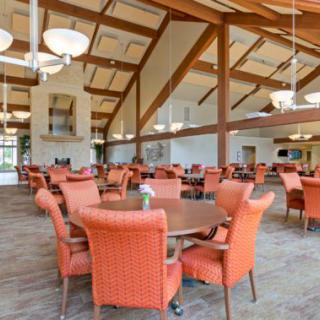
Dining room
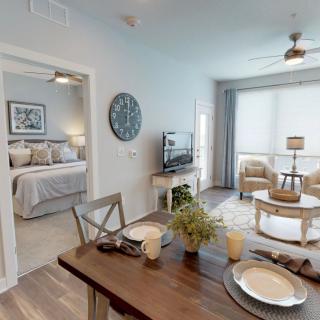
Fully furnished
Garden
Housekeeping services
Kitchenette
Move-in coordination
Outdoor space
Restaurant-style dining
Small library
Telephone
Wi-Fi/high-speed internet available
Transportation
Des Moines International (11 miles away)
Care Services
24-hour call system
24-hour supervision
Activities of daily living assistance
Assistance with bathing
Assistance with dressing
Assistance with transfers
Diabetes diet
Meal preparation and service
Medication management
Mental wellness program
Mild cognitive impairment
Special dietary restrictions
Specialized memory care programming
Dining
Diabetes diet
Special dietary restrictions
Activities
Community-sponsored activities
Resident-run activities
Scheduled daily activities
Nearby Places of Interest
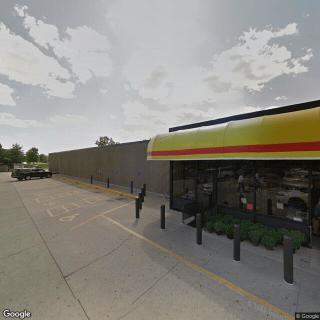
This part of Waukee, Iowa, offers a convenient and vibrant community for seniors looking to settle down. With several physicians and pharmacies within close proximity, accessing healthcare services is easy. There are also numerous restaurants offering a variety of dining options, as well as parks for outdoor recreation and relaxation. Places of worship provide spiritual support, while theaters offer entertainment options. The availability of cafes allows for social gatherings or quiet moments with a cup of coffee. Additionally, the nearby Mercy Medical Center West Lake ensures that quality medical care is readily accessible. Overall, this area of Waukee provides a well-rounded environment for senior living.
Physicians
Ducharme Dermatolgy (0.4 miles)
Waggoner Pediatrics of Central Iowa (Des Moines Pediatrics-West) (0.4 miles)
Waukee Memory Care offers competitive monthly rates for its residents, particularly when compared to both Dallas County and the broader Iowa market. For instance, the cost of a studio apartment at Waukee is $2,725, which is significantly higher than the county average of $1,864, yet notably lower than Iowa's statewide average of $3,613. The private room rate aligns closely with the county's figure at $2,795 but falls short of Iowa's higher price point of $4,670. While Waukee's one-bedroom option stands at $3,575 - above Dallas County's typical cost of $2,445 - it still presents a reasonable alternative amidst Iowa's average rate of $2,862. Overall, Waukee Memory Care strikes a balance between providing specialized care and maintaining affordability within the regional context.
Assistance with dressing, bathing, and transfers ensures that residents maintain their dignity and personal hygiene while receiving the support they need, which is crucial for individuals navigating the challenges of dementia or Alzheimer's disease. Medication management is vital in preventing complications related to missed doses or incorrect administration, thereby promoting overall health. Meal preparation and service cater to dietary needs while encouraging social interaction during mealtimes, fostering a sense of community. Activities of daily living assistance assists residents in maintaining independence as much as possible, contributing to their emotional well-being. The provision of 24-hour supervision ensures safety and security, alleviating concerns for both residents and their families. Programs focused on mental wellness specifically address cognitive decline associated with mild cognitive impairment and advanced stages of dementia by engaging residents in specialized memory care activities designed to stimulate memory retention and cognitive function. Each feature collectively creates an environment tailored to enhance quality of life while addressing the unique complexities associated with memory-related conditions.
Nearby Communities
Legacy Pointe of Waukee
Waukee, IA
Comprehensive care (diabetic care) with social spaces and off-site devotional services.
The Village At Legacy Pointe Nursing Facility
Waukee, IA
4 from 69 reviews
Small 48-bed facility with 24/7 supervision, medication management, and a mental wellness program.
Independence Village of Waukee
Waukee, IA
4.4 from 190 reviews
$2,599 to $5,695 / month
Caring staff, welcoming atmosphere, and an active resident community.
Thomas Place at Waukee
Waukee, IA
4.6 from 18 reviews
$543 to $665 / month
Friendly, well-maintained community with affordable rents and helpful on-site amenities.
Candleridge Apartments
Waukee, IA
4.9 from 73 reviews
Excellent access to healthcare, dining, parks, and cultural venues nearby.
The Courtyards at Shadow Creek
Clive, IA
4.8 from 5 reviews
Small, intimate assisted living with essential services and connectivity.
Attivo Trail
Waukee, IA
4.7 from 74 reviews
$1,250 to $1,590 / month
Extensive amenities and a vibrant 55+ community with friendly staff.
Bickford of West Des Moines
West Des Moines, IA
4.5 from 94 reviews
$4,106 to $4,867 / month
Home-like atmosphere with attentive staff and a varied activities program.
Reminiscence therapy helps individuals with dementia recall past memories through structured discussions and meaningful objects, enhancing mood, relationships, and sense of identity while celebrating their lives. It can be practiced in formal settings or at home, requiring sensitivity to personal histories and cultural backgrounds.
Reminiscence therapy is a structured method for older adults, especially those with dementia, to share life stories using prompts and sensory cues, fostering emotional well-being, social engagement, and self-identity. It aims to improve quality of life by enhancing interpersonal connections and cognitive stimulation while requiring careful facilitation to avoid distressing memories.
Dementia, particularly Lewy body dementia, often involves hallucinations that can significantly distress both patients and caregivers due to disruptions in sensory processing and neurotransmitter imbalances. Effective management includes compassionate communication, environmental adjustments, and a multidisciplinary approach to care while addressing the emotional needs of caregivers.
Get PricingAsk A QuestionSchedule A TourContact Senior Advisor
By clicking submit, you agree to our Partner's Terms of Use. You
also consent to receive calls and texts, which may be autodialed, from our Partner. Your consent is not a condition to
using our Partner's service. Please visit our Partner's Privacy Policy for information about their privacy practices.


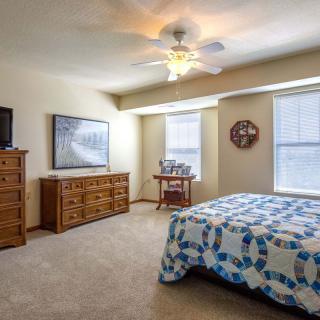
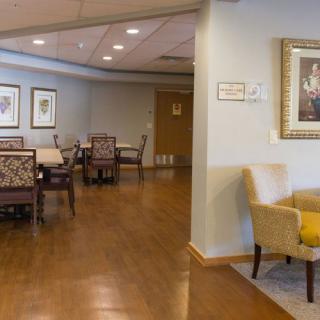
 32 resident community capacity
 Assisted Living
 Memory Care
 Beauty salon
 Cable or satellite TV
 Dining room
 Fully furnished
 Garden
 Housekeeping services
 Kitchenette
 Move-in coordination
 Outdoor space
 Restaurant-style dining
 Small library
 Telephone
 Wi-Fi/high-speed internet available
 Des Moines International (11 miles away)
 24-hour call system
 Activities of daily living assistance
 Assistance with bathing
 Assistance with dressing
 Assistance with transfers
 Diabetes diet
 Medication management
 Mental wellness program
 Special dietary restrictions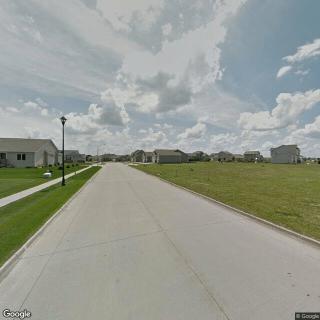
 Comprehensive care (diabetic care) with social spaces and off-site devotional services.
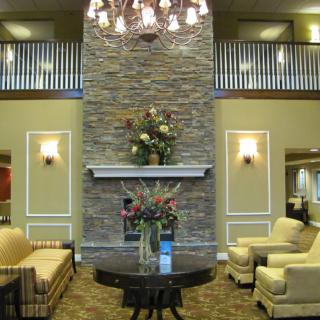
 Exploring the Power of Reminiscence Therapy for Individuals With Dementia
 An In-Depth Look at Reminiscence Therapy in Dementia Care
 Dementia-Related Hallucinations: Causes, Experiences, and Practical Approaches