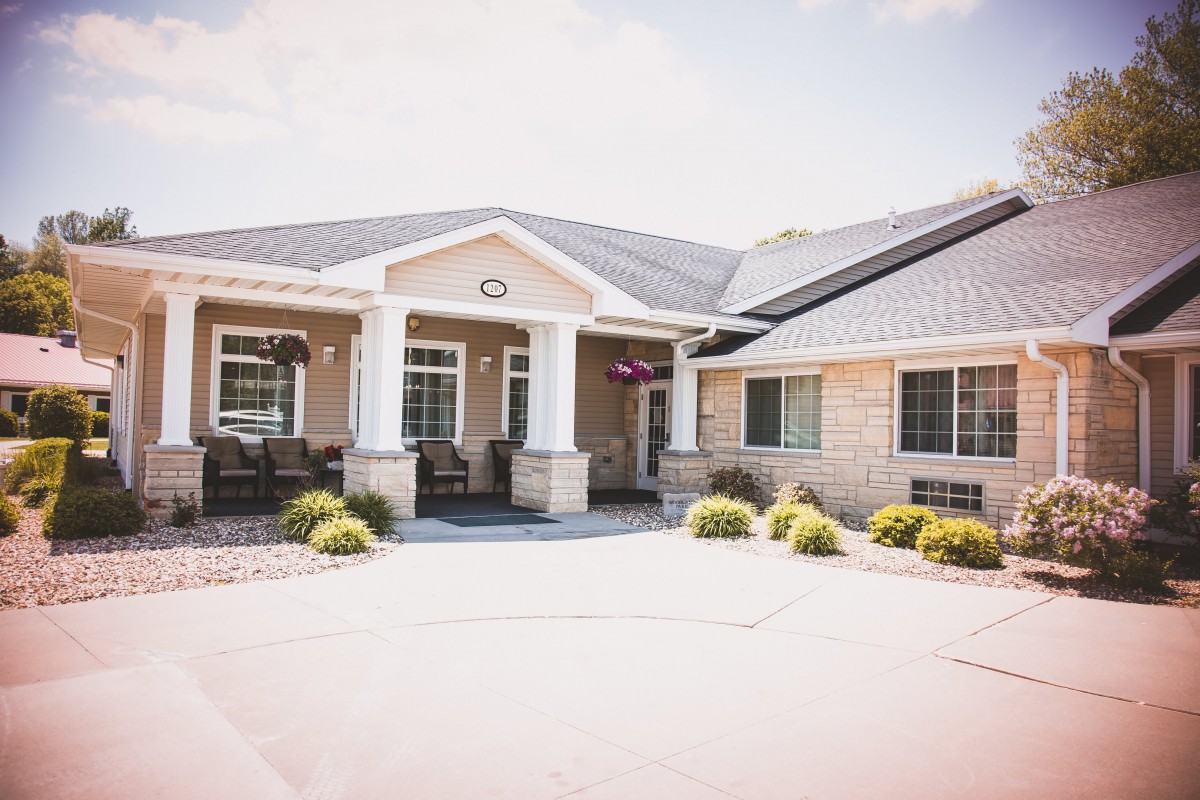


1207 East Third Street, Anamosa, IA 52205
For more information about senior living options: (866) 208-4318
Woodland Park Assisted Living Costs & Pricing
Woodland Park Assisted Living offers competitive pricing for its residents, with a monthly cost of $2,510 for a one-bedroom unit. This rate is notably lower than the average monthly costs in both Linn County and the broader state of Iowa, where similar accommodations are priced at approximately $3,097 and $2,862 respectively. By providing such accessible rates, Woodland Park not only positions itself as a cost-effective option within the community but also ensures that residents receive quality care and support without overwhelming financial strain. This affordability can be particularly beneficial for families looking to secure assisted living services while maintaining budgetary considerations.
| Floor plans | Woodland Park Assisted Living | Linn County | Iowa |
|---|---|---|---|
| 1 Bedroom | $2,510 | $3,097 | $2,863 |
Assisted Living communities with a similar price nearby
-
from +$228 / mo
Bickford of Marion
$2,738 to $3,194 / month16.3 miles away -
About the same
Cottage Grove Place, a CCRC
$2,500 to $3,995 / month20.2 miles away -
from -$290 / mo
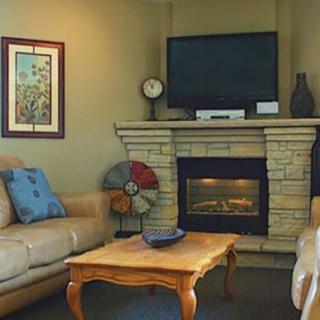
Pinicon Place
$2,220 to $4,500 / month0.5 miles away -
About the same
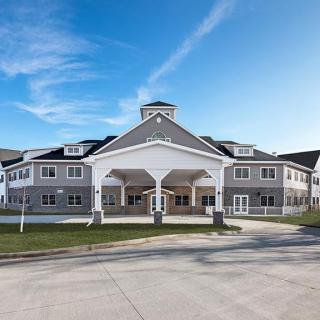
Boyson Heights Senior Living
$2,500 to $5,500 / month21.3 miles away -
from -$425 / mo

Summit Pointe
$2,085 to $5,200 / month15.9 miles away
Overall Review of Woodland Park Assisted Living
Pros
 The staff are always friendly and professional, taking care of the community's loved ones.
- The staff are consistently friendly and helpful, planning fun activities for the residents and showing genuine care for the people living there.
Review
Woodland Park Assisted Living in Anamosa is best suited for seniors who prioritize a warm, people-first environment where staff consistently demonstrate friendliness, professionalism, and a vested interest in the residents’ well-being. The community shines when a loved one benefits from steady, attentive caregiving coupled with a lively, engaging daily routine. For families seeking a place where staff-made connections feel genuine and residents are actively integrated into activities, this option stands out as a practical, well-grounded choice.
Those who may want to consider alternatives are families whose priorities hinge on heavier medical oversight, specialized memory care, or services spread across a larger campus with a broader resource network. If medical acuity drives the decision, or if a resident requires programs specifically tailored to memory support or highly varied on-site services, Woodland Park’s smaller footprint may not align with those needs. In such cases, exploring facilities known for deeper clinical staffing or broader care ecosystems is prudent.
The strongest advantages here are the staff’s consistent friendliness and professionalism, paired with a clear commitment to residents. Caregivers who plan and execute regular activities create a sense of purpose and belonging, reducing isolation and promoting social engagement. The impression of genuine concern about each resident’s well-being translates into dependable daily routines, predictable safety, and a community atmosphere that feels welcoming rather than transactional. This combination often translates into calmer days for families and more meaningful days for residents.
Because the reviews do not surface drawbacks, the main con is not readily evident and thus not heavily weighted in the decision. The absence of explicit downsides suggests a strong alignment between what families value, responsive, caring staff and an active, people-centered environment, and what Woodland Park delivers. However, for families worried about scenarios where care needs escalate, or where specialized memory care or advanced clinical services become essential, the lack of publicized, higher-acuity capabilities may be a real consideration. In those cases, the pros can offset concerns only if expectations remain in line with a community designed around engagement and daily caregiving rather than intensive clinical programs.
From a decision-making standpoint, prospective residents should evaluate how well Woodland Park’s strengths match personal priorities. Observe how staff interact with residents during a visit, note whether the tone is respectful and warm, and assess whether activities align with the resident’s interests and energy level. Inquire about staff-to-resident ratios, the flexibility of activity scheduling, meal options, and the availability of transportation for outings. Talking with current families about consistency of care, responsiveness to questions, and perceived quality of life can reveal how the daily experience translates to long-term satisfaction.
In the end, Woodland Park Assisted Living presents a solid, practical option for families seeking a community where kindness, dependable care, and an active social calendar are the norm. It is particularly well-suited for seniors who thrive in a connected, people-centric setting and for families who place a premium on everyday warmth and engaged programming. If the priority is a high-touch, community-focused experience with consistently positive staff interactions, Woodland Park deserves strong consideration. If the situation requires intensive medical oversight or specialized memory-care resources, those are valid reasons to explore alternatives that brightest align with those clinical and programmatic needs.
 32 resident community capacity
 Assisted Living
 Independent Living
 Cats allowed
 Dogs allowed
 Activities off-site
 Air-conditioning
 Beautician on-site
 Cable or satellite TV
 Devotional services on-site
 Dining room
 Fully furnished
 Garden
 Ground floor units
 Housekeeping services
 Indoor common areas
 Kitchenette
 Move-in coordination
 Outdoor common areas
 Restaurant-style dining
 Small library
 Telephone
 Wi-Fi/high-speed internet available
 24-hour call system
 Ambulatory care
 Assistance with bathing
 Assistance with dressing
 Assistance with transfers
 Diabetes diet
 Diabetic care
 High acuity care
 Incontinence care
 Medication management
 Mental wellness program
 Special dietary restrictions
 BBQs or picnics
 Birthday parties
 Catholic services
 Cooking club
 Day trips and outings
 Happy hour
 Karaoke
 Live musical performances
 Stretching classes
 Trivia games




 Funding and Affording Assisted Living: A Thorough Overview
 Assisted Living Expenses and Long-Term Care Insurance: A Comprehensive Exploration
 Securing Financial Support for Assisted Living: A Comprehensive Overview