For more information about senior living options: (866) 208-4318
2.8 from 37 reviews
5 stars
16
4 stars
0
3 stars
1
2 stars
1
1 stars
19
Golden Living Center - Muncie Costs & Pricing
Golden Living Center - Muncie offers competitive pricing for its private room accommodations, with a monthly cost of $2,100. This rate is significantly lower than the average costs in Delaware County, which stand at $3,683, and the broader state average in Indiana of $4,418. By providing a more affordable option without compromising on care quality, Golden Living Center - Muncie positions itself as an attractive choice for those seeking long-term care services in the area. The center's pricing reflects a commitment to accessibility while ensuring that residents receive essential support tailored to their needs.
Floor plans
Golden Living Center - Muncie
Delaware County
Indiana
Private
$2,100
$3,683
$4,418
Skilled Nursing Facilities with a similar price nearby
Several residents are described as going days without proper hygiene support.
Multiple reviews describe missed or delayed showers and residents left in soiled conditions. Families also mention finding waste on floors or noticing residents sitting in urine or feces for extended periods. One review specifically says a shower did not happen for ten days even after being raised with staff.
caveat3 reviews mention this
Staffing feels stretched
Residents and families report staffing levels that did not meet daily needs.
Some reviews point to understaffing and a lack of staff presence in the building. Others describe staff as overworked and feeling underpaid, with some workers portrayed as less responsive. In the same reviews, families describe outcomes like limited assistance and residents not getting support when needed.
common6 reviews mention this
Staff helpfulness gets praise
Many reviewers describe staff as helpful, friendly, and genuinely caring.
Across several positive reviews, families describe staff as supportive during day-to-day care and interactions. A few reviewers also single out particular staff members for being kind and responsive. One review says the staff treat residents like family, and another highlights helpfulness in the care setting.
differentiator4 reviews mention this
Memory care is mixed
Memory care experiences range from strong approval to serious complaints.
Some reviews specifically reference the memory care setting and describe it as providing great care. At the same time, other reviewers describe serious problems involving care and safety for someone with Alzheimer’s or dementia, including concerns about unit changes and how the environment supports residents. Overall, reviews suggest outcomes vary noticeably within memory care.
How we summarize
Counts show how many written reviews mention each theme; a review can touch several themes, and only frequently mentioned themes are displayed.
Features
Housing
117 resident community capacity
Types of Care
Assisted Living
Memory Care
Skilled Nursing Facility
Amenities
Activities off-site
Activities on-site
Air-conditioning
Beautician on-site
Beauty salon
Cable or satellite TV
Computer center
Devotional services on-site
Dining room
Fitness room
Fully furnished
Gaming room
Garden
Housekeeping services
Indoor common areas
Kitchenette
Move-in coordination
Outdoor common areas
Outdoor space
Private
Private bathrooms
Restaurant-style dining
Small library
Telephone
Wellness center
Wheelchair accessible showers
Wi-Fi/high-speed internet available
Transportation
Community operated transportation
Transportation arrangement
Care Services
24-hour call system
24-hour supervision
Activities of daily living assistance
Assistance with bathing
Assistance with dressing
Assistance with transfers
Diabetes diet
Diabetic care
High acuity care
Incontinence care
Meal preparation and service
Medication management
Special dietary restrictions
Dining
Diabetes diet
Meals provided
Special dietary restrictions
Activities
Activities off-site
Activities on-site
Community-sponsored activities
Concierge services
Devotional activities on-site
Fitness programs
Planned day trips
Resident-run activities
Scheduled daily activities
Nearby Places of Interest
This part of Muncie, Indiana, offers a variety of amenities and services that may be appealing to seniors looking for a convenient and accessible location. With several physicians, hospitals, pharmacies, and restaurants within close proximity, residents have easy access to healthcare and dining options. Additionally, there are cafes nearby for socializing or enjoying a leisurely meal. Places of worship are also available for those seeking spiritual fulfillment. The area features a theater for entertainment as well as parks for outdoor recreation. The Delaware County Airport provides transportation options for those looking to travel. Overall, this neighborhood offers a range of resources that cater to the needs and interests of seniors looking to settle in a vibrant community.
Physicians
US Healthworks (0.2 miles)
Jeremy J. Hunt (0.3 miles)
American Health Network - Spinal Therapeutics (0.5 miles)
Golden Living Center - Muncie offers competitive pricing for its private room accommodations, with a monthly cost of $2,100. This rate is significantly lower than the average costs in Delaware County, which stand at $3,683, and the broader state average in Indiana of $4,418. By providing a more affordable option without compromising on care quality, Golden Living Center - Muncie positions itself as an attractive choice for those seeking long-term care services in the area. The center's pricing reflects a commitment to accessibility while ensuring that residents receive essential support tailored to their needs.
The 24-hour supervision at Golden Living Center - Muncie ensures residents receive constant monitoring and immediate assistance when needed, promoting a safe environment for those with dementia or Alzheimer's. Assistance with activities of daily living, such as bathing and dressing, fosters independence while ensuring personal hygiene and comfort, which can be challenging for individuals experiencing cognitive decline. Support with transfers helps prevent falls and injuries, while incontinence care respects the dignity of residents by maintaining their hygiene without discomfort. Meal preparation and service are tailored to meet dietary needs, assuring that residents receive balanced nutrition essential for their overall health. Finally, medication management not only ensures adherence to prescribed regimens but also alleviates concerns regarding potential side effects or interactions, allowing families peace of mind about their loved one's well-being.
Nearby Communities
Bethel Pointe Health And Rehab
Muncie, IN
4.3 from 105 reviews
24/7 supervision with extensive on-site amenities.
LINCOLNSHIRE PLACE - MUNCIE
Muncie, IN
5 from 16 reviews
24/7 supervision with ADL support, medication management, mental wellness, and active social programs in a furnished setting.
Lincolnshire Place
Muncie, IN
5 from 15 reviews
$3,495 to $5,960 / month
Commitment to dementia care with ongoing staff training and strong management focus.
Muncie Estates Senior Living
Muncie, IN
4.7 from 60 reviews
$3,495 to $4,600 / month
Welcoming, home-like atmosphere with attentive staff and personalized care.
Morrison Woods Health Campus
Muncie, IN
4.3 from 42 reviews
$3,150 to $5,220 / month
Caring, attentive staff delivering excellent care in a pleasant setting.
Westminster Village Muncie
Muncie, IN
4.6 from 80 reviews
Clean, modern facilities with friendly staff, spacious apartments, and engaging activities.
Silver Birch Of Muncie
Muncie, IN
4.5 from 62 reviews
$2,000 / month
New, modern facility with spacious, accessible apartments and attentive staff.
Ashgrove Crossing
Muncie, IN
3.5 from 8 reviews
$1,995 to $7,395 / month
Vibrant social calendar with on-site and off-site activities; accessible features (ground-floor, wheelchair showers) and pet-friendly.
Sundown syndrome, or sundowning, is a phenomenon in dementia patients characterized by increased confusion and agitation during late afternoon and evening, influenced by factors like disrupted circadian rhythms and fatigue. Effective caregiver strategies include establishing routines and managing environmental light while addressing caregiver stress through support services.
Delirium is a rapidly onset, reversible cognitive disturbance often caused by acute medical issues, while dementia is a gradual and irreversible decline due to chronic neurodegenerative diseases. Accurate differentiation between the two is essential for appropriate treatment and management in older adults.
Dementia, including Alzheimer’s disease, is often mischaracterized in terms of lethality as it leads to complications that can be fatal rather than being a direct cause of death; it causes a progressive decline in cognitive and physical health, making patients vulnerable to infections and other health crises. Effective management of nutrition, hydration, and communication is crucial in patient care, with palliative care becoming vital in advanced stages to enhance comfort and quality of life while caregivers play a key role amidst the challenges posed by the disease.
Get PricingAsk A QuestionSchedule A TourContact Senior Advisor
By clicking submit, you agree to our Partner's Terms of Use. You
also consent to receive calls and texts, which may be autodialed, from our Partner. Your consent is not a condition to
using our Partner's service. Please visit our Partner's Privacy Policy for information about their privacy practices.

 117 resident community capacity
 Assisted Living
 Memory Care
 Skilled Nursing Facility
 Activities off-site
 Air-conditioning
 Beautician on-site
 Cable or satellite TV
 Computer center
 Devotional services on-site
 Dining room
 Fitness room
 Fully furnished
 Gaming room
 Garden
 Housekeeping services
 Indoor common areas
 Kitchenette
 Move-in coordination
 Outdoor common areas
 Private
 Private bathrooms
 Restaurant-style dining
 Small library
 Telephone
 Wellness center
 Wheelchair accessible showers
 Wi-Fi/high-speed internet available
 Community operated transportation
 24-hour call system
 Assistance with bathing
 Assistance with dressing
 Assistance with transfers
 Diabetes diet
 Diabetic care
 High acuity care
 Incontinence care
 Medication management
 Special dietary restrictions
 Concierge services
 Planned day trips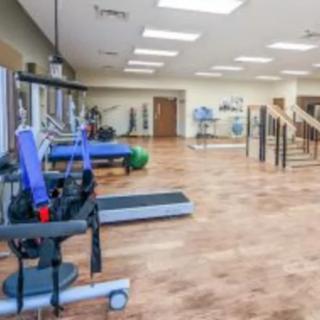
 24/7 supervision with extensive on-site amenities.

 Comprehending Evening Confusion in Dementia: Causes, Manifestations, and Support
 Delirium and Dementia: Unraveling the Key Differences
 Are Dementia and Alzheimer's Disease Lethal? A Comprehensive Exploration