
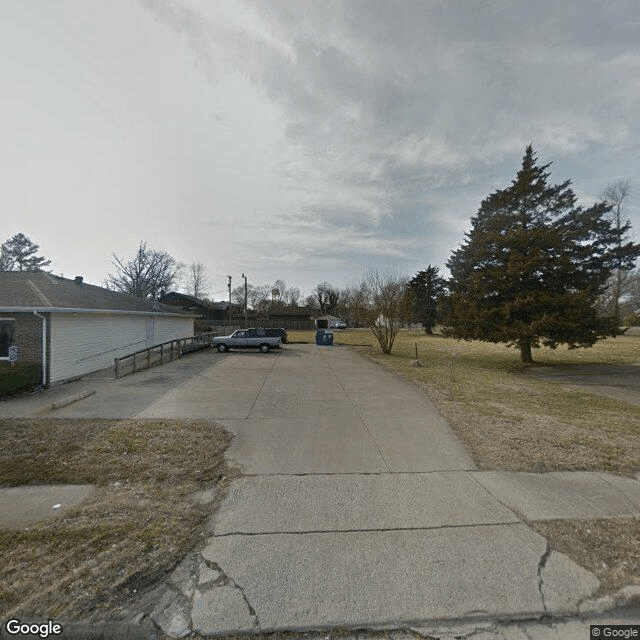
301 N 13th St, Murphysboro, IL 62966
To contact a resident: (618) 687-1415
For more information about senior living options: (866) 208-4318
Overall Review of Our Place
Pros
 There is one employee who takes pride in her job at this place.
- A staff member demonstrates pride in her work at this place.
Cons
 They do not treat their clients like they need to be treated.
- This home is the worst.
- Clients complain because of how bad it is there.
- There is only 1 employee that take pride in her job at this place.
- They don't even need a 1 star for this complaint.
Review
This community in Murphysboro is best suited for residents who can function with minimal daily supervision and whose families or designated guardians are prepared to take an active, ongoing role in overseeing care. The clear message from the reviews is that dependable help and respectful treatment are not reliably in place; therefore, only those who can tolerate potential gaps and who can advocate consistently should consider this option. In practical terms, it serves very low-care needs at best, with the expectation that someone else will monitor and intervene when concerns arise. For a resident who cannot speak up for themselves or whose family cannot step in regularly, this setting rapidly becomes untenable.
Families should explicitly consider alternatives if the resident requires consistent assistance with activities of daily living, timely response to calls, or ongoing dignity-centered care. Larger, better-staffed communities with visible supervisory presence and established escalation procedures are worth prioritizing. If a family is seeking a place where care teams are reliably available, where complaints are addressed promptly, and where residents are treated with daily respect, this particular community should not be the leading choice. The caution is practical: do not sélection based on appearance or location alone when evidence points to systemic staffing and care quality concerns.
The core issues documented in the reviews overwhelm any potential upside. The strongest negative signal is serious dissatisfaction with how residents are treated, described as “not being treated like they need to be.” This is reinforced by multiple residents’ complaints and the perception that the home operates under very limited staffing. Even if one staff member demonstrates pride in her work, that small level of dedication cannot compensate for pervasive gaps in care, responsiveness, and overall morale. With two independent, corroborating one-star evaluations, the risk to residents’ safety and well-being rises notably, making the fundamental question a matter of whether the community can consistently meet basic care standards.
If pursuing this community, a rigorous checklist is non-negotiable. Demand transparency on staff-to-resident ratios, shift coverage, and what happens during night hours. Seek concrete examples of care planning, daily care logs, medication administration practices, and how emergencies are handled when the sole or few caregivers are occupied. Ask about supervision, ongoing training, and how resident rights and dignity are upheld in real-time. The blunt takeaway from the reviews is that respectful, responsive care cannot be assumed; therefore, every inquiry should target proof of reliable staffing, clear pathways to escalate concerns, and measurable improvements in resident experience.
Risk assessment points squarely toward staffing instability and the potential for neglect or delayed responses. When client feedback centers on poor treatment and a lack of pride among staff, the likelihood of inconsistencies in supervision and accountability increases. Families should verify licensing status, inspection history, and any state-issued citations, then triangulate those findings with visits and conversations with residents and their families. A trial period should emphasize visible leadership oversight, consistent caregiver assignments, and a culture that welcomes questions rather than defensiveness. Without tangible evidence of sustained improvement, the red flags outweigh any presumed affordability or familiarity.
In conclusion, this community is not well-positioned for families that prioritize steady, compassionate care and predictable staffing. It is a setting to be avoided by anyone whose loved one requires reliable monitoring, timely assistance, and dignified treatment on a daily basis. The prudent path is to explore options with proven staffing stability, transparent operations, and demonstrated resident satisfaction. When evaluating alternatives, insist on multiple visits at different times, conversations with direct caregivers, and, importantly, access to independent metrics such as state license inspections and resident-rights records. The goal is clear: secure a community where care quality is consistent, staff morale is visible, and families can trust that the resident’s well-being will be prioritized every day.


 Skilled Nursing Facilities vs. Nursing Homes: Making Sense of the Differences
 A Detailed Examination of Nursing Home Costs Across the U.S.
 Exploring Nonmedical Home Care: Understanding Services, Costs, and Financial Approaches