
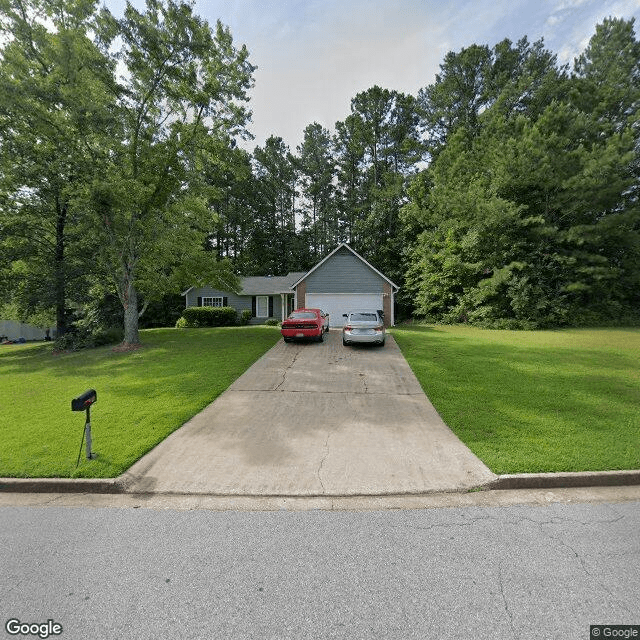
5780 Rock Road, Union City, GA 30291
To contact a resident: (678) 933-2829
For more information about senior living options: (866) 208-4318
Welcome Home Personal Care Costs & Pricing
Welcome Home Personal Care offers competitive rates for its services compared to both Fulton County and the broader Georgia state averages. For a semi-private room, residents can expect to pay $1,700 per month, which is significantly lower than the county average of $2,883 and the state average of $2,529. Similarly, private rooms at Welcome Home are priced at $1,900 monthly, again undercutting Fulton County's average of $3,203 and Georgia's overall average of $2,864. These pricing structures not only reflect a commitment to affordability but also highlight the value offered by Welcome Home Personal Care in providing quality care without compromising on comfort.
| Floor plans | Welcome Home Personal Care | Fulton County | Georgia |
|---|---|---|---|
| Semi-Private | $1,700 | $2,883 | $2,529 |
| Private | $1,900 | $3,203 | $2,864 |
Senior living communities with a similar price nearby
-
from -$200 / mo

Americare Group
$1,500 / month23.8 miles away -
from +$300 / mo

B&A Personal Care Home
$2,000 / month24.5 miles away -
from -$200 / mo
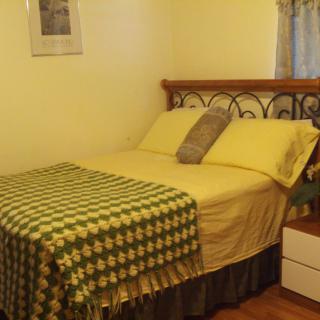
Lend A Hand Personal Care Home
$1,500 to $2,000 / month12.1 miles away -
About the same

Rose's Premier Personal Care Home
$1,700 / month6.0 miles away -
from -$200 / mo

Ivy Spring Retirment Cottage
$1,500 / month20.2 miles away
Overall Review of Welcome Home Personal Care
Pros
 The owners are personally involved and provide excellent care as if they were family.
- They are kind, compassionate, and bring extensive knowledge of elderly care.
- Their approach has led to radical improvements in conditions like edema, UTIs, and gut health.
- They are hard-working and dedicated to their residents.
- Families describe them as miracle workers and even angels.
- Angela, the new owner, is charming, sweet, thorough, and has a medical background.
- The facility offers pet therapy with goats and bunnies and fresh eggs from chickens, adding a warm, home-like atmosphere.
Cons
 They claim the facility lacks training and cannot handle difficult Alzheimer’s behaviors, making it not suitable for such patients.
- They allege the facility exaggerates its years of experience with Alzheimer’s patients, which is not the case.
- They note the facility has a bad rap from previous owners.
Review
Welcome Home Personal Care in Union City, GA is best suited for families seeking highly personalized, medically informed personal care for a loved one with dementia or chronic health issues. The facility centers on hands-on ownership, with Angela and Igor, Eastern European doctors, personally involved in day-to-day care. Their approach blends medical knowledge with a practical, problem-solving mindset and a willingness to guide families through end-of-life moments with dignity. For those who value direct access to caregivers, clear supervision, and a home-like setting over a large campus, this community offers something meaningful. The combination of medical background and personal dedication tends to translate into tangible improvements in several chronic conditions when the care plan prioritizes comfort and symptom control.
Pros are pronounced and tangible. Most rooms offer a private bathroom, contributing to privacy and independence in daily living. The small, intimate setting allows for rapid adjustments when health needs shift, and owners’ direct involvement means decisions aren’t buried in layers of administration. The staff described as kind and hardworking can translate into more attentive daily care, with reports of notable improvements in chronic edema, UTIs, gut health, and congestion under their approach. Unique touches, pet therapy with goats, rabbits, and chickens, plus the prospect of fresh eggs, contribute to engagement and mood for residents who respond to gentle, consistent interaction. Family members repeatedly highlight the depth of personal attention from Angela, Igor, and the caregiving team.
Yet there are significant caveats. The home is not pitched as a memory-care specialist for advanced Alzheimer’s or challenging behaviors, and several reviewers caution that difficult behaviors may overwhelm the facility’s current capabilities. This limitation matters: for a loved one whose dementia includes agitation, aggression, or resistance to care, the fit can deteriorate quickly. Additionally, there is reputational baggage from prior ownership, and mixed perceptions persist despite the new leadership. The small size, while favorable for supervision, also implies a smaller staff pool and potentially fewer ancillary services, which can strain scheduling and responsiveness during busy times. These factors create real risk for families depending on consistent, specialized behavioral management.
The strong points offset these concerns where care goals align with resident needs. The hands-on medical orientation translates into practical, symptom-focused care, not merely comfort-oriented assurances. Direct accountability from Angela and Igor, combined with a private-room environment and an attentive staff, often yields quicker adaptations in medication, nutrition, and daily routines. The home-like atmosphere and ongoing engagement through pet therapy can notably reduce agitation and improve quality of life for residents who respond to intimate, consistent routines. In essence, for seniors whose care demands center on medical oversight, comfortable pacing, and meaningful personal connection, the advantages carry substantial weight against potential shortcomings.
Decision-makers should weigh the resident’s dementia profile and care expectations carefully. If the loved one requires disciplined memory-care programming and a facility with a robust track record in managing dementia-related behaviors, alternatives, such as larger assisted living communities with dedicated memory-care wings or skilled nursing facilities, may offer more predictability. Prospective families should press for specifics on staff-to-resident ratios, dementia-behavior training for caregivers, and the ability to implement individualized diets, mobility support, and preferred end-of-life plans. A thorough tour that includes conversations about daily schedules, safety protocols, and coordination with external medical providers will illuminate whether the care design matches expectations.
In sum, Welcome Home Personal Care serves families seeking intense, hands-on, medically informed care delivered within a small, homelike setting. It is particularly well-suited for dementia patients who respond to close physician involvement, tailored nutrition, and a caregiving team that treats care as a vocation. Alternatives become compelling when a resident requires formal memory-care programming, larger service capacity, or more intensive behavioral management. The prudent approach is to assess personal care goals, observe interactions with staff, and honestly gauge whether the anticipated benefits, from symptom control to end-of-life comfort, justify the potential risks. A visit to meet Angela, Igor, and the caregiving team will reveal whether this is the right match for a given loved one.
 Board and Care Home
 Activities off-site
 Private
 Respite or short term stays offered
 Wheelchair accessible showers
 William B Hartsfield-Atlanta International (9 miles away)
 Ambulatory care
 Diabetic care
 Incontinence care
 Meals provided



 Understanding the Full Cost of 24/7 In-Home Care: A Detailed Overview
 Exploring the World of Home Health Nurses: Qualifications, Roles, and Hiring Tips
 Navigating Medicare Coverage for In-Home Care Services