
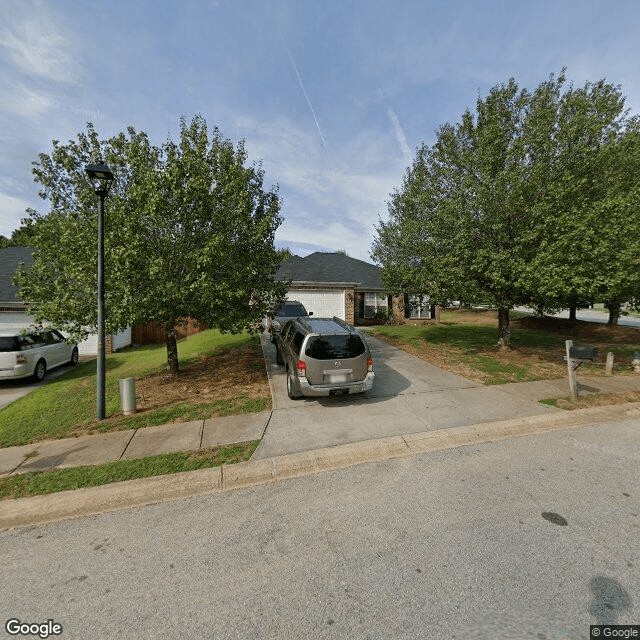
10300 Deep Creek Cove, Union City, GA 30291
For more information about senior living options: (866) 208-4318
Providence Home - Community Living Arrangement Service At Deep Creek Cove Costs & Pricing
At Providence Home - Community Living Arrangement Service at Deep Creek Cove, the monthly cost for a private room is set at $1,800. This price stands in notable contrast to the average costs found within Fulton County and the broader state of Georgia, where private room rates are significantly higher - $3,203 and $2,864 respectively. Such a disparity not only highlights the affordability of Providence Home's offerings but also reflects its commitment to providing quality care at a competitive rate. Families seeking community living arrangements will find that choosing Providence Home can represent a more economical option without compromising on essential services and support.
| Floor plans | Providence Home - Community Living Arrangement Service At Deep Creek Cove | Fulton County | Georgia |
|---|---|---|---|
| Private | $1,800 | $3,203 | $2,864 |
Assisted Living communities with a similar price nearby
-
from -$300 / mo
Lend A Hand Personal Care Home
$1,500 to $2,000 / month12.8 miles away -
from +$301 / mo

Brighton Gardens of Buckhead
$2,101 to $5,370 / month20.8 miles away -
from -$200 / mo
My Care Your Care Home
$1,600 to $1,900 / month19.7 miles away -
from +$100 / mo
Masalon Personal Care Home
$1,900 / month23.8 miles away -
from -$300 / mo

Joy's Manor Pch
$1,500 to $4,000 / month21.7 miles away
Overall Review of Providence Home - Community Living Arrangement Service At Deep Creek Cove
Pros
 The staff and owner are nice, clean, and warm, and they are very caring.
- The staff are very concerned.
- Guests would highly recommend this establishment.
Review
Providence Home - Community Living Arrangement Service at Deep Creek Cove in Union City, Georgia is best suited for seniors who want a small, intimate setting where daily life feels personal and the staff’s energy is consistently welcoming. The prevailing impressions from two positive reviews are that the community is clean and warm, with an owner who is genuinely caring and staff who convey serious concern for residents. For families seeking a home-like atmosphere where caregivers are accessible, visible, and invested in each resident’s wellbeing, this community delivers a compelling, practical match.
Those whose priority includes formal medical oversight, memory-care specialization, or a large-campus social calendar should explicitly consider alternatives. The current feedback is limited to warmth, cleanliness, and attentiveness; there is no documented evidence of specialized dementia programming, on-site clinical teams, or expansive activity offerings. Prospective residents should inquire about staffing levels, medical partner arrangements, care planning processes, and the range of services available day to day. If clear demonstrations of clinical capability or variety in programming are non-negotiable requirements, a broader search is warranted.
Still, the strongest pros, cleanliness, a welcoming environment, and a caring owner-led culture, can offset common concerns about smaller settings. When caregivers know residents well and respond promptly, daily routines feel predictable and respectful, reducing anxiety for families worried about neglect or delayed assistance. The warmth and perceived competency ring true in both reviews, suggesting that staff attentiveness translates into reliable help with activities of daily living, timely reminders, and sensitive observation of changes in health or mood. In this context, the personal touch matters as much as formal credentials.
That personal touch appears to be the operational backbone here: staff are described as warm, the owner is noted as caring, and concern for residents is explicit. In practical terms, this tends to produce strong daily communication with families, fewer surprises, and a sense of safety for residents who value being known and respected. For seniors who thrive on routine and a caregiver who can interpret subtle cues, a dropped appetite, subtle withdrawal, or a new limp, the environment promises quick adjustments and attentive problem-solving.
Families deciding whether Providence Home is the right move should treat a visit as a test drive. Observe how staff interact with residents, what happens when assistance is requested, and how the space supports independence alongside supervision. Ask concrete questions: what are the staffing ratios during mornings and evenings, what is the process for updating care plans, how are emergencies handled, and what options exist if a resident’s needs evolve? Also confirm the owner’s involvement in day-to-day care and whether residents have predictable routines that align with personal preferences. The answers will reveal whether the perceived warmth translates into sustained reliability.
In sum, Providence Home at Deep Creek Cove stands out for families who prize a clean, homey, and highly attentive setting where people are known and cared for. It is a strong choice for those who value immediacy of response and a culture of compassionate care over breadth of medical services or expansive programming. For families with specialized needs or expectations for a large, highly structured community, it makes sense to explore other options as part of a thorough decision process. A visit-driven evaluation will determine if the positives align with the resident’s essential priorities and risk tolerance.
 4 resident community capacity
 Assisted Living
 Board and Care Home
 Activities off-site
 Bath tubs
 Beautician on-site
 Cable or satellite TV
 Devotional services off-site
 Dining room
 Fully furnished
 Garden
 Housekeeping services
 Indoor common areas
 Move-in coordination
 Outdoor common areas
 Private
 Private bathrooms
 Respite or short term stays offered
 Telephone
 Wi-Fi/high-speed internet available
 William B Hartsfield-Atlanta International (9 miles away)
 24-hour supervision
 Ambulatory care
 Assistance with bathing
 Assistance with dressing
 Assistance with transfers
 Diabetes diet
 Diabetic care
 Incontinence care
 Meal preparation and service
 Medication management
 Special dietary restrictions
 Transportation arrangement (medical)
 Transportation to doctors appointments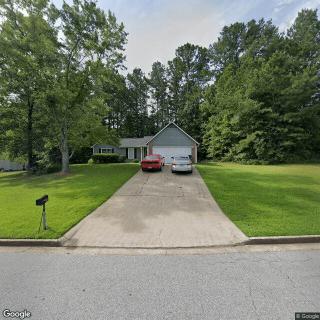




 8 Key Indicators That Suggest It May Be Time to Transition from Assisted Living to Skilled Nursing Care
 Vibrant Senior Living: A Comprehensive Guide for Active Older Adults
 When to Transition from Assisted Living to Memory Care: Key Indicators, Steps, and Finding the Right Community