
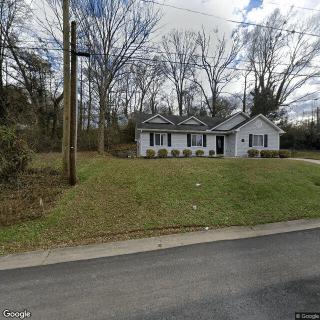
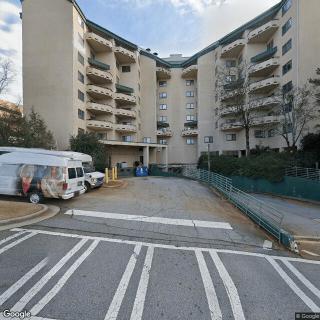
574 Allgood Road, Marietta, GA 30060
For more information about senior living options: (866) 208-4318
Overall Review of Miss Flo's Personal Care Home
Cons
 The overall experience was not good at all.
- The facility had only four residents, making it feel small and poorly run.
- The mother fell, sustained injuries, and no one called until 5:00 that night.
- They did not want to take her to the hospital.
- There was no proper menu posted and no real food schedule; residents never knew what they'd get.
- Peanut butter and tuna were served together on a sandwich for residents.
- Only one staff member was on night shift, so contact with residents was very limited.
- Most of the staff were foreign, making them hard to understand and contributing to turnover.
Review
Miss Flo's Personal Care Home in Marietta is best approached as a highly intimate, four-resident setting, but only for families willing to accept markedly limited supervision, questionable safety responsiveness, and sparse resident engagement. This is not a fit for seniors who rely on steady oversight, timely communication, or routine medical support. The tiny size can feel homey, yet the drawbacks are so significant that the arrangement tends to compound risk rather than deliver a comfortable alternative to a large facility. In practical terms, it serves a narrow niche: those prioritizing privacy and simplicity over reliable care quality and predictability.
For families evaluating options, it is essential to consider alternatives when continuous monitoring, prompt staff responsiveness, or consistent programming are non-negotiables. Larger, licensed assisted living communities with established staffing standards, formal meal plans, and structured activities typically offer far stronger safety nets. If a loved one requires regular assistance with mobility, medications, or sudden health needs, or if there is a history of falls or confusion, pursuing a more robust setting is strongly advisable. Similarly, if clear, ongoing communication with caregivers is a priority, this home is unlikely to meet that expectation.
The perceived advantages of a small, intimate home do not withstand the stress test of real-world functioning here. The promise of personalized attention is undermined by evidence of limited staff presence and insufficient engagement with residents. A four-resident environment should enable easy check-ins and tailored routines, yet in practice there is little structure beyond a posted schedule that rarely translates into meaningful activity or interaction. When the core goal is steady, predictable care, the lack of reliable programming and consistent human contact makes the small scale a liability rather than a benefit.
The most troubling aspect centers on safety and timely communication. A serious incident, early in the day, a resident’s fall resulting in a broken door and a back injury, was not followed up with family contact for several hours. The facility reportedly resisted hospital transport, and the family’s ability to respond promptly was compromised. Such gaps in incident awareness and escalation erode trust and place residents at unnecessary risk. In a setting this small, delayed notifications are less excusable because closer observation should heighten responsiveness, not diminish it.
Staffing realities compound the risk profile. Night shift coverage appears to be minimal, with only one staff member present while the majority of residents sleep. Language barriers and high turnover further impede effective communication, continuity of care, and consistent routines. The dietary side offers little reassurance, no formal, posted menu and occasional improvised meals, further eroding the sense of reliable daily structure. Even basic expectations, like residents having a predictable meal plan and opportunities to go outdoors, are not consistently met, making the environment feel more restrictive than supportive.
Given these dynamics, families should proceed with extreme caution or redirect to alternatives that prioritize safety, transparency, and engaged care. If choosing to explore Miss Flo’s further, insist on concrete assurances: a clear, posted monthly menu; a documented and followed fall-response protocol; dependable daytime staffing levels with direct access to a supervising clinician; and established activity programming with meaningful resident involvement. Conduct rigorous visits during daytime hours to observe interactions, meal preparation, and engagement. Request references from current families and review state inspection records for any recurring issues. If these assurances cannot be met, the prudent move is to pursue a setting with demonstrable safety culture, reliable communication, and a track record of attentive, proactive care.
 4 resident community capacity
 Assisted Living
 Board and Care Home
 Cable or satellite TV
 Dining room
 Fully furnished
 Garden
 Housekeeping services
 Move-in coordination
 Outdoor space
 Telephone
 Wi-Fi/high-speed internet available
 William B Hartsfield-Atlanta International (23 miles away)
 24-hour supervision
 Activities of daily living assistance
 Assistance with bathing
 Assistance with dressing
 Assistance with transfers
 Diabetes diet
 Meal preparation and service
 Medication management
 Special dietary restrictions
 Transportation arrangement (medical)
 Transportation to doctors appointments
 Below-average pricing with strong amenities and diverse care options.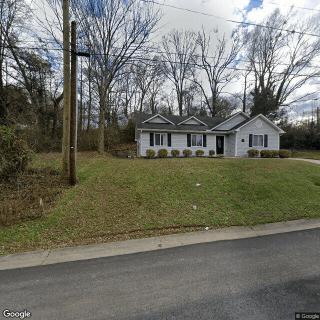



 Securing Financial Support for Assisted Living: A Comprehensive Overview
 Social Security Benefits and Assisted Living: Navigating Options Across the U.S.
 An Extensive Exploration of the VA Aid and Attendance Benefit