

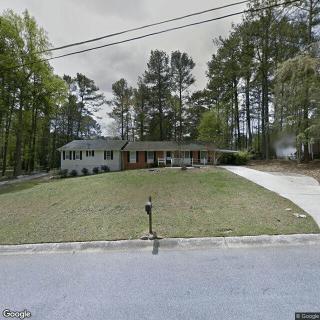
2107 Red Berry Ln, Marietta, GA 30008
To contact a resident: (678) 793-3486
For more information about senior living options: (866) 208-4318
Graceann Personal Care Home Costs & Pricing
Graceann Personal Care Home offers competitive pricing for its residents compared to the broader market in Cobb County and the state of Georgia. The monthly cost for a semi-private room at Graceann is $3,321, significantly higher than the average of $2,367 in Cobb County and $2,529 statewide. For those seeking more privacy, the price for a private room at Graceann is $3,985, which also exceeds local and state averages of $2,788 and $2,864 respectively. While these costs are above the regional norms, they may reflect the quality of care, amenities, and personalized services that Graceann provides to its residents.
| Floor plans | Graceann Personal Care Home | Cobb County | Georgia |
|---|---|---|---|
| Semi-Private | $3,321 | $2,367 | $2,529 |
| Private | $3,985 | $2,788 | $2,864 |
Senior living communities with a similar price nearby
-
from +$119 / mo

The Cohen Home
$3,440 to $5,840 / month24.1 miles away -
from -$511 / mo
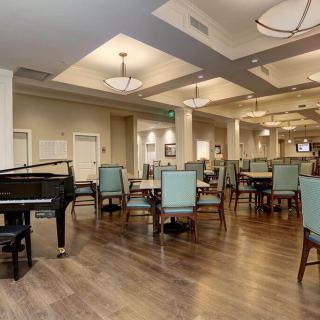
Vitality Living Milton
$2,810 to $5,515 / month24.6 miles away -
from +$479 / mo

The Holbrook of Acworth
$3,800 to $4,200 / month11.8 miles away -
from -$521 / mo

Wellness Community
$2,800 to $4,275 / month22.9 miles away -
from -$121 / mo

Crabapple Hall
$3,200 / month22.6 miles away
Overall Review of Graceann Personal Care Home
Pros
 The caregivers provide close, personal attention.
- Grace Living goes above and beyond to care for aging parents.
- Grace Living is worth considering for the care of an aging parent.
- Grace is the most well-run home with the most caring staff.
- Esther and her staff make Grace feel like a home and truly care for residents.
- Esther and staff do an outstanding job caring for residents, keeping them clean, and providing updates to families.
- The staff, including Esther and David, create a safe haven with incredible dedication to residents.
- The facility is clean, calm, and filled with loving caregivers who provide care.
Cons
 Grace would not readmit the mother after discharge unless the family arranged and paid for 24-hour outside nursing care, leaving them in a difficult situation at the last minute.
- The previous assisted living home had become unbearable in its treatment of her.
Review
Graceann Personal Care Home in Marietta is best suited for families seeking a warm, intimate, home-like environment for a loved one who needs help with daily activities and personal care, including residents who are non-ambulatory or living with dementia. The community earns its strength from close, attentive staff, a consistently clean setting, reliable meal service, and daily updates that keep families connected even when visits aren’t possible. It works especially well for those who prize dignity, a comforting routine, and a feel of “home” over a more clinical, institutional atmosphere. For anyone prioritizing a compassionate, hands-on caregiving culture, Graceann stands out as a principled choice.
That said, Graceann is not the right fit for every situation. Those requiring robust, on-site medical nursing or highly specialized clinical programs may want alternatives with broader medical staffing and more formal care pathways. The home’s model centers on devoted personal care and a homelike day-to-day experience rather than large-scale medical intervention. Prospective residents who expect aggressive discharge coordination from hospital to home or who need immediate, integrated medical oversight may encounter friction. In particular, the community’s policy around post-hospital readmission can pose a practical obstacle if quick arrangements for outside 24-hour care aren’t in place.
The strongest benefits, caregiver devotion, home-like ambiance, and transparent family communication, offset the main drawbacks for most families. The staff is repeatedly described as going “above and beyond,” delivering consistently attentive personal care that makes residents feel seen and valued. Cleanliness is non-negotiable, meals are consistently well-regarded, and updates keep families connected when in-person visits aren’t feasible. For residents who are non-ambulatory or facing dementia-related needs, these elements translate into steadier daily routines, reduced agitation, and a higher sense of security.
Another recurring theme is the staff’s reliability and the sense that Graceann operates like a tight-knit, well-run household. Families repeatedly note the respect, warmth, and professional demeanor of Esther and her team, which in practice means residents receive dignified care, regular hygiene and comfort, and a level of personal attention that is hard to replicate in larger facilities. This concentrated, compassionate approach often yields meaningful peace of mind for caregivers who must balance distance, demanding schedules, and emotional stress.
However, the policy around hospital discharge and readmission should be a non-negotiable inquiry during tours and discussions. At least one family encountered a situation where readmission hinged on arranging paid outside 24-hour care, a stipulation that arrived late and created a crisis. This is not a reflection on daily caregiving quality, but a concrete operational barrier that could derail a smooth transition if not anticipated. Prospective residents should confirm how discharge planning is handled, what supports exist for securing external caregivers, and whether timelines can be accommodated when urgent medical needs arise.
Overall, Graceann Personal Care Home stands as a practical, compassionate option for seniors who want a homey, attentive setting backed by a devoted, family-rooted team. It shines particularly for non-ambulatory residents, dementia care, rehab scenarios, and families seeking daily reassurance that their loved one is treated with warmth and respect. Alternatives will appeal to those requiring stronger in-house medical oversight or more streamlined transition support between hospital and home. The prudent path is a candid in-person evaluation: assess medical capabilities, inquire about transition processes, and judge how well the staff’s day-to-day approach aligns with the resident’s personality and care needs. When those elements align, Graceann offers a reliable, comforting home for aging loved ones.
 Board and Care Home
 William B Hartsfield-Atlanta International (20 miles away)




 Home Health Care Aides: Understanding Their Role and Supporting Your Family
 Urinary Tract Infections in Older Adults: Comprehensive Insights on Symptoms, Treatment, and Prevention
 California's Form 602A: An In-Depth Examination of Senior Care Assessment