
1835 Long Ridge Drive, Macon, GA 31211
For more information about senior living options: (866) 208-4318
Southern Community Living III Costs & Pricing
Southern Community Living III offers a range of accommodations with pricing that reflects its unique environment and services. For a semi-private room, the monthly cost is set at $3,480, which is considerably higher than the county's average of $2,269 and Georgia's average of $2,529. If you prefer more privacy, the private room option is available for $4,176, again surpassing both local and state averages of $2,746 and $2,864 respectively. For those seeking a studio layout, Southern Community Living III presents a rate of $4,524; this also exceeds the county's average of $3,083 and Georgia's statewide average of $3,520. While the costs are higher compared to surrounding options in Jones County and across Georgia, they may reflect enhanced amenities or specialized care that residents seek when choosing Southern Community Living III for their living arrangements.
| Floor plans | Southern Community Living III | Jones County | Georgia |
|---|---|---|---|
| Semi-Private | $3,480 | $2,269 | $2,529 |
| Private | $4,176 | $2,746 | $2,864 |
| Studio | $4,524 | $3,083 | $3,520 |
Assisted Living communities with a similar price nearby
-
from +$267 / mo

Alexander IV Senior Living
$3,747 to $4,496 / month3.9 miles away -
from +$515 / mo

Alexander IV
$3,995 / month3.9 miles away -
About the same

Angels Divine Pch
$3,500 to $4,000 / month3.4 miles away -
About the same
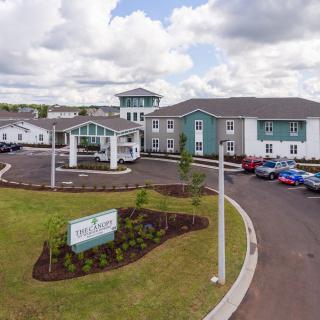
The Canopy at Warner Robins
$3,500 to $4,175 / month18.9 miles away -
from -$480 / mo

Phoenix At Lake Joy
$3,000 to $5,000 / month20.9 miles away
Overall Review of Southern Community Living III
Cons
 A Rescare employee damaged the homeowner's mailbox and did not inform them.
- Security footage allegedly shows one of Rescare's employees at 1393 Happy Trail in Macon, GA causing the damage.
- Michelle Ingram of the Macon office is described as rude, disrespectful, and unconcerned about resolving the issue.
- She allegedly claimed that Rescare is a “$10 million company,” instead of taking accountability.
- She allegedly hung up on the reviewer multiple times and showed no professionalism or empathy.
- The treatment is described as absolutely disgusting, casting doubt on how seniors in their care are treated.
Review
Southern Community Living III in Macon, GA is best suited for families that want the security of a large, corporate-backed operation and are prepared to actively supervise staff and outside contractors. It is not ideal for those seeking a consistently warm, responsive frontline experience or for families who expect issue resolution to unfold smoothly without persistent follow-up. The clear takeaway is that scale and resources do not automatically translate into reliable, compassionate service at the street level.
Explicitly, alternatives should be considered by seniors who require dependable courtesy, transparent communication, and proactive problem-solving from both the facility and any partners. Those who cannot or will not invest time in chasing down responses, or who prefer not to tolerate defensive or dismissive reactions when concerns arise, should look at other communities. Families with significant safety or property-protection concerns may find more reassurance elsewhere, where staff accountability is presented as a core operating standard rather than an afterthought.
The upside of the operation, its size and formal structure, does not meaningfully offset the primary drawbacks exposed in the experience. The incident described involves a Rescare employee damaging a mailbox, with the Macon office staff’s response characterized by frustration, defensiveness, and a lack of accountability. That sequence paints a pattern more troubling than a single error: a failure to take ownership, an emphasis on corporate scale over individual accountability, and a problematic dynamic between the office and the public when problems surface. In practical terms, potential residents must weigh the potential access to resources against the risk of unresolved issues and hostile, unempathetic communication.
Prospective residents should demand concrete assurances before committing. A clear, written incident-reporting protocol is essential, along with documented liability coverage for damages caused by contractors or partner staff. A named administrator or primary point of contact who can be reached reliably, with a track record of timely follow-through, is non-negotiable. It is prudent to request references from current families and to see evidence of consistent, respectful handling of complaints over time, not just promises during tours or initial conversations.
Red flags emerge quickly in this context: unresponsiveness, excuses that pivot away from accountability, and dismissiveness when concerns are raised. The described interactions suggest a culture where frontline communication and empathy may be lacking, and where property-related incidents are not treated with the seriousness they warrant. The presence of a large corporate umbrella should not obscure the need for rigorous expectations around staff behavior, training, and escalation paths, elements that appear to be uneven in the instance described.
Bottom line: for families that prize dependable, respectful care and consistently effective issue resolution, Southern Community Living III requires cautious scrutiny and potentially alternatives. The corporate veneer cannot disguise the critical gaps in accountability and front-line service illustrated by the review. Before committing, demand a formalized promises-and-policies package, insist on direct communication channels with responsible leaders, and verify that there is a proven track record of handling grievances with professionalism. If those assurances cannot be clearly documented, explore other communities where staff accountability and resident-from-staff trust are demonstrably prioritized.
 4 resident community capacity
 Assisted Living
 Cable or satellite TV
 Dining room
 Fully furnished
 Garden
 Housekeeping services
 Move-in coordination
 Outdoor space
 Telephone
 Wi-Fi/high-speed internet available
 Middle Georgia Regional (12 miles away)
 24-hour supervision
 Activities of daily living assistance
 Assistance with bathing
 Assistance with dressing
 Assistance with transfers
 Diabetes diet
 Meal preparation and service
 Medication management
 Special dietary restrictions
 Transportation arrangement (medical)
 Transportation to doctors appointments
 Small, home-like setting with personalized care and comprehensive on-site amenities.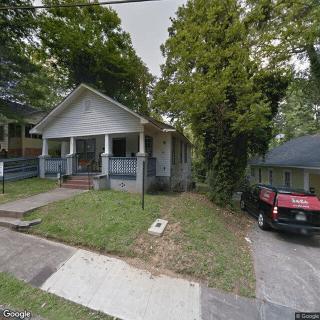

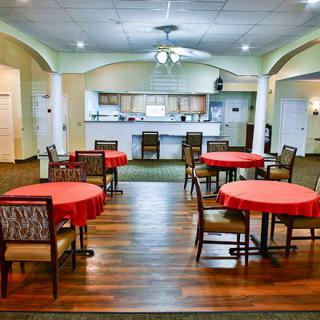
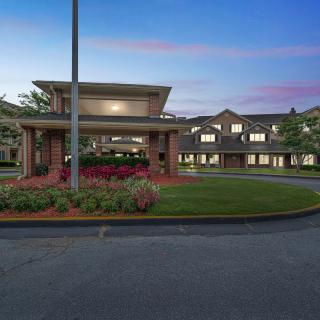
 Beyond the Bingo Hall: 50+ Enriching Activities for Seniors in Assisted Living
 Understanding the Distinctions: Assisted Living and Memory Care Explained
 Guiding Elderly Parents Who Refuse Assisted Living: 6 Practical Steps