
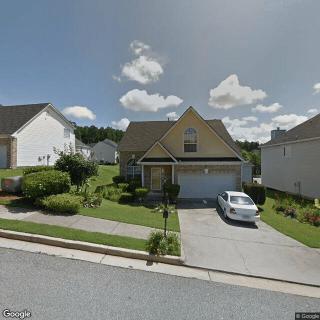
5111 Spring Street, Flowery Branch, GA 30542
For more information about senior living options: (866) 208-4318
Senior Care America Fb Costs & Pricing
Senior Care America Fb offers competitive pricing for senior care services, particularly when compared to both Hall County and the broader state of Georgia. For a semi-private room, Senior Care America Fb charges $2,000 per month, significantly lower than the Hall County average of $2,742 and the state average of $2,529. Similarly, the cost for a studio at Senior Care America Fb stands at $2,200, which also undercuts the higher rates of $3,583 in Hall County and $3,520 statewide. These figures reflect not only a commitment to affordability but also an effort to provide high-quality care options that are accessible to seniors and their families.
| Floor plans | Senior Care America Fb | Hall County | Georgia |
|---|---|---|---|
| Semi-Private | $2,000 | $2,742 | $2,529 |
| Studio | $2,200 | $3,583 | $3,520 |
Assisted Living communities with a similar price nearby
-
About the same

Tender Care Assisted Living
$2,000 to $2,400 / month8.2 miles away -
from +$100 / mo

Marieta's Mission Personal Care Home
$2,100 to $2,550 / month13.1 miles away -
from -$225 / mo

Senior Living At Mercy's Point
$1,775 to $1,875 / month17.1 miles away -
About the same

Rock Springs Senior Care
$2,000 / month10.2 miles away -
from -$200 / mo
Comfy Pch
$1,800 to $2,500 / month24.4 miles away
Overall Review of Senior Care America Fb
Pros
 The owner is very, very nice and seems like he really cares about his residents.
- He would have taken great care of her.
Cons
 It would not have been a good fit for Mom.
- Mom would have been the only non-Korean resident.
- The cultural differences, along with the move, would have been a lot for her to handle.
Review
This community is best suited for a resident who thrives in a small, intimate, home-like setting and who is comfortable operating within a culturally cohesive environment. The owner’s hands-on approach and evident genuine care create a sense of personal attention and responsiveness that can translate into highly individualized daily support. For families prioritizing a warm, direct relationship with leadership and staff, and for residents who value stability and a close-knit, almost familial atmosphere, this option stands out as a clean fit.
Those who should consider alternatives are primarily families with residents who require greater cultural variety or broader social exposure, or who expect a more mainstream, less homogenous living environment. Individuals who value a diverse resident mix, multi-language programming, and wider social networks may find the cultural homogeneity limiting. Additionally, families seeking more expansive facilities with larger resident populations, more robust activity calendars, or greater access to integrated medical and therapeutic services may want to look elsewhere.
The strongest positives here revolve around the intimate scale and the owner’s evident dedication. A smaller residential setting can translate into more hands-on supervision, quicker problem resolution, and a sense that each resident is truly known and cared for. The owner’s warmth and attentiveness are not nominal; they are the backbone of daily routines, meals, and care decisions. In practice, that translates into a residence where responsiveness and personalized adjustments are more than marketing claims, it's the lived experience of residents and their families.
However, the main downside centers on cultural fit and the realities of moving into a highly specialized environment. The reviewer notes that the resident would have been the only non-Korean person, which signals potential social and emotional barriers, language nuances, shared cultural references, and dietary patterns, that can complicate integration and comfort. The relocation itself adds a layer of stress, especially for someone who values familiar routines and feels most secure within a familiar cultural frame. In short, the risk is isolation or persistent discomfort for a resident who does not easily bridge those cultural gaps.
These pros and cons interact in a clear, practical way: the highly individualized care and the owner’s active involvement can offset some loss of social breadth, but they cannot fully compensate for a fundamental misalignment in cultural expectations and social milieu. For a resident who shares a cultural background with most neighbors, or for a family that places a premium on a small, deeply attentive environment, the balance tilts toward a positive outcome. For those seeking broad social engagement, diverse programming, or a facility that functions as a culturally neutral space, the scale tips toward alternatives.
Actionable next steps guidance follows from this analysis. Prospective families should schedule a targeted visit focused on cultural and social fit: ask about resident demographics, languages spoken by staff, opportunities for cultural meals or events, and how transitions are supported for new arrivals. Inquire about the resident-to-staff ratio, mobility assistance, and whether there are residents from varied backgrounds to foster a sense of inclusion. Finally, compare with larger, more diverse communities that offer broader activity calendars and more integrated services to determine whether the intimate, owner-led approach truly aligns with the resident’s needs and preferences.
 20 resident community capacity
 Assisted Living
 Board and Care Home
 Activities off-site
 Beauty salon
 Cable or satellite TV
 Devotional services off-site
 Dining room
 Fully furnished
 Garden
 Housekeeping services
 Indoor common areas
 Kitchenette
 Move-in coordination
 Outdoor common areas
 Respite or short term stays offered
 Telephone
 Wheelchair accessible showers
 Wi-Fi/high-speed internet available
 24-hour call system
 Ambulatory care
 Assistance with bathing
 Assistance with dressing
 Assistance with transfers
 Diabetes diet
 Diabetic care
 Incontinence care
 Meal preparation and service
 Medication management
 Mental wellness program
 Special dietary restrictions
 Transportation arrangement (medical)
 Transportation to doctors appointments




 Understanding the True Cost of Assisted Living in 2025: A Comprehensive Guide
 Understanding Medicaid Coverage for Assisted Living: A Comprehensive Guide
 How and When Medicaid May Cover Assisted Living Costs